
A disturbing allegation of illegal kidney harvesting has emerged along the Nyanya–Mararaba–Masaka corridor, following an intervention by activist Martins Vincent Otse, popularly known as VeryDarkMan (VDM), in the case of a 22-year-old man who allegedly discovered that his left kidney had been removed.
The development has raised fresh questions about the activities of suspected organ brokers, the vulnerability of economically disadvantaged Nigerians and the safeguards surrounding kidney transplantation in Abuja and neighbouring Nasarawa communities.
According to accounts attributed to VDM, the young man approached him after allegedly discovering that one of his kidneys was missing. VDM said he accompanied the victim for medical examinations at Nisa Premier Hospital and the Federal Medical Centre (FMC), Jabi.
The scans, according to VDM, indicated that the man’s left kidney was absent. The activist subsequently said he and the victim reported the matter to the police with the medical reports.
The investigation reportedly took an unexpected turn when the police traced and arrested a friend whom the victim said had taken him to the hospital.
Police raid produces shocking twist
According to VDM’s account, the friend was traced to Auta Balefi, after Masaka, where police arrested him before he could allegedly disappear.
The arrest reportedly produced another disturbing discovery.
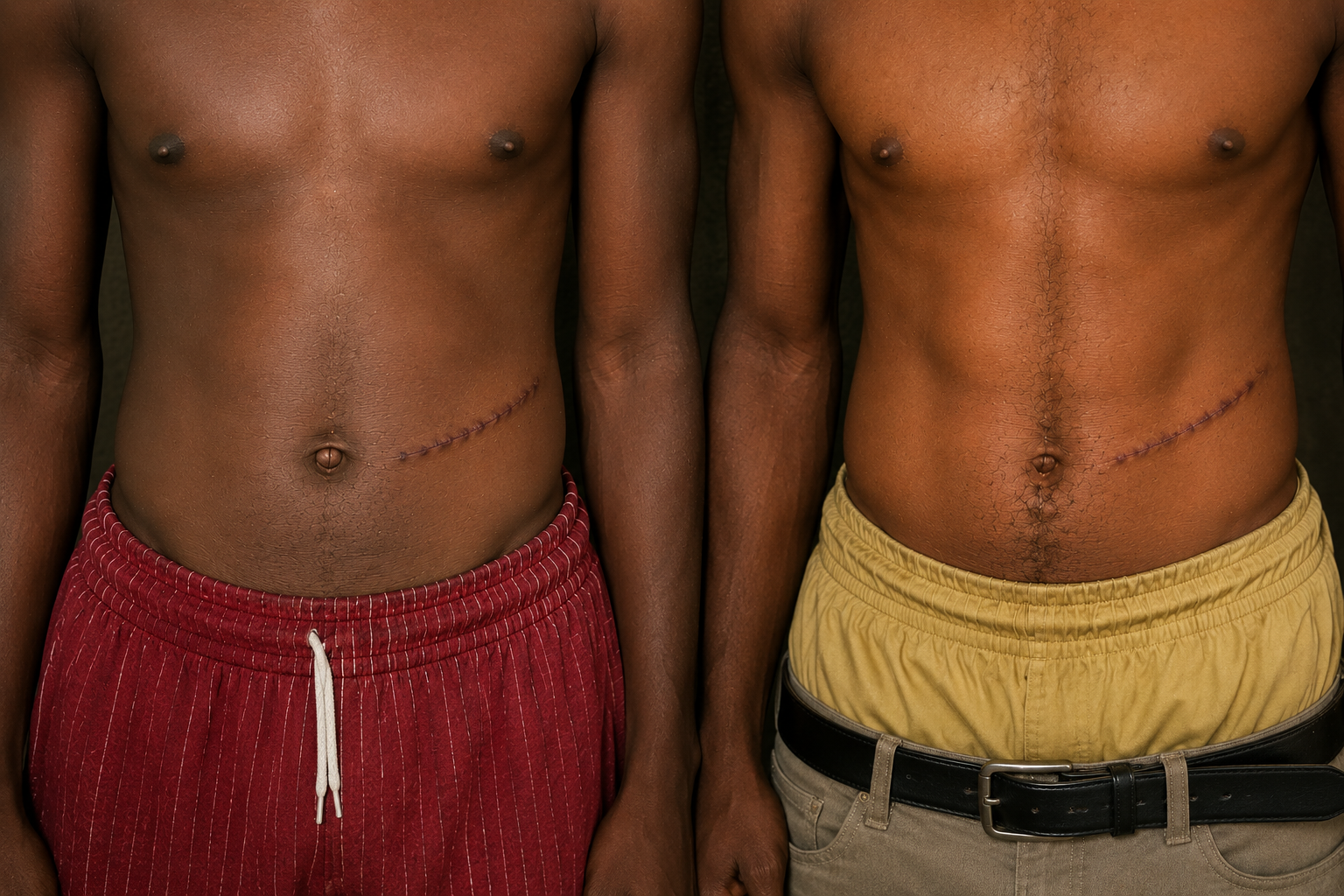
VDM said the suspect also had a surgical scar consistent with the removal of his left kidney. He allegedly told investigators that he had previously sold his own kidney for ₦7 million and was subsequently recruited as an agent to identify and bring other potential victims into the network.
The allegation, if established by investigators, would suggest a recruitment structure in which people who have themselves undergone kidney removal could be used to identify vulnerable individuals and persuade them to participate.
VDM further alleged that the arrested suspect provided investigators with the name of the hospital where his kidney was allegedly removed and information about an alleged key agent involved in procuring kidneys.
These claims remain allegations pending the conclusion of police investigations and, where applicable, prosecution and determination by a competent court.
VDM’s wider allegation
The activist has also made a much broader allegation about the scale of the suspected trade.
VDM claimed that numerous residents around Nyanya, Mararaba and Masaka could be living with only one kidney after allegedly being recruited into illegal kidney sales.
The claim has not been independently established, and it would be premature to conclude that a large proportion of residents in the area have undergone illegal kidney removal.
However, the allegation is significant because it comes against the background of previous investigations and official warnings concerning alleged kidney trafficking in the Abuja area.
Abuja has faced kidney-trafficking allegations before
This is not the first time the Abuja–Mararaba corridor has been associated with allegations of an illegal kidney market.
A major investigation published in 2023 documented several young men around Mararaba and Masaka who reportedly had surgical scars consistent with kidney removal. The investigation also described alleged networks of brokers recruiting financially vulnerable young people and negotiating payments for kidneys.
The investigation found that some alleged agents had themselves sold kidneys and subsequently became recruiters.
That detail is particularly relevant to the latest allegations because VDM says the suspect arrested in the present case similarly admitted to selling his kidney before becoming an alleged recruiter.
The earlier investigation also reported alleged negotiations involving payments running into millions of naira, although the precise amounts and individual claims varied.
Government previously acknowledged the problem
In December 2023, the Federal Ministry of Health and Social Welfare publicly responded to reports of an alleged kidney market in Abuja.
The ministry condemned kidney trafficking and stated that Sections 51–56 of the National Health Act 2014 prohibit the illegal commercial dealing in human organs.
The ministry further stated that people involved in the illegal trade—including buyers, sellers, medical practitioners and facilities where unlawful procedures are carried out—could face legal consequences. It also said the Medical and Dental Council of Nigeria was examining allegations involving medical practitioners.
The government’s response is important because it demonstrates that concerns about commercial kidney trafficking in the Abuja area predate the latest VDM investigation.
The 2023–2024 Alliance Hospital case
The issue became even more serious when the National Agency for the Prohibition of Trafficking in Persons (NAPTIP) brought charges against an Abuja hospital and several individuals over alleged organ harvesting.
In March 2024, NAPTIP arraigned Alliance Hospital and four individuals before an FCT High Court over an 11-count case concerning the alleged removal of kidneys from three young men, including two minors.
The defendants pleaded not guilty. The allegations concerned events said to have occurred between February and May 2023.
The case illustrates why allegations of illegal kidney removal cannot simply be dismissed as rumours. At the same time, an allegation against a medical facility is not proof of criminal liability; the accused persons are entitled to due process and the presumption of innocence.
Why would people sell a kidney?
Kidney trafficking is driven by a complicated combination of demand, poverty and weak safeguards.
People who become involved as alleged donors may be facing unemployment, debt, family responsibilities or acute financial hardship. Traffickers can exploit these circumstances by presenting kidney donation as an easy way to obtain a large amount of money.
The reality is considerably more complicated.
A legitimate living kidney donation is a highly regulated medical procedure requiring appropriate medical assessment, informed and voluntary consent, ethical oversight and continuing medical follow-up.
The World Health Organization has warned that organ trafficking exploits vulnerable people and can expose living donors to significant medical and social risks. WHO has also stressed the importance of protecting living donors and providing appropriate follow-up after donation.
The medical danger does not end after kidney removal
One of the most dangerous misconceptions surrounding kidney selling is the idea that a person can simply lose one kidney, collect money and continue life without significant consequences.
A healthy person can live with one functioning kidney, which is why legitimate living kidney donation is medically possible. But that does not mean that an unregulated or coerced kidney removal is safe.
A legitimate donor undergoes extensive evaluation before surgery to determine whether donation is medically appropriate.
Illegal organ harvesting can bypass these safeguards.
Potential complications associated with kidney removal include surgical bleeding, infection, blood clots, anaesthetic complications, injury to surrounding structures and other postoperative problems. Long-term health also depends on the donor’s remaining kidney, blood pressure, overall health and access to medical monitoring.
WHO has noted that even legitimate living kidney donation carries risks and that donors require appropriate assessment and continuing care.
The danger becomes substantially greater when an operation is allegedly performed primarily to obtain an organ for commercial purposes rather than to protect the donor.
What makes alleged medical malpractice particularly disturbing?
If investigators establish that a medical professional knowingly removed an organ from someone who did not provide genuine informed consent, the matter would go far beyond an ordinary case of medical negligence.
It could involve multiple serious offences, including unlawful organ removal, trafficking, exploitation, fraud, assault and professional misconduct, depending on the facts established by investigators and the applicable laws.
There is a crucial distinction between medical malpractice and organ trafficking.
Medical malpractice generally concerns professional negligence or failure to meet the required standard of care. Organ trafficking involves the illegal recruitment, acquisition or transfer of organs, often through coercion, deception or financial exploitation.
A hospital that legitimately performs a kidney transplant is therefore not automatically involved in organ trafficking. The critical questions are whether the donor gave free and informed consent, whether the relationship between donor and recipient was legitimate, whether ethical and regulatory approvals were obtained and whether the medical procedure complied with applicable law.
Nigeria’s health authorities have emphasised that transplantation must be based on voluntary and informed consent and that commercial dealings in human organs are prohibited. The Federal Ministry of Health has also highlighted plans to strengthen registration and oversight of transplant facilities and practitioners and establish a national organ-donation and transplantation registry.
The vulnerable person is often at the centre of the transaction
The structure of an illegal organ market can be particularly exploitative because the person supplying the organ may have the least bargaining power.
The recipient may desperately need a transplant.
A broker may make money by connecting the recipient to a potential donor.
A medical professional or facility may allegedly receive payment for conducting a procedure.
But the individual surrendering the kidney may be left with a permanent physical consequence after the money has been spent.
That imbalance is one reason WHO and international transplant authorities have repeatedly condemned commercial organ trafficking and transplant tourism as practices that can violate human dignity and exploit vulnerable populations.
The Mararaba connection deserves particular scrutiny
The geographical element of the latest allegations is also noteworthy.
Mararaba and neighbouring communities in Nasarawa State are closely connected to Abuja and the FCT, creating a large, densely populated urban corridor.
Previous reporting has specifically identified Mararaba and Masaka in accounts concerning alleged kidney brokers and vulnerable young people.
That does not mean residents of these communities should be treated as suspects or that every hospital or medical practitioner operating in the area is involved in criminal activity.
Instead, the latest allegations provide investigators with a basis to determine whether the cases reported over several years represent isolated incidents or whether there is an organised network connecting recruiters, brokers, medical personnel and prospective recipients.
The latest case raises several unanswered questions
The police investigation will need to establish several critical facts:
Who performed the operation?
Investigators will need to establish the identity and professional status of the person or persons who allegedly removed the kidneys.
Where was the surgery performed?
Medical records, theatre registers, admission documents, payment records and other hospital documentation could help establish where procedures occurred.
Did the victims actually consent to kidney donation?
This is perhaps the most important question. A person agreeing to an illegal commercial transaction is not necessarily providing the kind of free, informed and ethically valid consent required for legitimate organ donation.
Who recruited the victims?
Investigators should establish whether there was a chain of brokers or agents connecting potential donors to medical facilities and recipients.
Who paid for the organs?
Financial records, bank transfers, telephone records and communications could potentially help investigators establish the flow of money.
How many victims are involved?
The claim that numerous people in the Nyanya–Mararaba–Masaka axis have lost kidneys must be independently verified rather than repeated as established fact.
Were minors involved?
Previous Abuja organ-harvesting allegations included claims involving minors, making the protection of children an especially serious concern.
What hospitals should be required to prove
Where an illegal kidney removal is alleged, investigators should not rely solely on the testimony of victims or suspects.
Hospitals and medical practitioners connected to the cases should be required, where legally appropriate, to account for:
– donor consent documentation;
– medical assessment records;
– transplant committee or ethics approvals;
– identity verification;
– donor-recipient relationship;
– blood-group and tissue-compatibility investigations;
– surgical and anaesthetic records;
– postoperative records;
– payment documentation;
– pathology reports where applicable; and
– evidence of follow-up care.
A legitimate transplant leaves a substantial medical paper trail.
The absence of such documentation, unexplained inconsistencies or evidence of falsified consent records could become important to investigators.
Nigeria needs stronger transplant surveillance
The Federal Ministry of Health has already recognised the need for stronger oversight. Its national transplantation initiatives include registration of institutions and practitioners involved in transplantation and plans for a National Organ Donation and Transplantation Registry.
Such a registry could become an important tool in detecting suspicious patterns.
For example, regulators should be able to determine how many kidney transplants a facility performs, where organs originate, who the donors are, whether donor-recipient relationships comply with regulations and whether donors receive proper follow-up.
Hospitals performing transplant procedures should also be subject to rigorous periodic audits.
The police investigation must now go beyond one suspect
The arrest of an alleged recruiter should not be the end of the investigation.
If the allegations are substantiated, investigators will need to identify the entire chain—from recruitment to medical examination, surgery, payment and eventual transplantation.
Financial investigators could examine alleged payments.
Telecommunications evidence could potentially establish communications between recruiters and other members of a network.
Medical records could help establish whether procedures occurred and who performed them.
Regulators could examine whether medical facilities complied with transplant regulations.
And victims should be medically assessed and provided with appropriate long-term follow-up.
A warning to Nigerians
The latest allegations also highlight the importance of public awareness.
People should be extremely cautious about anyone offering large sums of money in exchange for a kidney or promising a quick medical procedure without transparent documentation.
Anyone who believes that an organ may have been removed without their knowledge or genuine consent should seek an independent medical assessment and preserve relevant medical documents, receipts, messages and other evidence.
Most importantly, the public should avoid taking justice into their own hands or publicly accusing particular hospitals or individuals without evidence.
The investigation should be allowed to establish the facts.
Conclusion
The allegations emerging from Auta Balefi are disturbing not simply because one young man allegedly lost a kidney, but because of what the case could reveal if the claims are substantiated: a possible recruitment chain in which vulnerable people are allegedly turned into both organ donors and recruiters.
The reported discovery that the arrested friend allegedly had also lost his left kidney makes the case particularly unusual and potentially significant.
But the wider claim that many people around Nyanya, Mararaba and Masaka are walking around with missing kidneys remains an allegation that requires rigorous independent investigation.
What is already clear is that Nigeria has previously confronted serious allegations of illegal kidney trafficking in Abuja, including a major NAPTIP prosecution involving alleged kidney removal from young people. The Federal Government has also publicly condemned commercial organ trafficking and acknowledged the need for stronger regulation.
The present investigation therefore offers authorities an opportunity to determine whether the latest case is an isolated criminal operation or evidence of a broader network.
For the victims, however, the issue goes beyond criminal prosecution. Anyone who has lost a kidney through an illegal or improperly conducted procedure may require lifelong medical monitoring, psychological support and access to justice.
The human body cannot be treated as a commodity, and legitimate transplantation can only be sustained when donor consent, medical ethics, professional standards and the law are placed above profit.