
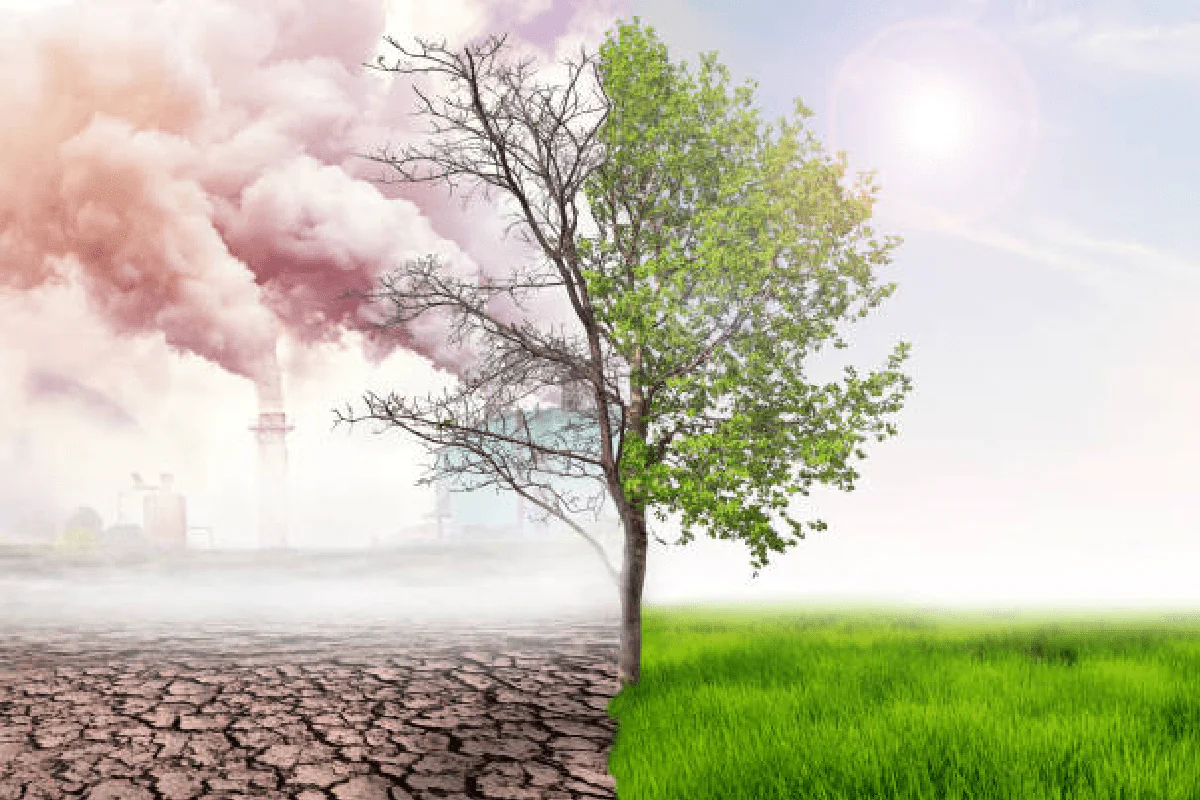
From Nepal-China landslides and floods to Europe’s scorching heat and Nigeria’s recurring floods, the world is witnessing a dangerous convergence of climate change and environmental mismanagement.
The warning signs are no longer subtle.
From the Himalayas in Asia to Europe and Africa, extreme weather events are increasingly disrupting lives, destroying infrastructure, threatening food security and exposing the vulnerability of governments and communities to a rapidly changing climate.
Recent devastating floods and landslides affecting Nepal and China have provided another grim reminder of the growing dangers confronting humanity in a warming world. Elsewhere, Europe continues to grapple with episodes of extreme heat, while Nigeria remains vulnerable to destructive flooding during the rainy season.
These disasters which have claimed many lives are occurring in different geographical and climatic settings. They cannot all be attributed to climate change in the same way. But they have something important in common: a changing climate is altering the conditions under which extreme weather occurs, while poor environmental management has been complicit in turning natural hazards into human catastrophes.
That distinction is crucial, though scholars are no more sharply divided about the divergence between the two. Rain will always fall. Rivers will always overflow occasionally. Mountains will sometimes experience landslides. Temperatures will fluctuate but when environmental degradation, unplanned urbanization, deforestation, wetland destruction, inadequate drainage, weak land-use regulation, and insufficient preparedness are added to increasingly severe climatic extremes, the consequences can be devastating. These are the climate emergencies we must confront.
The Himalayan Warning: The latest disaster in Nepal and China’s Tibet region caused by flash floods in August is particularly sobering. The Himalayan region is among the world’s most environmentally sensitive areas. Rising temperatures are affecting glaciers, snow cover, water systems and mountain ecosystems. Climate scientists have repeatedly warned that warming conditions can contribute to increasing risks from glacial hazards, floods, landslides and other cascading disasters.
Yet climate change should not become a convenient explanation for every disaster. Extreme rainfall, unstable terrain, glacial conditions, river systems, land use and the location of human settlements all influence the eventual scale of destruction. The lesson is therefore not that climate change has replaced geology or weather. Rather, it is that climate change is increasingly interacting with existing environmental vulnerabilities and that is precisely why governments must prepare. Herein is the complicity of governments across the globe that have neglected their responsibilities that have exacerbated the ugly fallout of the phenomenon of climate-induced disasters despite coordinated policies and programmes of international, continental and regional bodies such as the UN, AU and ECOWAS,
Nepal’s predicament also raises the uncomfortable issue of climate justice. Countries that have contributed relatively little to historical greenhouse-gas emissions are frequently among those facing the greatest climate risks. Their limited financial resources make recovery and adaptation even more difficult.
If climate vulnerability is global but responsibility for historic emissions is unequal, then international climate finance cannot remain a matter of goodwill. It must become a central component of global climate policy.
Europe’s Heat Is a Warning to Africa: Europe provides another illustration of the changing natural climate. Extreme heat is no longer an occasional inconvenience. Increasingly, it is becoming a serious threat to public health, agriculture, water resources, energy systems, and economic productivity. Recent European heat extremes have demonstrated how dangerous prolonged high temperatures can become, particularly when combined with drought and wildfire conditions.
The significance for Nigeria should not be missed. It is tempting to view European heatwaves as a distant problem because Nigeria already lives in a tropical climate. A warmer world does not simply mean “hotter weather.” It means greater climatic instability and more pressure on already vulnerable systems. Agriculture becomes more difficult. Water resources come under stress. Food prices can rise. Public health risks increase. Energy demand changes. Ecosystems become more vulnerable. Climate change is therefore not simply an environmental issue. It is an economic, health, agricultural, security, and development issue.
Nigeria’s Flooding Crisis: Nigeria has its own peculiar climate-induced challenges particularly in the last three decades. With the right exposure to Nigeria’s climatic experience depending on your city of residence one would definitely not need to look towards the Himalayas or Europe to understand the seriousness of climate risk. Our own flood experience tells the story; especially for those who reside in Lagos. Every year, communities across the country face the threat of flooding. Homes are destroyed. Roads and bridges are damaged. Businesses lose valuable working days. Farmers lose crops and livestock. Schools and health facilities are disrupted. Families are displaced and each time, we often respond as though the disaster has arrived unexpectedly. But flooding should not surprise us.
Nigeria has meteorological institutions, hydrological agencies, environmental experts, universities and emergency-management structures capable of identifying areas of heightened risk. The problem is increasingly not the absence of information. It is the failure to translate information into effective action. With each passing year, in Nigeria, state governments and institutions saddled with the task of arresting the flood menace appear inefficient and clueless. Unfortunately, therefore, the people who bear the brunt appear helpless and doomed.
When Environmental Mismanagement Becomes a Disaster Multiplier: It is important to distinguish between a hazard and a disaster. Heavy rainfall is a natural hazard. But whether that rainfall produces a humanitarian catastrophe depends greatly on how society has prepared for it. When wetlands are converted into buildings, natural drainage channels are blocked, refuse is dumped into waterways, forests are destroyed and floodplains are occupied without adequate planning, society effectively increases its own vulnerability.
In essence, climate change can intensify the hazard. Poor environmental management magnifies the consequences. This is why Nigeria’s flood crisis should not be reduced to the question of whether rainfall was “too much.”
A Message to Nigeria’s Political Leaders: Nigeria’s political leaders must move climate change from the margins of political discourse to the centre of national development planning. Climate adaptation should not begin after floodwaters have entered people’s homes. It should begin when roads are designed, strict urban planning laws are enforced, and when infrastructure projects are planned. Every major development project should take climate risk seriously. Every state government should know its flood-risk areas, while major cities should have functional drainage and storm-water management plans. Governments must put in place a serious early warning system for communities exposed to significant climate hazards. Most importantly, environmental regulations must be enforced without political favour. There is little value in having beautiful environmental laws if powerful interests can sidestep them.
A Challenge to Environmental Scholars and Researchers: Nigeria’s environmental scholars and researchers also have a major responsibility.
The country needs research that is not merely published but used. We need detailed flood-risk maps. We need better urban climate models. We need research on the economic value of wetlands. We need practical solutions for climate-resilient agriculture. We need a better understanding of how changing rainfall patterns will affect different regions of Nigeria. We need research that tells policymakers where infrastructure should and should not be built. Universities should therefore become more closely connected to state and federal climate-planning institutions. Research must leave the conference hall and enter the policy process.
The Role of NGOs and International Organisations: Civil society organisations, development agencies and international experts must also rethink their approach. Emergency relief is necessary, but relief alone is not resilience therefore communities need support to prepare before disasters occur. They need local early-warning systems, disaster education, resilient livelihoods, evacuation plans, climate-smart agriculture and access to adaptation finance.
International organisations must also help countries such as Nigeria develop the technical and financial capacity required to adapt to climate change. The global climate conversation cannot be reduced to emissions targets alone. The world must also discuss who will pay for adaptation and who will protect the most vulnerable.
What Has Happened to the Sustainable Development Goals?: The climate emergency also raises questions about the United Nations Sustainable Development Goals and their implementation status. Floods, heatwaves, droughts and landslides undermine progress towards poverty reduction, food security, health, clean water, resilient infrastructure and sustainable cities. They directly threaten SDG 1 on poverty, SDG 2 on hunger, SDG 3 on health, SDG 6 on water, SDG 9 on infrastructure, SDG 11 on sustainable cities, SDG 13 on climate action and SDG 15 on life on land. This should concern Nigeria deeply. The country cannot achieve sustainable development while repeatedly rebuilding infrastructure destroyed by predictable environmental hazards. There is a fundamental economic lesson here:
What Nigeria Must Do Now: Prevention is cheaper than reconstruction
Nigeria needs an urgent national climate-resilience programme built around several priorities.
First, protect wetlands and natural waterways. Wetlands are not empty land waiting for development. They are part of the country’s natural flood-management system. Second, enforce land-use planning. Development on floodplains and drainage corridors should be strictly controlled. Third, upgrade drainage infrastructure. Many Nigerian cities need comprehensive storm-water management systems designed for current and future climate conditions. Fourth, strengthen early-warning systems. Forecasts are useful only when warnings reach communities early enough for people to act. Fifth, strengthen climate-resilient agriculture. Farmers need reliable climate information, improved water management, resilient crops, insurance, and access to appropriate technology. Sixth, accelerate the transition towards cleaner energy. Nigeria has enormous potential in solar and other renewable-energy sources. A credible energy transition can contribute both to development and to climate mitigation.
Seventh, improve environmental enforcement. Regulations must apply equally to ordinary citizens, corporations, and politically influential interests. And finally, make climate education a national priority. Climate literacy should extend beyond environmental scientists. Politicians, engineers, planners, journalists, teachers, farmers, business leaders, and ordinary citizens all need to understand the risks facing their communities.
We already know what is happening. The real question is whether we will act before the next warning becomes another tragedy. The time for climate declarations is over. The time for climate governance, environmental discipline, and decisive action is now.