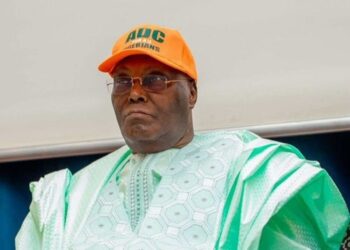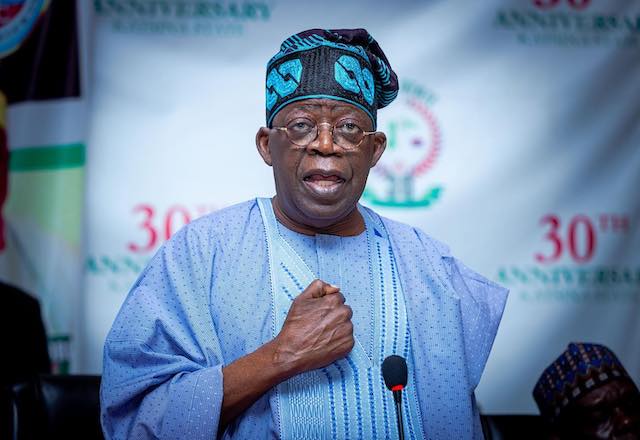

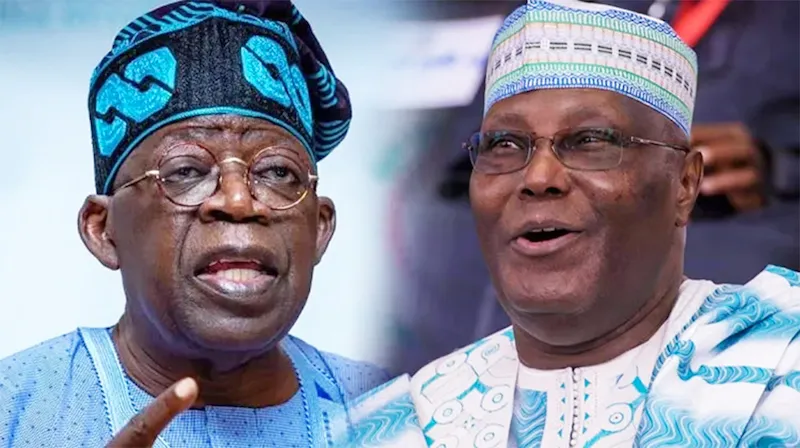
Former Vice President and African Democratic Congress (ADC) presidential candidate, Atiku Abubakar, has launched a fresh attack on President Bola Ahmed Tinubu’s economic policies, accusing the Presidency of relying on propaganda and selective statistics while millions of Nigerians continue to face worsening hardship.
In a statement issued on Monday by his Senior Special Assistant on Public Communication, Phrank Shaibu, Atiku said the State House had failed to answer what he described as the central question confronting the administration.
“If the economy is doing so well, why are Nigerians getting poorer?” he asked.
The former Vice President said it was contradictory for the government to dismiss criticism based on 2024 economic figures while simultaneously implementing the 2024, 2025 and 2026 budgets.
“As the Yoruba rightly say, the one who defecated yesterday may quickly forget, but the person who cleaned up the mess never does,” Atiku said.
“Nigerians have not forgotten the pain this administration unleashed through the disastrous management of every fiscal year since 2024. Those wounds remain fresh, and no amount of revisionism, selective statistics or government propaganda can erase them.”
‘GDP Does Not Feed Hungry Families’
Atiku argued that the Presidency’s celebration of GDP growth showed a disconnect between official economic indicators and the realities faced by ordinary citizens.
“The State House celebrates macroeconomic indicators while ordinary Nigerians struggle with microeconomic realities,” he said.
“It speaks glowingly about GDP growth while families skip meals. It boasts of debt ratios while businesses shut their doors.”
He questioned whether the purchasing power of Nigerians had improved since Tinubu assumed office.
“Can civil servants buy more food today than they could three years ago? Are transport fares lower? Are manufacturers paying less for energy? The answer, tragically, is no.”
Citing the International Monetary Fund’s latest Article IV Consultation, Atiku noted that the IMF estimated 63 per cent of Nigerians live below the national poverty line, while about 27 million Nigerians faced food insecurity in late 2025.
“Those are not opposition figures. They are the findings of the same institution the government celebrates whenever it commends aspects of its reforms,” he stated.
Questions Over Borrowing
Responding to the Presidency’s defence of Nigeria’s debt-to-GDP ratio, Atiku said the government was avoiding the real issue.
“No serious economist argues that borrowing is inherently wrong. Nations borrow. The real question is this: what has Nigeria obtained in return for the unprecedented debts accumulated under this administration?” he said.
He argued that despite claims of improved revenue collection and subsidy savings, Nigerians were still facing rising unemployment, unreliable electricity, worsening insecurity and a severe cost-of-living crisis.
“If revenue has improved so dramatically, if subsidy has been removed, and if debt servicing has supposedly become more manageable, why does this administration continue to borrow at record levels?” he asked.
Subsidy Removal ‘Without Dividends’
Atiku maintained that Nigerians were not opposed to difficult reforms such as the removal of fuel subsidy, but said the government had failed to deliver the promised benefits.
“The real question has never been whether subsidy should be removed. The question is: where are the gains?” he queried.
He said the administration had promised that subsidy removal would free resources for infrastructure, healthcare, education, transportation and social protection, yet citizens had instead experienced record fuel prices, soaring transport costs and collapsing purchasing power.
“Government cannot ask citizens to celebrate sacrifice while the promised rewards remain invisible,” he said.
‘True Federalism Is Not Devolving Pain’
The former Vice President also dismissed the Presidency’s claim that increased allocations to states and local governments represented true federalism.
“True federalism is not simply sending more money to states after unleashing inflation on the entire country,” Atiku said.
“Passing the burden of economic hardship to states while the Federal Government continues to centralise power is not restructuring. It is merely devolving pain.”
Health Sector Claims Challenged
On healthcare, Atiku said government achievements should be measured by whether Nigerians could access affordable and quality medical care, not by the number of projects announced.
He referenced reports that the Federal Ministry of Health received only ₦36 million under the 2025 Appropriation Act during a budget implementation review.
“A government that has released such a paltry sum to its health ministry can hardly claim to be leading a healthcare revolution,” he said.
He added that Nigeria remained one of the countries with the highest maternal mortality rates in the world.
“A government should not measure success by the number of programmes it announces but by the number of mothers who survive childbirth,” Atiku stated.
Education And Student Loans
The ADC candidate said the administration’s emphasis on NELFUND student loans did not amount to genuine education reform.
“Helping students finance higher education is commendable. But student loans alone do not constitute education reform,” he argued.
He pointed to the continued problem of out-of-school children, insecurity in schools, poor teacher welfare and inadequate educational infrastructure.
Manufacturers ‘Writing The Real Verdict’
Atiku said the clearest evidence of economic failure was the condition of Nigeria’s manufacturing sector.
Citing figures from the Manufacturers Association of Nigeria (MAN), he said 767 manufacturing companies had shut down, while 335 others were classified as distressed.
He added that manufacturers were holding about ₦2.14 trillion worth of unsold goods, while spending approximately ₦1.11 trillion on diesel to keep factories running.
“Factories do not shut down because the opposition writes press statements,” he said.
“Manufacturers do not accumulate trillions of naira in unsold goods because critics hold press conferences. They leave because the economic environment has become increasingly hostile to production, investment and enterprise.”
‘Stop Blaming Obasanjo’
Atiku also criticised the Presidency for repeatedly blaming previous administrations, particularly the Olusegun Obasanjo government, for Nigeria’s current economic difficulties.
“President Tinubu has now been in office for more than three years. No serious government can continue blaming an administration that left office 19 years ago for its inability to deliver on its own promises,” he said.
He recalled that the Obasanjo administration had secured about $18 billion in Paris Club debt relief, implemented banking sector consolidation, liberalised telecommunications, established the Excess Crude Account, and pursued pension and anti-corruption reforms.
“Those reforms attracted investment, created jobs, restored confidence in the Nigerian economy and laid the foundation upon which subsequent administrations built,” Atiku said.
‘Nigerians Have The Final Say’
Concluding the statement, Atiku said the government should focus less on defending its record and more on addressing the hardship faced by citizens.
“No amount of propaganda can substitute for competent governance. No statistical gymnastics can erase hunger. No government can successfully persuade citizens that they are prospering while they struggle daily to survive,” he said.
He added that the ultimate judgment of the administration would come from ordinary Nigerians.
“The true report card of this administration is not written in the corridors of Aso Rock. It is written every day in the markets, on the farms, in the factories, in hospitals, in classrooms and in millions of Nigerian homes.
“That report card is not being written by the opposition. It is being written by the Nigerian people themselves. And its verdict is becoming clearer with each passing day.”