
The United States has announced a 12.5 per cent additional tariff on most imports from Nigeria under a new trade policy aimed at pressuring countries to strengthen efforts against goods produced with forced labour.
The measure, unveiled on Thursday by the Office of the United States Trade Representative (USTR), forms part of a broader Section 301 action affecting 60 major trading partners of the United States.
According to the USTR, the investigations focused on whether countries had failed to establish and effectively enforce restrictions on imports linked to forced labour, a situation Washington believes creates unfair competition for American businesses and workers.
Under the new framework, countries that have implemented or committed to measures preventing the importation of goods made with forced labour will generally face a lower 10 per cent tariff. Nigeria, however, was not included among those countries and will instead be subject to the higher 12.5 per cent rate.
The USTR explained that its investigation, launched on March 12, 2026, concluded that the practices identified in the affected economies were actionable under Section 301 of the US Trade Act of 1974.
The agency said the review process involved consultations with more than 45 governments, two rounds of public hearings, and the consideration of over 1,600 written submissions before the final measures were adopted.
Although the tariffs will apply to most imports from the listed economies, several categories of goods have been exempted. These include informational materials, humanitarian donations, accompanied personal baggage and products already covered by certain Section 232 tariffs. The USTR also exempted selected raw materials and products where additional duties could significantly disrupt domestic supply chains or where adequate alternatives are unavailable.
Explaining the rationale behind the decision, US Trade Representative Jamieson Greer said the latest action reflects the Trump administration’s determination to eliminate forced labour from global supply chains.
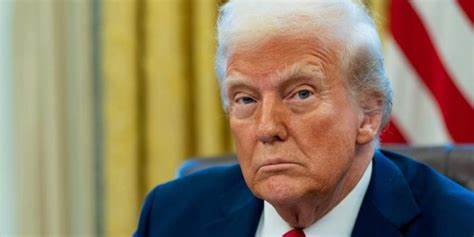
Greer said President Donald Trump believes that years of diplomatic persuasion have failed to end the problem, adding that countries benefiting from access to the American market should implement and enforce effective measures to prevent products made with forced labour from entering international commerce.
He noted that the 60 economies affected by the action account for approximately 99.4 per cent of total US imports.
Seventeen economies qualified for the lower 10 per cent tariff because they have introduced restrictions on forced-labour imports, committed to such measures through trade agreements with the United States, or adopted partial enforcement regimes.
Those countries include Argentina, Bangladesh, Cambodia, Canada, Ecuador, El Salvador, Guatemala, Honduras, India, Indonesia, Jordan, Malaysia, Mexico, Pakistan, Sri Lanka, Trinidad and Tobago, and the United Kingdom.
Meanwhile, products from the European Union, Taiwan, Japan, South Korea and Switzerland will be subject to separate tariff calculations that take existing Most-Favoured-Nation rates into account.
Nigeria joins countries such as China, Australia, Brazil, Egypt, Israel, Japan, South Africa, Saudi Arabia, Singapore, Thailand, Turkey, the United Arab Emirates and Vietnam in attracting the 12.5 per cent tariff under the new US trade policy.