
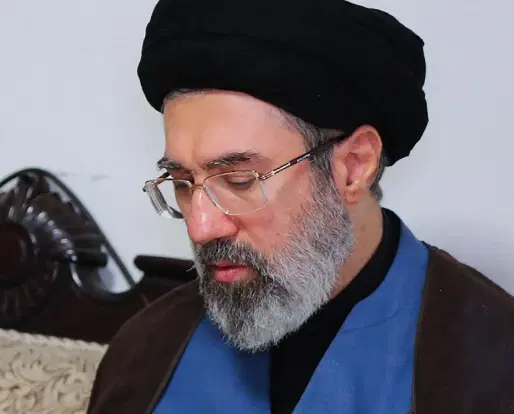
Iran’s Supreme Leader, Mojtaba Khamenei, has warned the United States that it will face “unforgettable lessons” as tensions between both countries continue to intensify following a fresh wave of military confrontations across the Middle East.
Khamenei made the remarks on Saturday after Iran launched retaliatory attacks against American-linked targets and key infrastructure in the Gulf, following days of intensified US strikes inside Iran.
In a statement broadcast on Iranian state television, Khamenei accused Washington of abandoning a preliminary agreement that had briefly raised hopes of ending the conflict.
“The ongoing attacks against our country have once again demonstrated to everyone the worthlessness of the American president’s signature,” he said.
He added, “Now that the American enemy seeks to incite war and bear its most serious consequences, it should know that the dear Iranian nation and the axis of resistance have unforgettable lessons to offer it.”
The renewed hostilities come about a month after the United States and Iran reportedly reached a preliminary agreement aimed at de-escalating tensions. However, that understanding has since collapsed, with both sides accusing each other of violating its terms.
Iran’s military retaliated by striking strategic facilities across the Gulf region. Kuwaiti authorities confirmed that an oil installation, as well as a power and water facility, were hit during the attacks. Bahrain also reported intercepting several Iranian missiles and drones aimed at its territory.
Meanwhile, the US Central Command confirmed the deaths of two American service members during Iranian missile and drone attacks in Jordan. According to the military, the personnel were killed on Friday while defending against incoming strikes, while another service member remains missing.
Senior Iranian military adviser Major General Mohsen Rezaei warned that Tehran could significantly escalate its military response if US attacks continue.
“Iran will no longer limit itself to retaliatory, like-for-like responses,” Rezaei was quoted by Iranian state media as saying, adding that the country was prepared to resume “full-scale offensive operations.”
The Iranian military also claimed responsibility for attacks targeting a US-operated air base in Bahrain and military facilities in Jordan. Iranian state television reported that fuel storage facilities at Jordan’s Al-Azraq air base were among the targets.
Jordan’s military said it successfully intercepted 10 missiles on Saturday, after shooting down several others the previous day.
In Kuwait, authorities condemned the attacks, accusing Iran of deliberately targeting civilian infrastructure. The strikes have sparked anxiety among residents, many of whom fear a prolonged conflict.
“The demand for water and canned goods has increased since this morning amid fears that services or supply chains will be affected,” Kuwait resident Hassan Rayan said.
Another resident, Ali Mahmoud, noted that public spaces had become unusually quiet.
“The streets and beaches were almost empty, even though it is a holiday,” he said.
Diplomatic efforts to revive negotiations appear to have stalled despite attempts by international mediators to bring both countries back to the negotiating table.
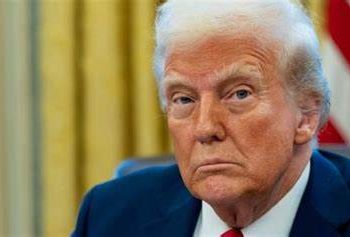
US President Donald Trump recently threatened further attacks on Iranian infrastructure, although Washington has not officially confirmed any new military operations since making the warning.
Iran’s Deputy Foreign Minister, Kazem Gharibabadi, insisted that Washington’s strategy was failing.
“America has violated and stopped all its commitments under that memorandum of understanding, and we have also stopped all our commitments,” he said. “The United States is not getting anywhere with these aggressive actions.”
Iranian officials also reported fresh casualties from recent US strikes. State news agency IRNA said three people were killed and eight others injured in Hormozgan Province. In Khuzestan Province, local authorities claimed US attacks over the past 10 days had targeted 95 locations across 12 cities, leaving at least eight people dead.
The latest exchanges mark another sharp escalation in the conflict, raising concerns that the fighting could spread further across the Gulf region and complicate already fragile diplomatic efforts.