
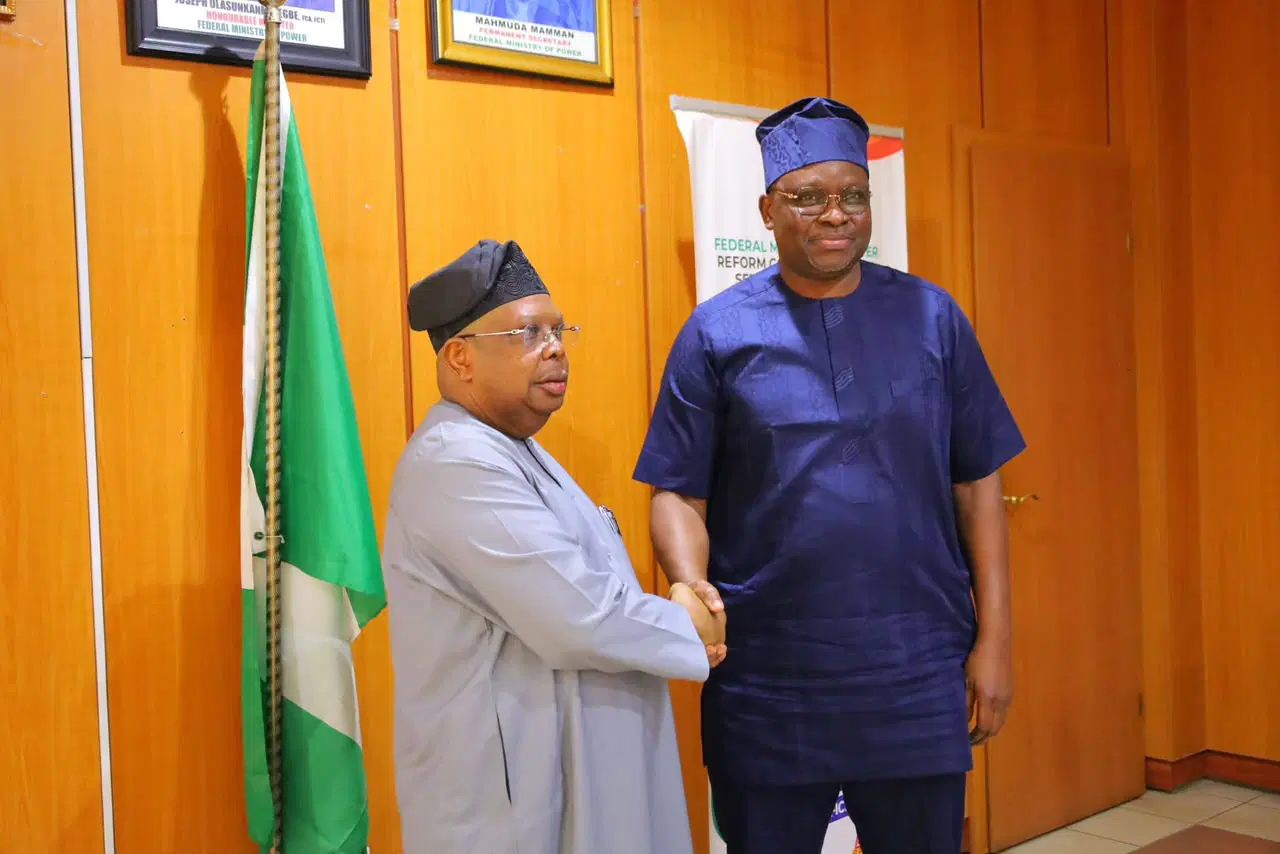
Former Governor of Ekiti State, Ayodele Fayose, has officially assumed office as the Chairman of the Governing Board of the Rural Electrification Agency (REA), pledging to work towards expanding electricity access and strengthening the agency’s programmes across Nigeria.
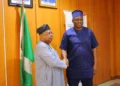
Fayose was inaugurated alongside other members of the REA governing board by the Minister of Power, Joseph Tegbe, during a ceremony held in Abuja.
Other board members inaugurated included Alhaji Ahmadu Abubakar, Mr Ilyasu Makinta, and three additional members serving as non-executive directors. Mr Abba Aliyu also formally assumed office as the Managing Director of the REA.
The inauguration was disclosed in a statement issued on Friday by Lere Olayinka, media aide to the Minister of the Federal Capital Territory, Nyesom Wike.
Speaking after taking the oath of office, Fayose expressed appreciation to President Bola Tinubu for appointing him and the other board members to serve in the agency.
He said the board’s immediate priority would be to provide the necessary political support to strengthen the agency and ensure that its programmes receive adequate funding.
“My mission in REA is to take the agency to greater heights by providing the needed political will,” Fayose said.
He added that the agency had already begun engaging relevant stakeholders to accelerate its activities.
“Work has started in earnest; we are reaching out very fast and appealing to people to ensure the work is done,” he stated.
The former governor assured Nigerians that the new board would work diligently to justify the confidence reposed in it by the President.
“I want to use this window to assure Nigerians that your expectation about my appointment and my colleagues will not be dashed. We will give our best to achieve the Renewed Hope of President Tinubu for the country to be better for us all,” he said.
Fayose noted that many of the problems affecting Nigeria’s electricity sector are most visible at the grassroots level, stressing that the responsibility of the REA extends beyond simply supplying power.
According to him, the agency must ensure that rural communities and underserved populations experience the tangible benefits of improved energy access.
“The assignment given to us is beyond providing electricity but also looking at the population of the country who need to feel the impact of the energy,” he said.
“When this happens, the people will forever be indebted to the agency.”
The Rural Electrification Agency is responsible for expanding electricity access to rural and underserved communities through grid extension, mini-grid development and other alternative energy solutions.
Fayose’s appointment is expected to bring additional political visibility to the agency as it pursues programmes aimed at increasing electricity access, supporting rural development and improving energy availability for communities across the country.