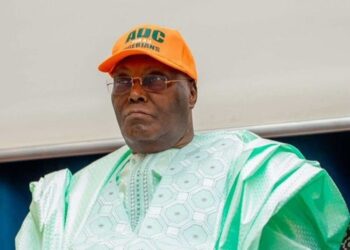

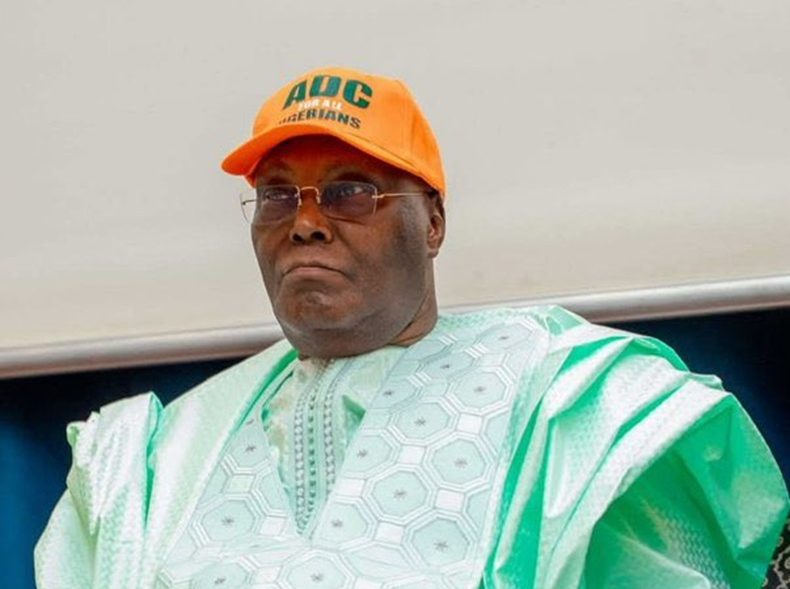
Former Vice-President Atiku Abubakar has accused the leadership of the Department of State Services (DSS) of allegedly recruiting protesters to disrupt the African Democratic Congress (ADC) campaign rally in Sokoto State.
Atiku, who is the ADC’s presidential candidate for the 2027 general election, alleged that the planned protest was intended to create tension and give the state government an excuse to impose a curfew, thereby preventing the opposition party from holding its rally.
He made the allegations on Tuesday during a press briefing in Abuja.
The former Vice-President also accused the Sokoto State Government of deliberately frustrating the party’s campaign preparations by denying it access to public facilities and withholding necessary logistical support.
According to him, the alleged actions were part of a broader attempt to restrict opposition activities and undermine a level playing field ahead of the 2027 elections.
“More disturbing still, the information available to us is that the leadership of the Department of State Services is recruiting people to stage protests in Sokoto,” Atiku alleged.
He further claimed that some of the protesters had assembled at an office behind Zenith Bank on Koko Road, from where trucks were allegedly deployed to strategic locations, including a roundabout.
Atiku alleged that the protesters were obstructing traffic, threatening commuters and assaulting some residents.
Describing the alleged involvement of security officials in the planned demonstration as an abuse of authority, he said, “This is not intelligence work. It is political interference dressed in official uniform.”
The ADC presidential candidate called on security operatives allegedly involved in the mobilisation to withdraw, insisting that security agencies had a responsibility to protect citizens and uphold the law rather than interfere in political activities.
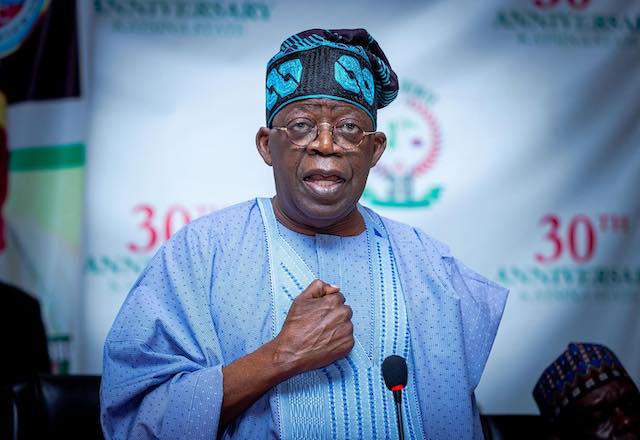
He also accused President Bola Tinubu’s administration of using intimidation and political pressure to weaken opposition parties and encourage opposition politicians to defect to the ruling All Progressives Congress (APC).
Atiku warned that such alleged actions could push Nigeria towards a one-party system and undermine democratic competition.
He urged the Federal Government to prioritise the economic challenges confronting Nigerians instead of creating obstacles for opposition parties.
The former Vice-President identified the rising costs of food, transportation, fuel and electricity as some of the major difficulties facing households.
He promised that an ADC-led administration would focus on boosting local production, improving food security, creating employment opportunities and reducing the cost of doing business.
He also proposed introducing targeted production subsidies linked to locally refined fuel as part of measures to ease the burden on consumers and support domestic industries.
Atiku further accused the APC of resorting to intimidation following what he described as the ruling party’s poor performance at its recent rally in Kaduna.
Despite the alleged attempts to frustrate its activities, he maintained that the ADC would not abandon its campaign plans.
“The ADC will resist every gimmick, administrative roadblock and underhand manoeuvre designed to exclude the opposition or impose a one-party reality on Nigeria,” he declared.
Atiku confirmed that he would travel to Sokoto on Wednesday to address party supporters, urging residents to remain peaceful and avoid actions capable of triggering violence.
He also called on security agencies to provide adequate protection for residents, commuters and participants at the rally without showing preference for any political party.
The former Vice-President warned that security personnel found to have participated in efforts to suppress legitimate political activities would be held accountable under the law.
He, however, commended officers who refused to allow themselves to be used against democratic activities.
Describing the 2027 general election as a critical moment for Nigeria’s democracy, Atiku said the outcome would determine the country’s political direction and the future of democratic participation.
“The 2027 general election will be a defining moment in our democratic history. This is more than a contest between parties or candidates. It is a choice between a government that has shown indifference to people’s suffering and Nigerians who have endured enough and want their votes to count,” he said.