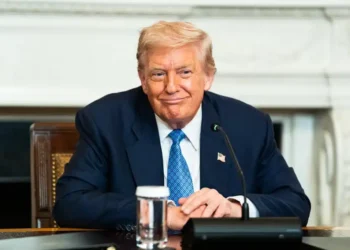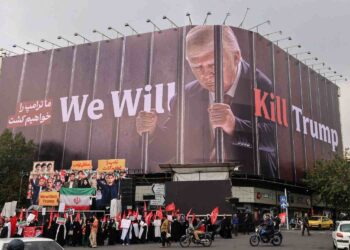

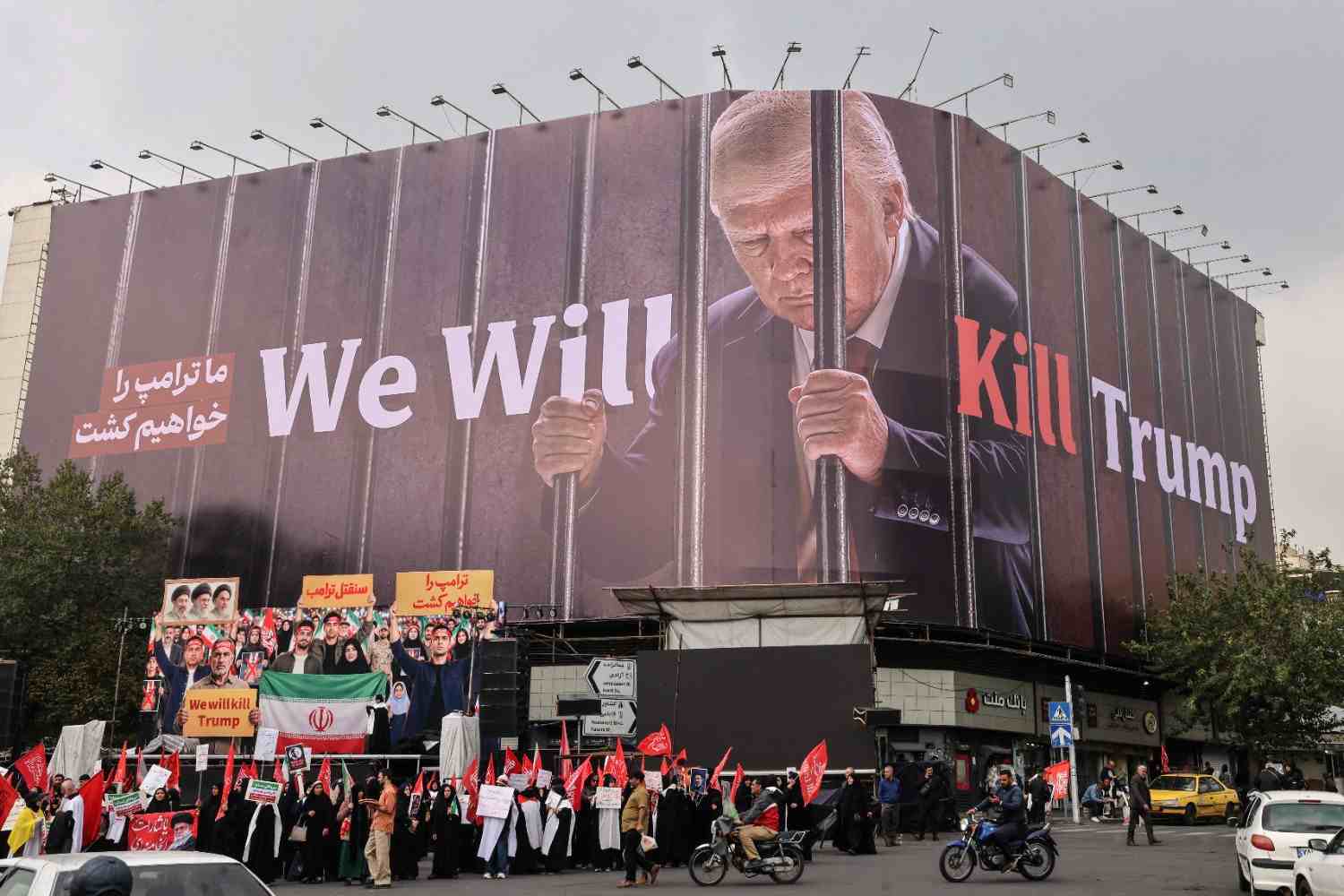
Iran has unveiled a provocative billboard in its capital, Tehran, depicting United States President Donald Trump behind bars and carrying a threatening message directed at the American leader.
The billboard, displayed at Enghelab Square on Tuesday, showed Trump with his head bowed inside a prison cell, alongside a message threatening to kill him.
Similar banners and anti-Trump displays have also appeared across Tehran, reflecting the growing hostility towards the US president since the outbreak of the war on February 28.
The latest displays emerged as diplomatic efforts intensify to bring Washington and Tehran back to negotiations and prevent further escalation of the conflict, which has spread across the region and contributed to rising global prices.
The war began with joint US-Israeli strikes that killed Iran’s Supreme Leader, Ayatollah Ali Khamenei.
Trump has indicated that a diplomatic breakthrough remains possible, saying an agreement with Iran “could happen”.
However, the conflict has become a political issue in the United States ahead of Tuesday’s crucial midterm elections, with the war reportedly contributing to voter dissatisfaction.
In another anti-Trump display at Tajrish Square in northern Tehran, an outdoor exhibition featured several paintings criticising the US president, including images portraying him injured and humiliated.
One of the paintings showed a bomb covering Trump’s face, apparently referencing Belgian surrealist artist René Magritte’s 1964 artwork, The Son of Man.
A life-sized replica of a prison cell was also displayed at the location, with an actor dressed as Trump reportedly spending the day inside. A nearby screen showed images of destruction allegedly caused by American strikes on Iran.
Iran has accused Trump of deliberately ordering attacks on civilian locations, including a school and a wedding ceremony, which it says resulted in dozens of deaths, including women and children. The allegations have not been independently established in the report.
Public billboards and murals have long served as instruments of political messaging in Iran, particularly since the 1979 Islamic Revolution.
They are frequently used to commemorate allies, honour military figures and communicate the country’s political positions, especially regarding the United States and Israel.