
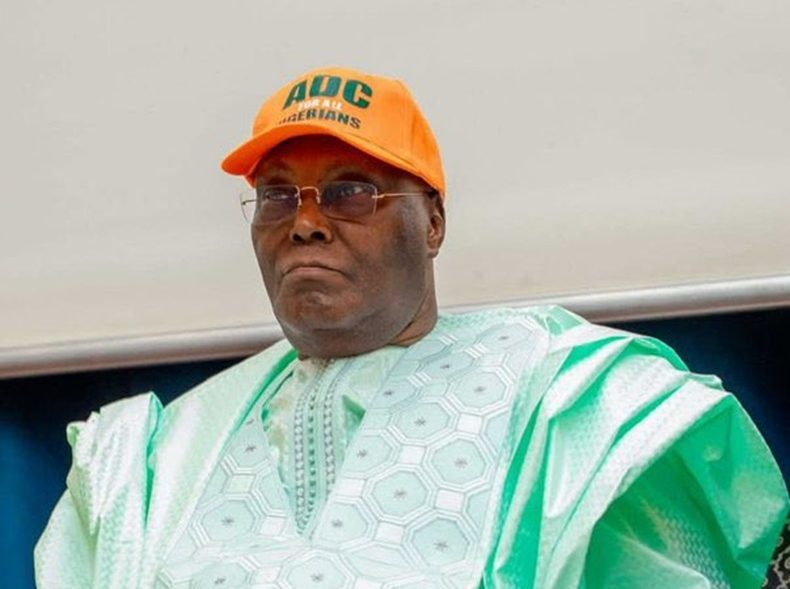
Presidential candidate of the African Democratic Congress (ADC), Atiku Abubakar, has called for the identities of government officials allegedly connected to the Presidential Foreign Intervention Promotion Council (PFIPC) scandal to be made public, arguing that the interim report of the Independent Corrupt Practices and Other Related Offences Commission (ICPC) failed to answer critical questions.
In a statement issued by his Senior Special Assistant on Public Communication, Phrank Shaibu, Atiku said the Presidency could not present the ICPC’s interim findings as a complete clearance when the report reportedly pointed to negligence and possible connivance within government institutions.
The former Vice President questioned how the alleged operation could have functioned without assistance from individuals within the government.
“If there was connivance, who connived? If public officers were negligent, who are they? Who granted access to government offices? Who recognised this supposed Director-General? Who enabled him to operate within the machinery of government?” Atiku asked.
According to him, the allegations surrounding the PFIPC were too extensive to be blamed on a single individual without identifying those who may have facilitated the activities.
Atiku referred to reports that the central figure in the controversy, Adeniyi Adeyemi, allegedly forged a presidential appointment letter and operated a non-existent federal agency.
He also noted allegations that offices and instruments associated with the former Presidential Economic Advisory Council were used, that bank accounts were opened with forged documents, and that two additional fictitious agencies were created.
The ADC candidate said those claims made it necessary to identify any public officials who may have played a role in enabling the alleged fraud.
“A fake agency does not walk into government offices by itself. A forged appointment letter does not validate itself. Bank accounts do not open themselves,” he said.
“Behind every door that opened, every process that was bypassed and every official instrument that was accessed was a human being. Name them.”
Atiku accused the interim report of shielding the identities of officials allegedly connected to the operation.
“What the ICPC Interim Report has done, in the main, is to shield the identities of shadow operatives within the Presidency who allegedly connived to enable the fraud,” he stated.
“Their identities should be made public, and their roles fully explained. Nigerians deserve to know who did what, who authorised what, and who opened the doors that made this possible.”
He argued that an interim report should not be treated as a final declaration exonerating government institutions while investigations into alleged collaborators and related bank accounts were still ongoing.
Calls For Televised National Assembly Investigation
Atiku also urged the National Assembly to conduct an open and live-broadcast public hearing into the scandal, saying Adeyemi should be allowed to testify publicly under oath if he was willing to do so.
“The Presidency now has nowhere left to hide. If Mr Adeyemi is prepared to appear publicly, testify under oath and answer questions before Nigerians, then let him be heard,” he said.
“The National Assembly should immediately institute an open, live-broadcast public hearing into this scandal.”
The former Vice President maintained that a transparent process would help restore public confidence and remove suspicions that influential individuals were being protected.
“If the Villa is truly clean, it should be the first to welcome live television coverage. Let Nigerians watch, unedited, as the witnesses testify and the evidence is presented under oath. What is the Presidency afraid of?” he asked.
Atiku further demanded the publication of the full ICPC report, including the names of any public officers found culpable of negligence or misconduct.
According to him, transparency must extend to everyone involved, regardless of their position in government.
“Transparency cannot stop where the trail enters the corridors of power. The Presidency cannot investigate itself into innocence,” he said.
“Open the investigation. Put the witnesses under oath. Switch on the cameras. Let Nigerians hear the truth for themselves.”
The PFIPC controversy has generated significant public attention following allegations that a fictitious federal agency was created and used to conduct activities within government circles. Investigations by the ICPC are still ongoing, while opposition figures continue to press for fuller disclosure of the findings and the identities of any officials implicated in the case.