
The Petroleum Products Retail Outlets Owners Association of Nigeria (PETROAN) has urged the Federal Government to allocate at least 30 per cent of petrol supplied under its discounted fuel initiative to independent marketers.
The association said the move would expand access to cheaper petrol, ease congestion at Nigerian National Petroleum Company Limited (NNPCL) filling stations and improve distribution across the country.
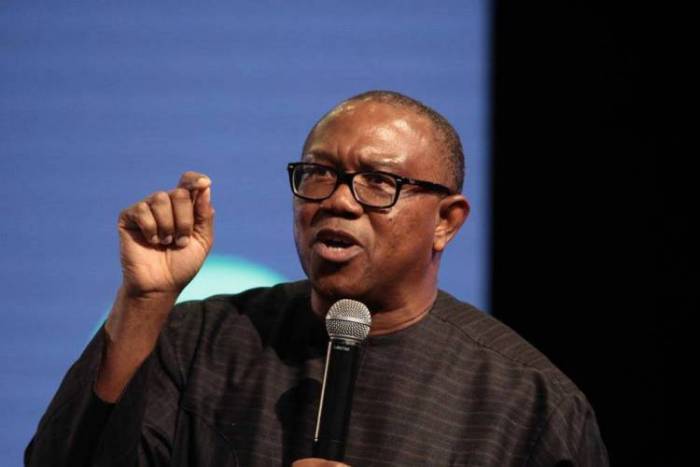
PETROAN National President, Billy Gillis-Harry, made the appeal during an interview with Arise News, explaining that the NNPC’s retail network alone might not be sufficient to serve the country’s large population efficiently.
He stressed that independent marketers could help extend the initiative to communities where NNPC-owned stations are limited.
“The 30% we mentioned is actually a minimum, because we could do more depending on the dynamics NNPC sees on how we can work together,” Gillis-Harry said.
He noted that millions of Nigerians depend on petroleum products to support their daily activities and businesses, making widespread availability and affordability essential.
“The number of NNPC retail outlets, as good as they are, may not be able to do the entire work in an efficient and expeditious manner,” he added.
According to the PETROAN president, independent marketers need access to the discounted product to compete with NNPC stations without selling at prices that would make their businesses unsustainable.
He explained that NNPC could reduce its profit margin under the initiative, while independent operators had less financial capacity to absorb similar losses.
“We don’t have the deep pockets of NNPC to forego profits. The reason is simple: if we have the product already well-discounted landing at our outlets, we can sell at a much cheaper price than if we buy from other sources,” he said.
Gillis-Harry clarified that the association was not requesting free petrol from the national oil company. Rather, it wants to purchase the discounted product and distribute it through its members’ filling stations nationwide.
“We’d just be an extension of NNPC’s efforts, just doing what NNPC is doing. That way, we are able to carry this same product down to the nooks and crannies of Nigeria,” he stated.
He illustrated the proposal by saying that if the NNPC had one billion litres available for the scheme, PETROAN would want at least 300 million litres allocated to its members.
“We will pay NNPC for the product; they don’t give us product for free. Our proposal is simply: if you have 1 billion litres to supply through this method, give us 30% (300 million litres), which we can extend to our members without making it much more expensive,” he said.
Gillis-Harry said involving more filling stations would help distribute demand more evenly and reduce long queues at NNPC outlets, where motorists might otherwise gather to access the discounted petrol.
“We understand the need and dynamics of servicing Nigerians with those two critical points: availability and affordability. This will not be any different,” he said.
He disclosed that PETROAN had submitted its proposal to the government and was awaiting a response, expressing hope that the arrangement would be approved.
The association’s president also rejected suggestions that the discounted petrol initiative represented a return to fuel subsidy.
He explained that a subsidy typically involves the government paying the difference between the cost of bringing petrol into the country and the price at which it is sold to consumers.
“No, I do not agree that subsidy is returning. When we say PMS is subsidized, it means landing cost, just as an example, is ₦1,350 and the government takes the shock of ₦700. That is a subsidy,” he said.
According to him, the current arrangement involves the NNPC reducing its profit margin rather than the government directly paying the difference in price. He said the company was expected to offer a discount of ₦16 from its profit.
Gillis-Harry also raised concerns about a proposal to set a ceiling of ₦1,350 per litre for petrol landing costs, arguing that fixing a predetermined figure could become problematic if international or market conditions caused prices to fall.
“Our reaction is that it will be difficult to pre-determine what the landing cost will be. The moment we start working towards that, it takes us away from this intervention, which is supposed to just be a discount,” he said.
He questioned the rationale for maintaining such a ceiling if landing costs subsequently dropped to ₦1,250 per litre.
“We do not think that is a better policy. At the end of the day, we need the government to ensure there is support for business,” he added.
Gillis-Harry maintained that independent marketers would sell the discounted petrol at the same price as NNPC outlets if the proposal received government approval.
“It will not be any different from what NNPC is doing, because all we are doing is being an extension,” he said.
He added that PETROAN remained hopeful of a favourable response from the Federal Government.
“Yes, we are waiting, and hopefully they will respond,” he stated.