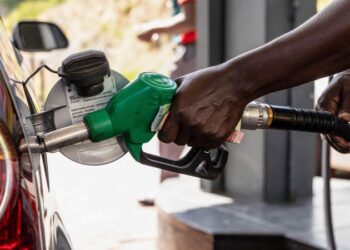

The Minister of Finance and Coordinating Minister of the Economy, Taiwo Oyedele, has clarified that the 30-day petrol discount announced by the Nigerian National Petroleum Company Limited (NNPC) Retail does not amount to a return of fuel subsidy.
Oyedele explained that the initiative was a commercial decision by NNPC Retail to reduce its profit margin temporarily, rather than a government intervention funded with public money.
The minister made the clarification in a statement on Friday, following the announcement that motorists would enjoy reduced petrol prices at NNPC filling stations for 30 days.
According to him, the discount is being financed entirely by NNPC Retail through a reduction in its profit margin, without drawing on government funds.
He said, “The cost of the discount is borne by the retailer alone,” stressing that the arrangement was different from the fuel subsidy policy abolished by the Federal Government in 2023.
Oyedele explained that a retail margin discount occurs when a company reduces or temporarily gives up part or all of its profit margin to make a product cheaper for customers.
He contrasted this with fuel subsidy, under which the government covers part of a product’s cost using public revenue to keep prices below the prevailing market rate.
The minister noted that NNPC Retail purchases petrol from the Dangote Refinery and other suppliers at market prices before adding its retail margin to determine the pump price.
He maintained that the temporary price reduction does not mean the government has resumed subsidising petrol, adding that the discounted price remains market-based.
Oyedele also distinguished the arrangement from selling government-owned crude oil below market value, which he said would constitute a subsidy because the resulting shortfall would ultimately be borne by public revenue.
The minister defended NNPC Retail’s decision to offer the discount, describing it as consistent with the company’s responsibility to promote the availability, distribution and affordability of refined petroleum products across the country.
He said NNPC Retail, a subsidiary wholly owned by NNPC Limited, had operated as a petroleum marketing and retail business for more than two decades and had historically sold petrol at prices lower than those of some competing marketers.
Oyedele added that the discount was a commercial strategy designed to provide temporary relief to households, commuters and transport operators while supporting the company’s business interests.
Addressing concerns that the reduced profit margin could affect NNPC Limited’s earnings and dividends payable to the Federation, the minister argued that higher sales volumes and increased customer loyalty could compensate for the lower earnings per litre.
He expressed optimism that the strategy could eventually boost NNPC Retail’s overall profitability and increase the dividends paid to the government.
The Federal Government removed the petrol subsidy in 2023 as part of its economic reforms, a move that led to significant increases in fuel prices and transportation costs nationwide.