
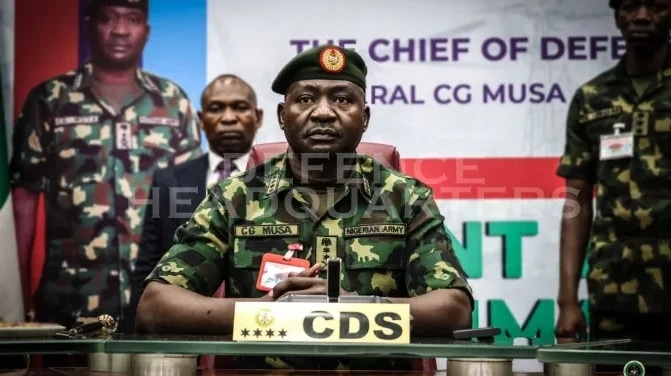
The Minister of Defence, Gen. Christopher Musa (retd.), has explained why security forces sometimes rescue kidnapped victims without arresting or killing their abductors during military operations.
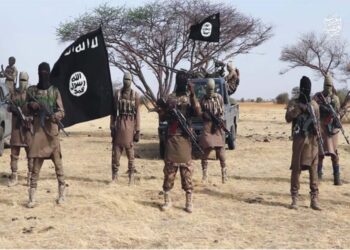
Musa said terrorists often abandon their hostages and flee when they come under pressure from troops, contrary to the belief that they would always remain in their camps and engage security forces in gun battles.
The minister made the clarification on Channels Television’s Politics Today on Thursday while discussing recent operations in which kidnapped victims were successfully rescued without reported casualties among their captors.
According to Musa, military personnel can deploy tactical manoeuvres to locate and surround criminal hideouts while restricting the movement of the terrorists.
He explained that once the abductors realise that security forces have discovered their location or that military assets are approaching, they may abandon their victims and escape.
“The funny thing is, the terrorists too don’t want to die. I hope you know that. All this one they’re doing carrying weapons, they don’t want to die,” Musa said.
He added that the sight or presence of military equipment, including drones, could cause the criminals to scatter, creating an opportunity for troops to rescue the hostages without engaging in a firefight that could put the victims at further risk.
“So once there’s anything, even if it’s a drone that comes, you see them scatter away and leave everybody. That’s what happens,” he explained.
Military Targets Terrorists’ Supply Lines
Musa, a former Chief of Defence Staff, also revealed that security forces employ strategies aimed at cutting off the resources that sustain terrorist camps.
He said once the location of a criminal group is identified, troops can block routes through which food, water, fuel and other supplies reach the camp.
The minister likened the strategy to cutting off the “oxygen” sustaining the terrorists.
“What we normally do is once we’re able to identify where they are, we block avenues for them. Like I said, take out the oxygen, they will die,” he stated.
Musa explained that disrupting the supply chain could weaken the criminals without necessarily requiring troops to launch an immediate direct assault.
“As long as people go to support, to sneak in, give them fuel, give them water, give them food, give them all this, these are the things that are making them thrive. Once they don’t have that, they can’t survive,” he said.
CBN Tracking Ransom Payments
The Defence Minister also disclosed that security agencies were paying greater attention to the financial networks connected to kidnapping and other criminal activities.
He said ransom payments and other suspicious financial transactions could provide investigators with important leads to identify and trace criminal networks.
Musa noted that the Central Bank of Nigeria (CBN) was strengthening efforts to monitor suspicious transactions and trace the movement of funds.
“I’m happy that the CBN too is living up to expectation, trying to make sure that even if we were able to trace monies that are coming in from those other areas, we can track back where they are,” he said.
Musa’s comments come amid ongoing military operations against terrorists and kidnappers, with security agencies increasingly combining intelligence gathering, tactical operations and financial tracking in efforts to dismantle criminal networks.