
Every year on July 14, France comes alive with military parades, spectacular fireworks, concerts and street celebrations as millions of people commemorate Bastille Day, the country’s national holiday that symbolizes liberty, democracy and national unity.
Known in France simply as “La Fête Nationale” or “Le 14 Juillet,” the annual celebration marks one of the most significant moments in French history and remains a powerful reminder of the values of Liberty, Equality and Fraternity that emerged from the French Revolution.
The origins of Bastille Day
Bastille Day traces its roots to July 14, 1789, when revolutionaries stormed the Bastille, a medieval fortress and prison in Paris that had become a symbol of the absolute power of the French monarchy under King Louis XVI.
Although only a handful of prisoners were being held there, the fall of the Bastille became a defining moment of the French Revolution. It demonstrated that ordinary citizens could challenge royal authority and paved the way for sweeping political and social reforms that transformed France.
A year later, on July 14, 1790, France celebrated the Fête de la Fédération, a massive national festival held at the Champ de Mars in Paris. The event brought together an estimated 300,000 people in a ceremony promoting peace, reconciliation and national unity after the early stages of the Revolution.
Why July 14 became France’s national holiday
Despite the significance of the Revolution, July 14 was not immediately adopted as France’s national holiday.
During the reign of Napoleon Bonaparte, official celebrations shifted to Saint Napoleon’s Day on August 15. Later monarchies also promoted celebrations linked to their own rulers rather than the Revolution, leaving July 14 largely unrecognised for decades.
It was not until the establishment of the Third French Republic that lawmakers sought a national day reflecting republican ideals.
On July 6, 1880, the French Parliament passed legislation declaring July 14 the country’s annual national holiday. The law, signed by President Jules Grévy, deliberately avoided specifying whether it commemorated the storming of the Bastille in 1789 or the peaceful Fête de la Fédération of 1790.
Historians say the ambiguity was intentional, allowing the date to honour both the revolutionary struggle for freedom and the spirit of national unity.
The first official Bastille Day celebration
France held its first official Bastille Day celebration on July 14, 1880, with festivities organised across the country.
One of the day’s major highlights was a grand military ceremony at the Longchamp Racecourse in Paris, where President Jules Grévy presented new regimental flags to the French Army before hundreds of thousands of spectators.
Public concerts, fireworks displays and community dances also formed part of the celebrations, traditions that continue nearly 150 years later.
Bastille Day traditions today
Modern Bastille Day celebrations blend military ceremony with public festivities.
The annual military parade along the Champs-Élysées is regarded as one of Europe’s largest and most prestigious military displays. The tradition has been held on the famous Paris avenue since 1919 to honour soldiers who fought in the First World War.
The French President reviews troops during the parade, while military aircraft perform spectacular fly-pasts featuring the colours of the French flag.
As night falls, celebrations shift to concerts, neighbourhood festivals and the famous Bal des Pompiers (Firefighters’ Ball), a uniquely French tradition that began in Paris in the 1930s and has since spread across the country.
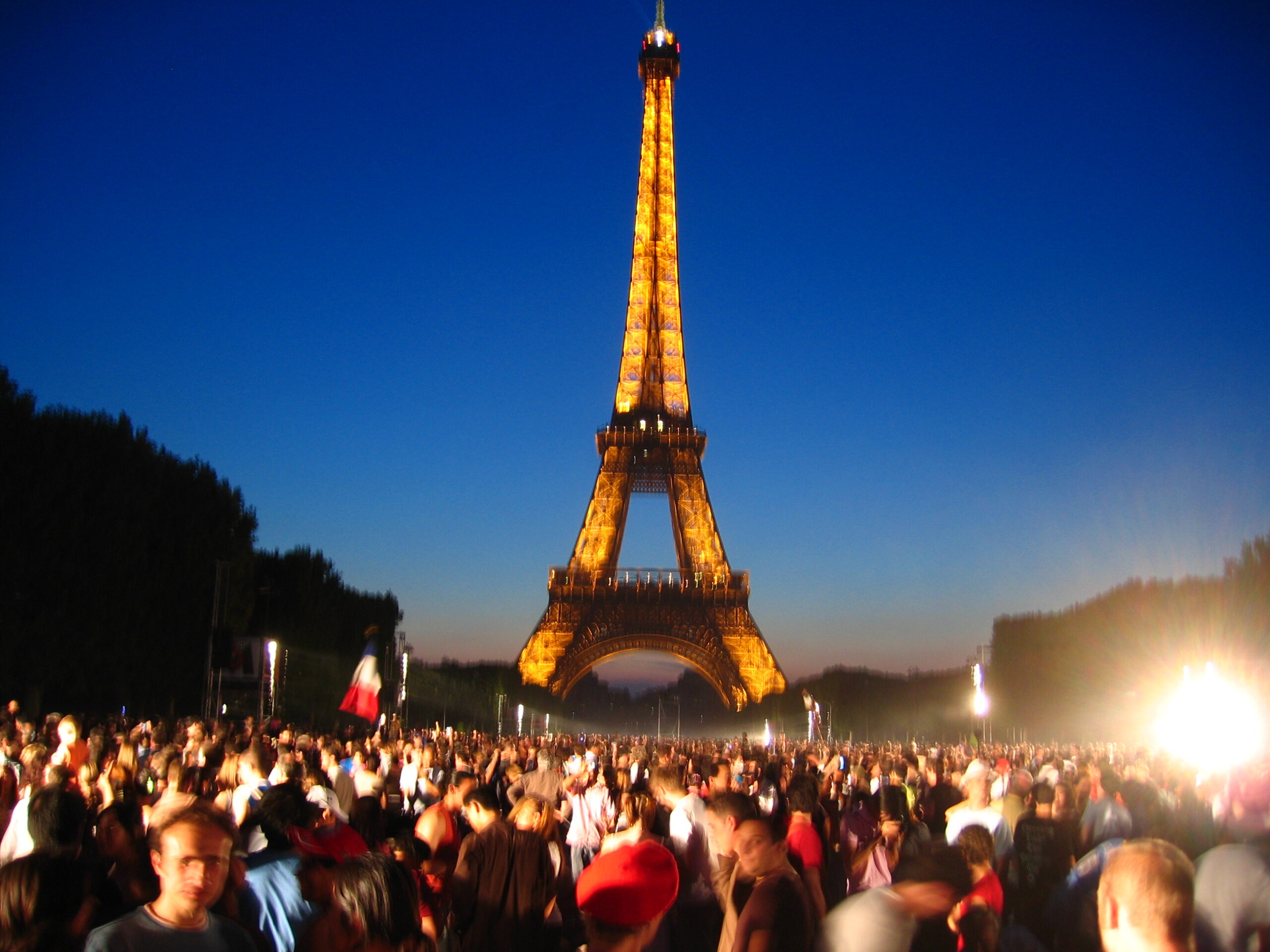
The day concludes with a spectacular fireworks display launched near the Eiffel Tower, attracting hundreds of thousands of spectators from around the world.
Bastille Day attracts global visitors
Beyond its historical significance, Bastille Day has become one of France’s biggest tourist attractions.
Visitors flock to Paris every July to witness the military parade, enjoy cultural performances, dine on the banks of the River Seine and watch the dazzling fireworks over the Eiffel Tower.
Hotels, restaurants, museums and entertainment venues often organise special events to mark the occasion, making Bastille Day one of the busiest periods in the French tourism calendar.
More than a historical anniversary
For many French citizens, Bastille Day is more than a remembrance of a revolutionary event. It represents the country’s enduring commitment to democracy, national unity and civic freedom.
More than two centuries after the storming of the Bastille, July 14 continues to unite people across France in a celebration of the nation’s history, culture and republican values while showcasing French heritage to visitors from around the world.