

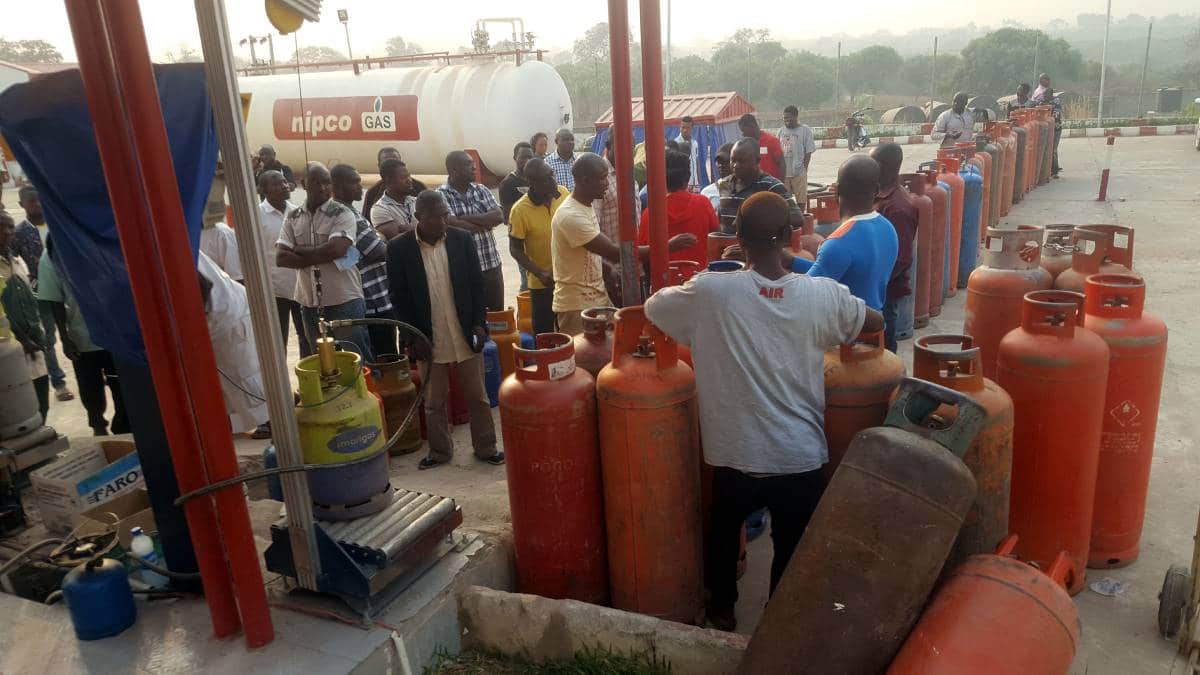
The Federal Government has stepped up efforts to address the persistent increase in cooking gas prices across Nigeria by directing the Nigerian Midstream and Downstream Petroleum Regulatory Authority (NMDPRA) to intensify engagement with industry stakeholders to enhance Liquefied Petroleum Gas (LPG) supply.
The move comes amid growing concerns from households and businesses over the rising cost of cooking gas nationwide.
Minister of State for Petroleum Resources (Gas), Ekperikpe Ekpo, disclosed the development in a statement issued on Monday through his spokesperson, Louis Ibah.
According to the minister, the government remains committed to ensuring that Nigerians have access to adequate, reliable and affordable gas supplies despite current market challenges.
Ekpo revealed that the NMDPRA has been instructed to sustain discussions with gas producers, marketers and other stakeholders to increase LPG availability and ease pressure on the domestic market.
“Marketers have committed to increasing import volumes to complement domestic production,” the statement said.
The minister also expressed optimism that additional supplies expected from Seplat Energy’s new gas facility, scheduled to commence LPG deliveries in July, would significantly improve availability across the country.
No Diversion Of Domestic LPG Supply
Addressing concerns about local gas production, Ekpo insisted that LPG volumes designated for Nigerian consumers were not being exported.
He explained that regulatory frameworks were already in place to ensure domestic demand remains the primary focus.
“The outlook for LPG supply remains positive, and the Federal Government will continue to pursue measures that enhance availability, affordability, and long-term energy security for Nigerian consumers,” the minister stated.
He added that authorities would continue monitoring market conditions and implementing interventions aimed at stabilising prices and supply levels.
Market Factors Driving Price Increase
Ekpo attributed the recent surge in cooking gas prices to several economic and operational factors rather than policy failures.
According to him, foreign exchange volatility, increasing transportation and logistics costs, infrastructure limitations, and fluctuations in global LPG prices have contributed significantly to the upward trend.
He cautioned against interpreting the current price situation as evidence of ineffective government policies.
The minister noted that the Federal Government had already prioritised domestic utilisation of locally produced LPG as part of a broader strategy to reduce import dependence and strengthen market resilience.
“This policy has already strengthened domestic supply, reduced dependence on imports, and improved market resilience,” he said.