
Nigeria’s foremost Islamic body has issued a stern warning against what it calls a dangerous and growing pattern of associating Muslims with kidnapping, banditry and violent crime, as members of the Hausa community in Ibadan simultaneously staged a street protest against ethnic stigmatisation linked to the ongoing insecurity crisis in Oyo State.
The Nigerian Supreme Council for Islamic Affairs made its position known in a Democracy Day statement signed by its spokesperson, Abbas Jimoh, describing recent attempts to paint Nigerian Muslims as criminals as not only false and misleading, but capable of fracturing the national unity needed to confront insecurity.
“The Nigerian Supreme Council for Islamic Affairs is deeply concerned about attempts to portray Nigerian Muslims as perpetrators of kidnapping, banditry and other violent crimes,” the council said, adding that such profiling was “false, misleading and unfair to the overwhelming majority of peace-loving Muslims who contribute to national development across all sectors.”
The NSCIA pointed specifically to the kidnapping incident in the Orire Local Government Area of Oyo State — in which 46 pupils and teachers were abducted in a coordinated attack on three schools — noting that early attempts to link the crime to a particular ethnic or religious group were subsequently proven inaccurate. The council said the episode was a cautionary tale against rushing to conclusions ahead of security investigations.
The statement called on suspects to be identified and prosecuted strictly on the basis of evidence, rather than their religion, ethnicity or state of origin. “Crime should be treated as crime,” the council maintained, “and not as the action of an entire religious or ethnic group.”
The NSCIA also directed its message at journalists, public commentators and opinion leaders, urging restraint in reporting and public statements on security matters. It warned that inflammatory narratives risked being exploited by criminals to deepen divisions among Nigerians at a time when cohesion was most needed.
While commending the Federal Government and security agencies for ongoing counterinsurgency efforts, the council called for broader cooperation among citizens, community leaders, religious institutions and security forces to restore peace across affected regions.
Hausa Residents March in Ibadan
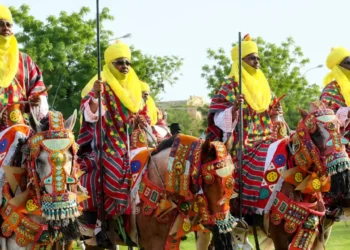
The NSCIA’s statement came as members of the Hausa community in Ibadan took to the streets on Wednesday, June 10, to protest what they described as unfair and damaging ethnic profiling in the wake of the Oriire school abductions.
The protesters insisted they were law-abiding residents who had coexisted peacefully with other communities in Ibadan and across Oyo State for generations, and that it was deeply unjust to hold an entire ethnic group responsible for the conduct of criminals.
They appealed to government authorities, security agencies and the general public to avoid language or actions capable of sowing division, and demanded that criminal responsibility be assigned to individuals rather than communities.
“Anyone found guilty of a crime should be arrested and prosecuted as an individual, not as a representative of any ethnic group,” the protesters maintained, as they called for fairness and equal treatment in the handling of the state’s security crisis.
The abduction of the Oriire schoolchildren remains one of the most high-profile kidnapping incidents in Oyo State in recent memory, and has intensified pressure on both state and federal authorities to deliver results in the fight against violent crime.