
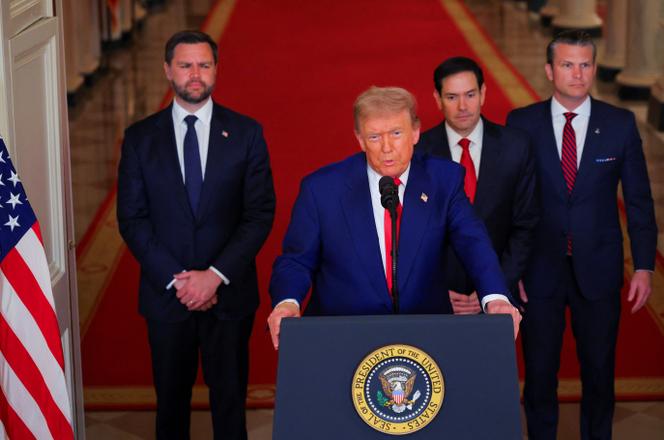
United States President Donald Trump has warned that the future of North Atlantic Treaty Organization (NATO) could be at risk if American allies fail to support Washington’s efforts to reopen the strategic Strait of Hormuz amid the ongoing tensions involving Iran.
Speaking during an interview, Trump called on allied nations to assist in securing the vital shipping corridor, arguing that many countries benefiting from oil shipments through the strait should help ensure its safety.
According to the US leader, countries such as China, France, Japan, South Korea and the United Kingdom rely heavily on Gulf oil transported through the narrow waterway and should therefore contribute to a coordinated international response.
Trump warned that failure by allies to respond positively could have serious implications for the transatlantic alliance.
“It’s only appropriate that people who are the beneficiaries of the Strait will help to make sure that nothing bad happens there,” he said, adding that a lack of support could be “very bad for the future of NATO.”
The Strait of Hormuz, located between Iran and the Arabian Peninsula, is considered one of the world’s most critical energy chokepoints, with about one-fifth of global oil shipments passing through it.
Tensions around the waterway escalated after recent military strikes by the United States and Israel on Iranian targets more than two weeks ago. In response, Tehran reportedly moved to restrict shipping activity in the area, raising fears of disruptions to global energy supplies.
The uncertainty has already rattled energy markets, with oil prices climbing sharply since the conflict intensified.
Despite urging allies to help secure the route, Trump expressed skepticism that they would respond quickly. He noted that Washington had previously supported European interests, including assistance during the war involving Ukraine.
“We have a thing called NATO,” Trump said. “We’ve been very sweet. We didn’t have to help them with Ukraine. Ukraine is thousands of miles away from us. But we helped them. Now we’ll see if they help us.”
The US president said allied nations should be prepared to deploy naval resources, including minesweepers capable of clearing sea mines in the Gulf. He also suggested that military forces might be required to neutralize threats such as drones and naval mines along Iran’s coastline.
Trump added that he expects Beijing to play a role in stabilising the situation before his planned visit to China later this month for talks with Chinese President Xi Jinping, warning that delays in addressing the crisis could affect the planned summit.
The US leader also expressed frustration over the response from the United Kingdom following a phone conversation with British Prime Minister Keir Starmer, saying London had been slow to commit naval support.
Trump further warned that the United States could launch additional strikes on Kharg Island, Iran’s main oil export hub, and potentially target other key oil infrastructure if tensions continue to escalate.
The conflict has already affected allied forces in the region. Reports indicate that a French soldier was killed in an Iranian drone strike in Iraq, while an Italian aircraft was destroyed at a military base in Kuwait.
Trump also addressed claims that Russia may be assisting Iran with satellite intelligence, saying he could not confirm the reports but acknowledged the growing complexity of global military alignments.
The escalating crisis has heightened concerns about a wider regional confrontation and the potential impact on global energy markets if shipping through the Strait of Hormuz remains disrupted.