
The Federal Government has assured Nigerians that electricity tariffs will not be increased in 2027, insisting that it is exploring alternative measures to settle outstanding debts owed to power generation companies (GenCos).
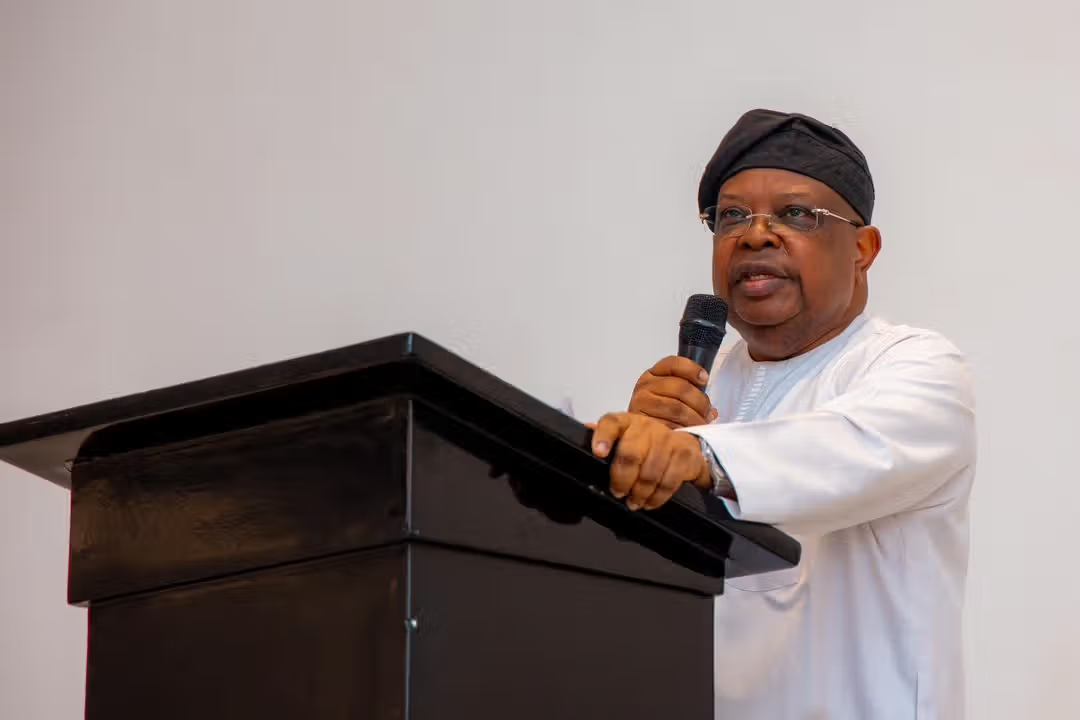
The Minister of Power, Joseph Tegbe, gave the assurance during an interview on Arise News on Monday, stating that the government’s immediate priority was to improve electricity supply and expand access to reliable power rather than increase the financial burden on consumers.
Tegbe stressed that there was no plan to raise electricity tariffs next year, dismissing concerns that the government might introduce another increase as part of efforts to address the financial challenges confronting the power sector.
“Let me make it categorically clear to Nigerians. And I’ll say it again. There’s no plan to increase tariff,” the minister declared.
He explained that the government was considering a special gas pricing arrangement for power generation companies to reduce their operating expenses without undermining the financial interests of gas suppliers.
According to him, the government is also reviewing certain assumptions and figures used in determining electricity tariffs but maintained that the exercise would not result in an increase.
“We’re looking at assumptions that have been built into the tariff model. There’s a possibility that some of those assumptions may need to be revised. But rule out tariff increase,” he said.
Speaking on the outstanding payments owed to GenCos, Tegbe disclosed that the Federal Government had so far paid ₦1.23 trillion out of the negotiated ₦3.3 trillion debt.
He expressed confidence that the remaining balance would be settled in 2027 through different financial arrangements being considered by the government.
“Today, we are paid 1.23 trillion. We’re speaking 1.23 trillion in this economy in a speed of about one and a half years. And we’re on track to finish paying the rest next year. Because we are looking at different ways to settle it,” Tegbe stated.
The minister revealed that one of the proposed arrangements involved offsetting part of the outstanding debt with government royalties and corporate income tax obligations.
He added that discussions were also ongoing with the Nigerian National Petroleum Company Limited (NNPC) on measures to reduce the cost of gas supplied to electricity generation companies.
Tegbe also addressed the controversy surrounding his earlier remark that “freezers are freezing”, which attracted criticism from Nigerians frustrated by persistent electricity shortages.
Clarifying his comment, the minister insisted that he did not intend to dismiss the difficulties faced by consumers who continue to experience poor power supply.
“I had no disregard, please. I had no disregard for the people that still have challenges with power, and that wasn’t my intention,” he explained.
He recalled making the remark after the commissioning of a 1.6-megawatt mini-grid project constructed by the Federal Government at the University of Abuja.
According to him, students at the institution had enjoyed uninterrupted electricity for the past year, while some residents in other locations had also sent him videos showing improvements in power supply.
Tegbe said his comment was a response to positive feedback from consumers who had experienced better electricity supply.
He explained that his intention was to encourage the ongoing efforts to improve the sector, adding that the government would continue working until more Nigerians enjoyed reliable electricity.
On the timeline for achieving significant improvements, the minister acknowledged that the challenges confronting Nigeria’s electricity infrastructure were more extensive than initially anticipated.
He, however, maintained that the government remained committed to addressing the problems, expressing optimism that Nigerians would begin to experience substantial improvements in electricity supply within the next three to five years.