

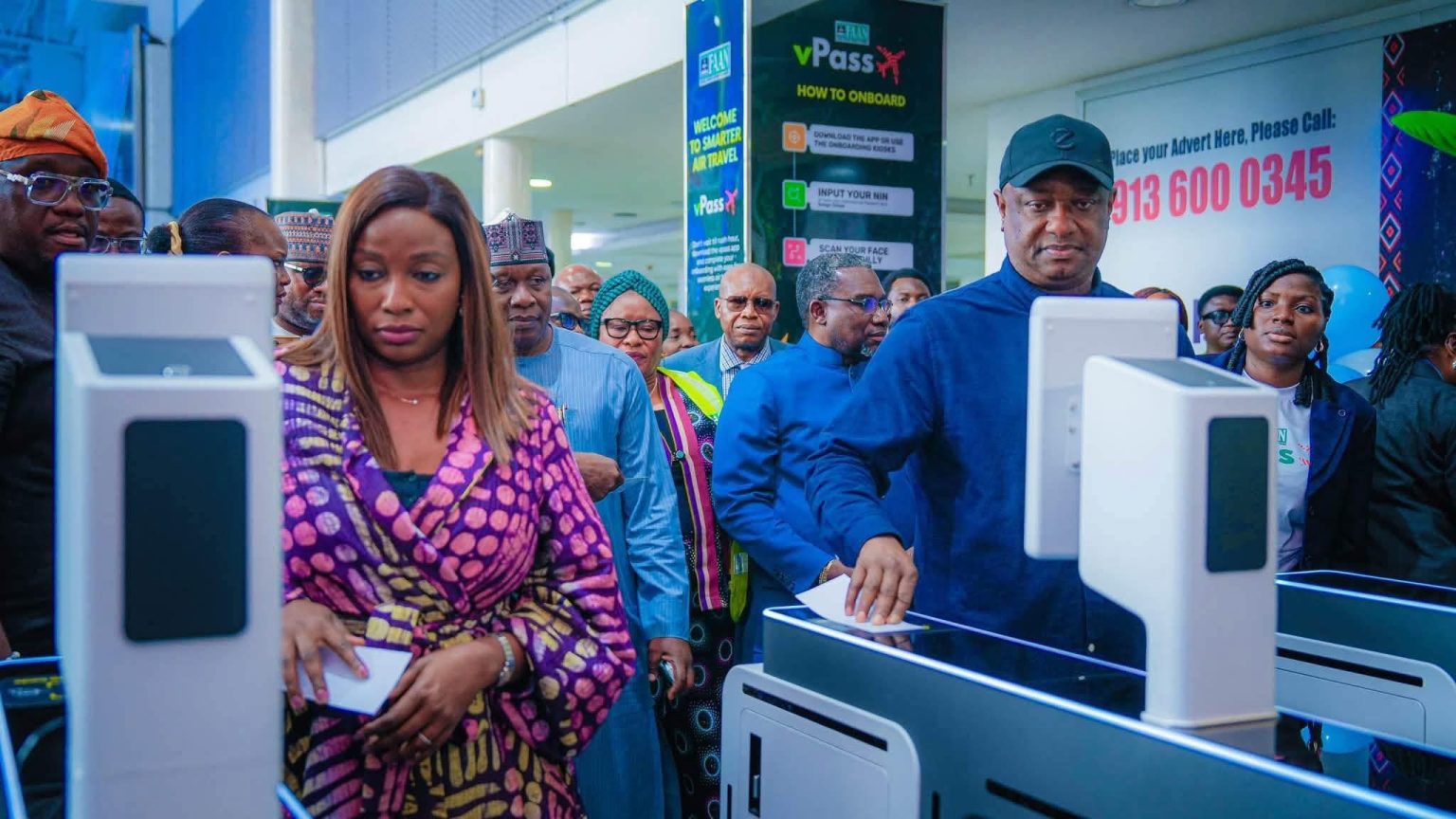
The Federal Government has introduced a new biometric passenger verification system, known as V-PASS, which will require passengers travelling on domestic flights to undergo identity checks linked to their National Identification Number (NIN).
The Minister of Aviation and Aerospace Development, Festus Keyamo, unveiled the system on Monday, November 16, 2026, at the domestic terminal of the Murtala Muhammed International Airport, Lagos.
The initiative, implemented through a Public-Private Partnership (PPP) arrangement, is aimed at strengthening airport security, tackling identity fraud and improving passenger processing across Nigeria’s domestic aviation sector.
Speaking at the unveiling, Keyamo said the introduction of V-PASS would help address persistent challenges, including impersonation, airport touting and ticket racketeering.
He explained that the platform would rely on biometric information connected to passengers’ NIN details to establish their identities before they are allowed to board their flights.
According to the minister, the system would make it increasingly difficult for individuals to travel with tickets purchased in another person’s name, while also improving the efficiency of passenger verification at airports.
Airlines Face December 31 Integration Deadline
As part of the implementation process, Keyamo directed the Nigeria Civil Aviation Authority (NCAA) to ensure that all domestic airlines integrate their operations with the V-PASS platform on or before December 31, 2026.
He warned that airlines that fail to meet the deadline would face restrictions from the beginning of the new year.
The minister stated that effective January 1, 2027, scheduled domestic airlines that have not complied with the directive would not be allowed to board passengers.
The directive is expected to compel airlines to upgrade their passenger processing systems and ensure full integration with the new biometric verification platform before the enforcement date.
Lagos, Abuja to Lead Initial Rollout
The Federal Government said the first phase of the V-PASS implementation would cover airports in Lagos and Abuja before being extended to other domestic airports across the country.
The phased rollout is expected to provide a foundation for wider adoption of the system within Nigeria’s aviation industry.
With V-PASS, the government hopes to establish a more reliable passenger identification process, reduce opportunities for fraudulent travel arrangements and strengthen security at domestic airports.
The introduction of the platform is part of broader efforts by the Federal Government to modernise the aviation sector through technology-driven solutions.
Passengers travelling within Nigeria are expected to experience changes in the airport check-in and boarding process as airlines begin integrating the new verification system.