
Public sector workers under the Joint National Public Service Negotiating Council (JNPSNC) have reaffirmed plans to embark on a three-day nationwide warning strike from Friday, October 2, 2026, if the Federal Government fails to address their demands on petrol prices, wage award and minimum wage negotiations.
The council, which comprises eight public sector unions, had issued a September 30 ultimatum to the Federal Government, urging it to take urgent action on the issues affecting workers before the deadline expires.
Among the workers’ demands is a reduction in the pump price of Premium Motor Spirit (PMS), commonly known as petrol, to ₦500 per litre.
They are also demanding an immediate wage award to cushion the impact of rising living costs and the constitution of a tripartite committee to commence negotiations for a new national minimum wage expected to take effect in 2027.
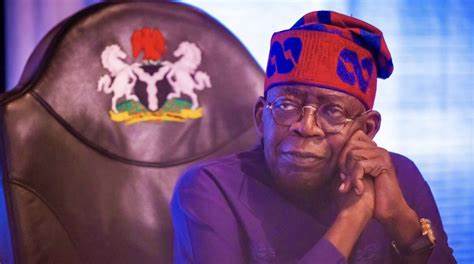
The JNPSNC had communicated its demands to President Bola Ahmed Tinubu in a letter dated September 21, including a proposal for a new minimum wage of not less than ₦500,000 from 2027.
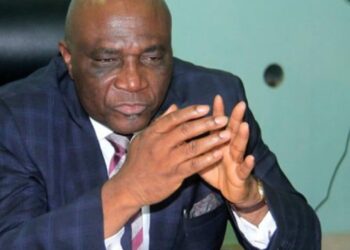
National Secretary of the council and General Secretary of the Nigeria Civil Service Union, Gbenga Olowoyo, said the September 30 deadline remained in force.
Olowoyo urged the President to use his Independence Day address to respond to the concerns raised by workers, warning that failure to do so would trigger the planned industrial action.
He said, “The three critical issues requiring urgent attention are as follows: reduction of fuel price to N500 per litre. The Federal Government should take urgent steps to bring down the price of Premium Motor Spirit (PMS) to N500 per litre.”
According to him, one way of achieving the reduction would be through government intervention to address landing costs and support operators in the oil and gas sector.
He also called on the government to ensure that crude oil is made available to the Dangote Refinery and modular refinery operators under appropriate terms to boost domestic refining and reduce the cost of petroleum products.
Olowoyo said the prevailing petrol prices, which he claimed range between ₦1,450 and ₦2,000 per litre and could reach ₦2,500 in some areas outside major cities, had placed significant pressure on Nigerian workers.
“The current price of PMS, ranging from N1,450 to N2,000 and, in some locations outside major communities and cities, as high as N2,500 per litre, is unacceptable to Nigerian workers,” he said.
The council further demanded an immediate wage award for workers, arguing that the measure would help cushion the effects of the prevailing economic difficulties.
“The Federal Government should urgently approve a wage award for Nigerian workers to cushion the effects of the prevailing harsh economic conditions being experienced by workers, their dependants, and vulnerable Nigerians,” Olowoyo stated.
He added that addressing the demand would help strengthen workers’ commitment and productivity within the public service.
On the proposed new minimum wage, the JNPSNC urged the Federal Government to immediately constitute a committee to begin negotiations, saying early action would prevent administrative delays that could affect the implementation of the new wage once negotiated and approved by the National Assembly.
The council warned that failure to address its demands by September 30 would leave its members with no option but to commence the three-day warning strike on October 2.
It stated, “Consequently, the council states that failure by the Federal Government to take the necessary steps to address these issues on or before 30th September 2026 will leave Nigerian workers with no option but to commence a three-day warning strike, with effect from Friday, 2nd October 2026, to press home their demands.”
The unions also stressed the significance of President Tinubu’s Independence Day broadcast in addressing the issues.
“It is imperative to state clearly that the Independence Day address of the President of the Federal Republic of Nigeria should adequately address these critical issues,” the council said.
The JNPSNC warned that failure to respond to the concerns could further deepen dissatisfaction among workers and other Nigerians affected by the rising cost of living.
Members of the council include the Nigerian Civil Service Union, Medical and Health Workers Union, Association of Senior Civil Servants of Nigeria, National Association of Nigerian Nurses and Midwives, Amalgamated Union of Public Corporations, Civil Service Technical and Recreational Employees, Nigeria Union of Public Service, Reportorial, Secretarial, Data Processors and Allied Workers, National Union of Printing, Publishing and Paper Products Workers, and National Union of Agriculture and Allied Employees.