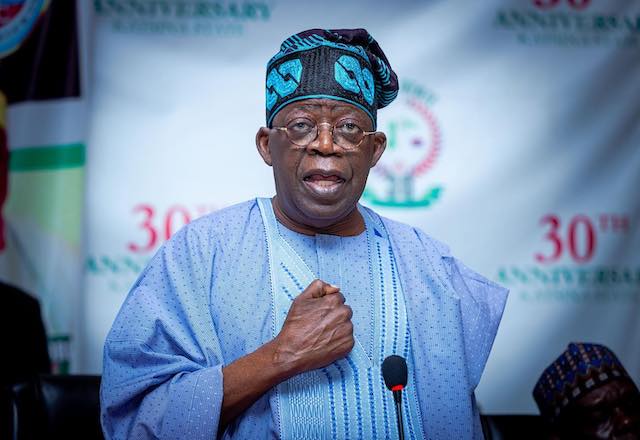


President Bola Ahmed Tinubu has signed the Presidential Executive Order on Virtual Assets Coordination, 2026, introducing a coordinated regulatory framework aimed at strengthening oversight of Nigeria’s virtual assets ecosystem while supporting innovation in the country’s growing digital economy.
The Executive Order, signed under Section 5 of the 1999 Constitution (as amended), took effect immediately, according to a statement issued on Friday by the President’s Special Adviser on Information and Strategy, Bayo Onanuga.
The new framework is designed to improve collaboration among key government agencies responsible for regulating virtual assets, addressing concerns over fragmented oversight that has left gaps in supervision and enforcement.
According to the presidency, the rapid growth of virtual assets has blurred the traditional distinctions between currencies, securities, commodities and payment systems, making a coordinated regulatory approach necessary.
The statement noted that, “with relevant agencies operating in silos, overlapping in some areas and leaving gaps in others, the country has been exposed to risks, including money laundering, terrorism financing, cybersecurity and data privacy threats, fraud, and revenue losses.”
It added that “too often, unregistered and fraudulent operators have exploited these gaps to prey on unsuspecting Nigerians, costing families their savings.”
To address these challenges, the Executive Order establishes a Virtual Asset Council, which will be chaired by the Central Bank of Nigeria (CBN), with the Nigeria Revenue Service (NRS) and the Securities and Exchange Commission (SEC) serving as vice-chairpersons.
Other members of the Council include the Nigerian Financial Intelligence Unit (NFIU) and the Office of the National Security Adviser (ONSA).
According to the statement, “the Council will provide policy direction, promote synergy among the participating agencies, and work with the Attorney-General of the Federation to develop a harmonised legal and institutional framework that aligns the sector with Nigeria’s national security, economic and social objectives.”
The Executive Order also creates a Virtual Asset Office, which will function as the Council’s operational arm. The office will have its secretariat at the Central Bank of Nigeria and will coordinate information sharing, applications and reporting among participating agencies through an integrated supervisory technology platform.
The presidency stressed that the new arrangement does not establish another regulatory agency or diminish the statutory powers of existing institutions.
It explained that “the Order does not create a new regulator or transfer powers between agencies. Each institution retains its full statutory mandate and independence, and the framework coordinates their work rather than replacing it.”
Under the new framework, regulatory responsibility will depend on the nature of the virtual asset or activity involved. Securities-related virtual asset activities will fall under the SEC, while payment, settlement, custody and other non-security virtual asset services will be supervised by the CBN. Where jurisdiction is unclear, the Virtual Asset Council will determine the appropriate regulator.
The Federal Government said the coordinated model is expected to close regulatory loopholes that have previously enabled unregistered operators to evade oversight.
As part of the implementation strategy, the Central Bank of Nigeria will launch a regulatory sandbox that will allow qualified operators to test blockchain-based products and virtual asset services in a controlled environment before they are introduced to the wider market.
According to the statement, “the sandbox will provide a controlled environment in which eligible operators can test and operate virtual asset products, services, and blockchain-based solutions under close supervision,” enabling regulators to evaluate their impact on financial stability, consumer protection, financial inclusion, market integrity and national revenue.
The presidency disclosed that the CBN will provide further details on the sandbox initiative, while the Nigeria Revenue Service will release a dedicated tax policy for the virtual assets industry.
The proposed tax framework, according to the statement, is intended to clarify the application of existing tax laws to virtual assets, improve voluntary compliance and ensure the sector contributes appropriately to government revenue.
Meanwhile, the Federal Government is also finalising a comprehensive Virtual Assets White Paper, which will outline Nigeria’s long-term policy direction and implementation strategy for the sector.
The statement further revealed that the newly inaugurated Council has been directed to produce a Harmonised Implementation Framework within 30 days to facilitate the effective execution of the Executive Order across participating agencies.