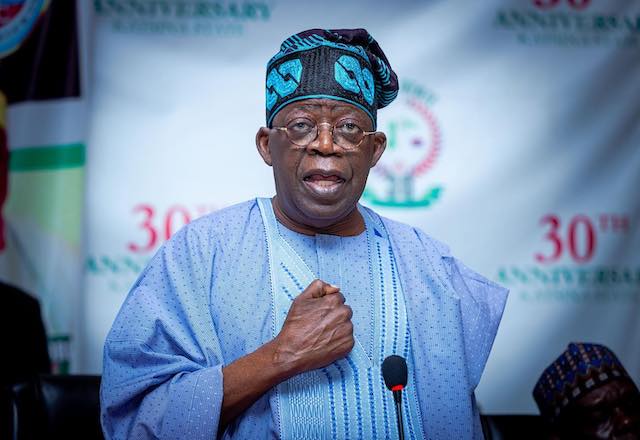


President Bola Tinubu has ordered the Federal Competition and Consumer Protection Commission (FCCPC) to investigate leading global technology companies and Generative Artificial Intelligence (GAI) platforms over allegations of anti-competitive conduct and the unauthorized use of content produced by Nigerian media organizations.
The directive followed a petition submitted to the Presidency by the Nigerian Press Organisation (NPO), a coalition comprising the Newspaper Proprietors’ Association of Nigeria (NPAN), the Nigeria Union of Journalists (NUJ), the Broadcasting Organisations of Nigeria (BON), and the Guild of Corporate Online Publishers (GCOP).
The Federal Government’s decision was communicated to the FCCPC through a letter signed by the Minister of Information and National Orientation, Mohammed Idris.
According to a statement issued on Monday, the investigation is expected to address growing concerns within Nigeria’s media industry over the impact of global digital platforms on the sustainability of local journalism and the country’s news ecosystem.
The petition accused major technology firms, including Meta, Alphabet, and X (formerly Twitter), alongside some Generative AI platforms operating in Nigeria, of engaging in practices that could undermine fair competition, weaken the commercial viability of Nigerian media organizations, and infringe on the rights of publishers and content creators.
Responding to the directive, FCCPC Executive Vice Chairman and Chief Executive Officer, Tunji Bello, said the commission would conduct a fair and evidence-driven inquiry into the allegations.
> “We recognise the strategic importance of the media to Nigeria’s democracy and the equally significant role of technology in driving innovation and economic growth. Our responsibility is to objectively determine the facts and ensure that competition within the digital ecosystem remains fair, transparent, and consistent with Nigerian law,” Bello said.
He emphasized that the investigation should not be interpreted as a finding of guilt against any of the companies named in the petition.
“This inquiry is not directed at any entity by presumption of wrongdoing. Rather, it is an opportunity to carefully examine the facts, hear from all affected parties, and determine whether any conduct has resulted in anti-competitive outcomes or unfair business practices. Every party will be accorded a fair opportunity to present relevant information before any conclusions are reached,” he added.
The commission explained that the probe will determine whether the alleged conduct breaches the Federal Competition and Consumer Protection Act 2018 or any other applicable Nigerian law.
Among the issues to be examined are claims of market dominance and anti-competitive practices, as well as allegations that copyrighted news articles, broadcast materials, and other original journalistic works have been extracted, scraped, ingested, or commercially used without authorization to develop and train Generative AI models.
The FCCPC will also investigate claims that global technology companies have failed to establish fair commercial arrangements with Nigerian media organizations, allegedly denying publishers meaningful opportunities to negotiate adequate compensation for the use of their content.
The commission recalled that it had previously taken action against Meta, securing what it described as a landmark court judgment in 2025 over violations of the FCCPC Act, including data privacy breaches. According to the statement, the court imposed a $220 million penalty on the company, although the decision is currently under appeal.
The FCCPC also cited developments in South Africa, where a similar investigation by the South African Competition Commission led to an agreement under which Google committed to compensate South African news organizations with R688 million (approximately $40 million) annually for a period of three to five years.
The commission said its investigation would be conducted independently, with all affected parties given the opportunity to present evidence before any regulatory decisions are reached.