
The Federal Government has revealed that it is engaged in active diplomatic discussions with United States authorities following President Donald Trump’s threat of military intervention over alleged Christian persecution in Nigeria.
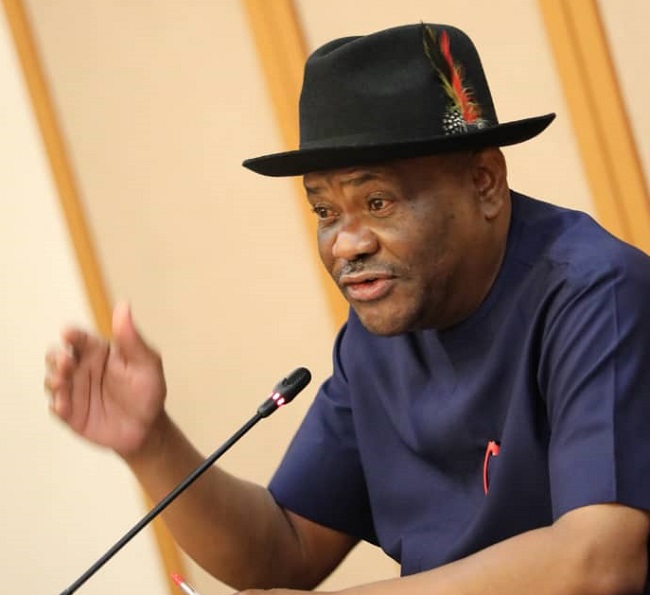
Minister of Information and National Orientation Mohammed Idris disclosed this during an interview with Sky News, expressing optimism that ongoing dialogue through diplomatic channels is helping to ease tensions between the two nations.
“Channels of communication have been opened. I can confirm that we are talking with them, and I think they are understanding the situation better. We believe that most of the information is a result of a lack of a proper understanding of the diversity and complexity of the problem we have at hand,” Idris stated.
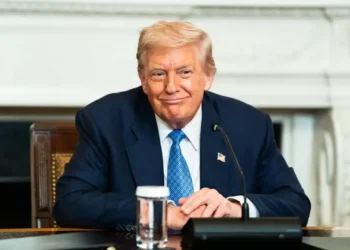
The minister’s comments represent the Nigerian government’s most detailed public explanation of its response strategy since Trump issued his unprecedented threat two weeks ago to send American forces into Nigeria “guns-a-blazing” to eliminate what he described as Islamic terrorists carrying out Christian genocide.
Idris used the international platform to challenge the narrative that has gained traction in Washington, insisting that Nigeria’s security challenges are far more complex than the simplistic religious persecution framework being applied by American officials.
He emphasized that the Nigerian government has not lost any territory to Boko Haram terrorists and pointed out that the conflict with insurgent groups does not follow the patterns of conventional warfare, making it difficult to assess using traditional military metrics.
In a significant revelation, the Information Minister alleged that a direct connection exists between proscribed separatist elements in Nigeria and lobby groups operating in the United States, which he claimed have been deliberately spreading misinformation to American authorities.
“Let me also put it out there that we are seeing a direct connection between lobbyists and a proscribed terrorist organisation in Nigeria, and we have seen how they have set up this lobby in the US, contacting high-up people in the United States to help them to lobby,” Idris said, suggesting that domestic opponents of the Nigerian government have been feeding false information to Washington.
While not naming the organization specifically, his reference to a “proscribed terrorist organisation” appears to allude to separatist groups like the Indigenous People of Biafra, which has been banned by Nigerian authorities and has advocates in the United States who have been vocal about alleged human rights abuses.
The minister stressed that the United States has historically been a partner in Nigeria’s fight against terrorism and called for a continuation of that collaborative relationship rather than confrontation. He appealed to Washington to work with Abuja to address the security challenges facing the country.
“What we are saying is that, yes, indeed, the situation is there. We have conflict in Nigeria. We have a security situation in Nigeria, but in the past, the United States government has helped Nigerian authorities to deal with this situation. So we are calling on them to partner with us once again, to help push this, and then we have peace once and for all in our country,” Idris explained.
The Information Minister expressed surprise at some of the statistics being cited by American officials to support claims of Christian genocide, suggesting that the data being used cannot withstand rigorous examination.
“Some of the assumptions are based on data that largely cannot stand any scientific scrutiny,” he said, directly challenging the figures Trump cited claiming thousands of Christians have been killed in religiously motivated attacks.
Idris called on the international community to develop a more nuanced understanding of Nigeria’s security situation rather than accepting oversimplified narratives. “We want to tell the world that this is not the case, and to appeal to them that we share the concern of people from our country. We also share the concern of the international community, including the United States, about some of these killings going on. But what we want at this point is an understanding of the diversity and the complexity of the situation,” he stated.
The minister reinforced that Nigeria’s constitution enshrines religious freedom and that the country remains fundamentally committed to its identity as a multi-faith nation where citizens of all religious backgrounds are protected equally under the law.
Trump’s October 31 redesignation of Nigeria as a “Country of Particular Concern” marked a dramatic escalation in Washington’s rhetoric toward Abuja. The American President has not only threatened military action but also warned that all United States aid and assistance to Nigeria would be immediately suspended if the alleged killings of Christians continue.
In a video address delivered on Wednesday, Trump instructed the Department of War to prepare for possible military operations, describing potential strikes as “vicious and sweet” and calling Nigeria a “disgraced country.” He has also directed members of Congress to investigate the allegations and report back to him promptly.
The brewing crisis represents the most serious bilateral dispute between Nigeria and the United States in modern history, with the threat of unilateral American military intervention raising alarm bells across Africa about Western respect for sovereignty.
Idris’s revelation that diplomatic talks are underway and showing progress offers the first indication that behind the heated public rhetoric, both governments may be seeking an off-ramp from the confrontation. However, with Trump having publicly committed to action and Nigerian authorities equally firm in rejecting the genocide allegations, finding a face-saving resolution for both sides remains a significant diplomatic challenge.
The coming weeks will test whether the diplomatic channels Idris referenced can successfully defuse the crisis or whether the unprecedented threats will give way to concrete American actions that could fundamentally reshape relations between Washington and one of Africa’s most important nations.