
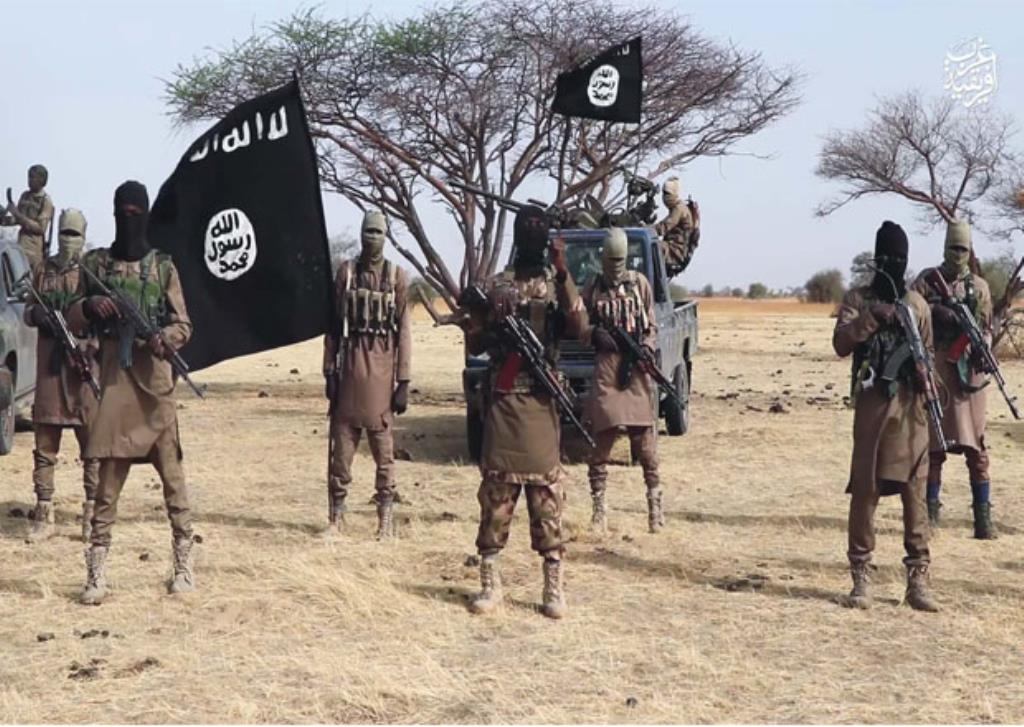
The Islamic State West Africa Province (ISWAP) has strengthened its technological capabilities, increasingly deploying armed drones, satellite communications and sophisticated international financial networks to support its operations in Nigeria, a new report has revealed.
The study, published on Thursday, November 26, by the Institute for Security Studies (ISS), disclosed that the terrorist group had adapted commercially available and civilian technologies for intelligence gathering, propaganda and military operations.
Authored by Taiwo Adebayo, the report was based on interviews with 17 informants conducted between April and September 2026. Those interviewed included former ISWAP fighters, security and intelligence officials, civilians and researchers.
According to the findings, ISWAP has moved beyond using drones primarily for surveillance and now deploys commercially available models modified to carry improvised explosives in repeated attacks on military positions in Nigeria’s North-East.
The report also identified the group’s growing relationship with the central leadership of the Islamic State, which has reportedly provided technical training, financial support and media infrastructure to strengthen its operations.
These connections, the study noted, have given ISWAP an operational advantage over its rival, Boko Haram.
ISWAP emerged from a split within Boko Haram in 2016 following disagreements over leadership and ideology.
The report further identified supply and financial networks operating through locations including Lagos, Kano and Dubai, with currency exchange operators allegedly facilitating transactions and the procurement of equipment.
Highlighting the difficulty of dismantling these networks, the report stated: “The network often intersects with legal economies, making isolation and targeting difficult for government.”
The researchers also uncovered a financial incentive system known as ghanimah, through which fighters reportedly receive payments for weapons captured during attacks on military formations and subsequently handed over to the group’s leadership.
According to the report, the arrangement provides an additional motivation for fighters beyond religious ideology.
“This points to a key motivational variable, other than ideology, for the frequent attacks on military positions,” the study stated.
The findings also reinforce concerns about the growing technological capabilities of extremist organisations operating in the region.
A separate report published in July had similarly warned that armed extremist groups in Nigeria were increasingly institutionalising the use of artificial intelligence for activities ranging from battlefield planning to explosives production.
Nigeria has battled an insurgency since 2009, with Boko Haram and ISWAP carrying out repeated attacks against military formations and civilian communities, particularly in the North-East.
Against this backdrop, the ISS researchers called on Nigerian authorities and regional security agencies to strengthen military base protection, improve counter-drone capabilities and intensify efforts to dismantle the financial and supply networks supporting terrorist operations.
They also recommended greater reliance on intelligence from former insurgents to improve security operations and understand the evolving tactics of armed groups.
The report warned, in effect, that tackling the insurgency would require more than conventional military operations, as extremist groups continue to exploit technological advancements and financial networks to expand their operational capabilities.