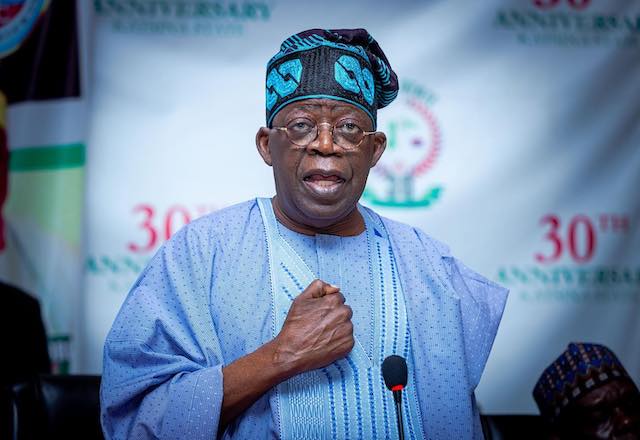

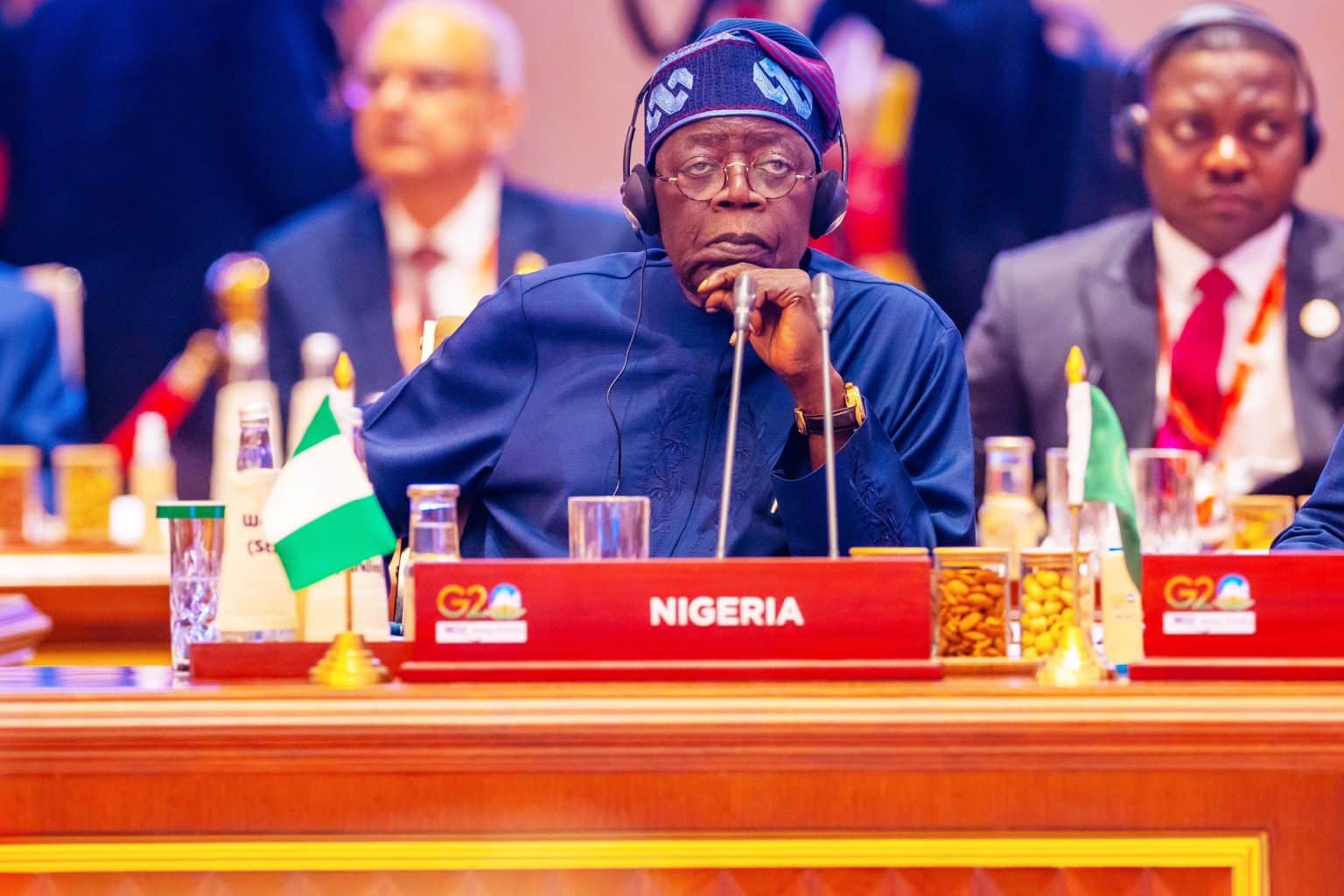
President Bola Tinubu has said Nigeria must end its dependence on imported finished products by expanding local manufacturing and positioning the country as a major production hub for the African continent.
Tinubu stated this on Wednesday at the 6th Adeola Odutola Lecture and Presidential Luncheon organised by the Manufacturers Association of Nigeria (MAN) in Lagos.
The President was represented at the event, themed “Leveraging National Industrial Policy to Position Nigeria as Africa’s Industrial Hub,” by the Minister of State for Industry, Senator John Enoh.
He said Nigeria could no longer afford to remain a consumer market for goods produced in other countries, stressing that the country had the population, resources and entrepreneurial capacity required to manufacture products for the African market.
“Nigeria will not be Africa’s warehouse, storing what others make. Nigeria will be Africa’s workshop, making what Africa needs, and sending it with pride across the continent and beyond,” Tinubu said.
The President noted that the manufacturing sector’s contribution to the nation’s Gross Domestic Product had dropped from more than 20 per cent in the early 1990s to below 10 per cent in 2024.
He said although manufacturing recorded growth of 3.29 per cent in the first quarter of 2026 and 3.24 per cent in the second quarter, the sector continued to face challenges, particularly in accessing finance and dealing with operating costs.
According to Tinubu, the Nigerian Industrial Policy introduced in February is aimed at raising manufacturing’s contribution to GDP to between 20 and 25 per cent by 2030.
He said the target would be backed by industrial financing of up to five per cent of GDP, alongside measures designed to improve the operating environment for manufacturers.
Tinubu said the government would focus on providing more reliable electricity, affordable long-term financing, fair competition, improved security along industrial corridors and stronger accountability in implementing industrial policies.
He also disclosed that the Industrial Revolution Work Group would meet with manufacturers quarterly to assess progress and address problems affecting businesses.
The President further urged Nigerian manufacturers to take advantage of the African Continental Free Trade Area, which he said provides access to a market of about 1.4 billion people with a combined GDP of approximately $3.4 trillion.
He challenged manufacturers to increase production, strengthen local supply chains, comply with export standards and invest in training young Nigerians.
“The government will clear the road. You must drive the trucks,” Tinubu told manufacturers.
Tinubu also called for an end to the practice of exporting raw materials such as cocoa, crude oil and cotton while importing finished products made from them.
He said Nigeria must instead develop the capacity to process its resources locally and export value-added products to other African countries.
“We are writing a new chapter, and we are writing it in factories,” the President declared.