

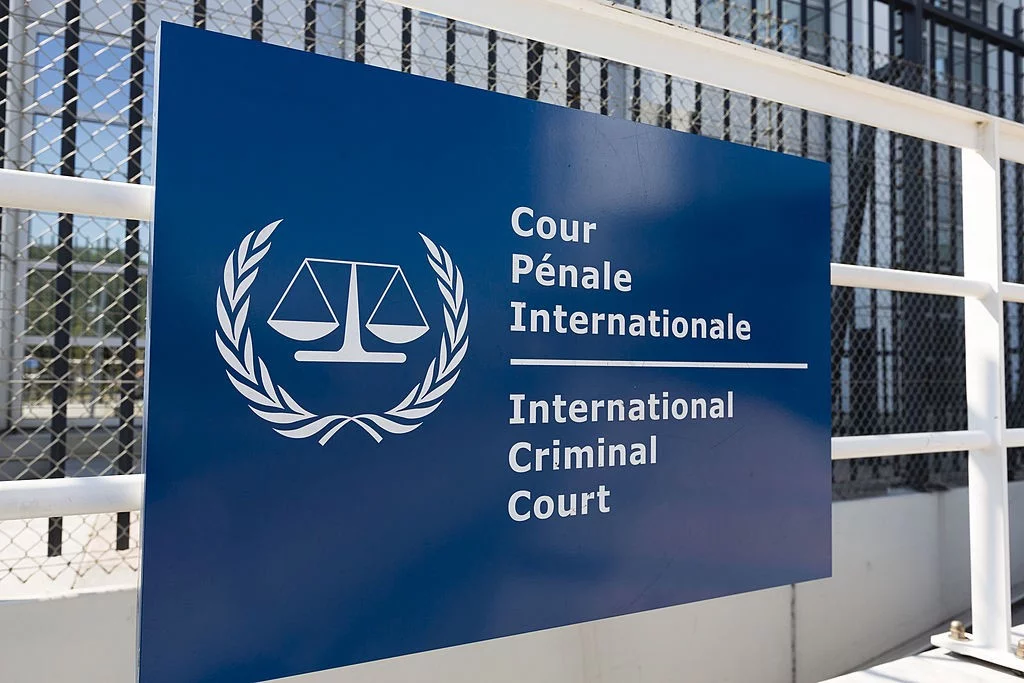
The International Criminal Court (ICC) has dismissed a petition seeking an investigation into alleged “systemic kidnappings in Nigeria as crimes against humanity.”
The petition, filed by an unidentified individual, was rejected by Pre-Trial Chamber II on September 1, 2026, after the chamber determined that it lacked a legal basis to proceed with the request.
The matter was initially forwarded by the ICC Registrar to the President of the Pre-Trial Division on August 24 before being assigned to Pre-Trial Chamber II two days later.
The petition, titled “Formal Communication Requesting Investigation into Systemic Kidnappings in Nigeria as Crimes Against Humanity,” was considered by a three-member panel led by Presiding Judge Rosario Salvatore Aitala, alongside Judges Sergio Godínez and Haykel Mahfoudh.
The decision comes amid continuing concerns over kidnapping and other security challenges across several parts of Nigeria.
However, the ICC decision has drawn a strong reaction from the Nigerian government, with the Attorney-General of the Federation and Minister of Justice, Lateef Fagbemi, questioning how the anonymous petition was admitted for consideration in the first place.
In a statement issued on Thursday, Fagbemi criticised the assignment of what he described as an unverified filing to a judicial chamber without first determining whether the court had jurisdiction over the matter or whether the complaint was frivolous.
“The Federal Government notes with serious concern that on 26th August 2026, the President of the Pre-Trial Division improperly initiated a procedural process by assigning an unverified filing from an anonymous submitter to Pre-Trial Chamber II,” Fagbemi said.
The minister argued that the ICC’s internal administrative procedures should not be used to circumvent the provisions of the Rome Statute, which established the court.
“For the avoidance of doubt, internal administrative guidelines cannot be used to bypass the strict rules established under the Rome Statute,” he stated.
Fagbemi further maintained that the authority to assess information relating to alleged crimes and determine whether an investigation should be pursued rests primarily with the ICC Prosecutor, or may arise through a referral by a state party or the United Nations Security Council.
According to the minister, neither the President of the Pre-Trial Division nor a Pre-Trial Chamber has the authority under the Rome Statute to entertain anonymous petitions or interfere with the internal security affairs of a sovereign state.
He warned that what he described as procedural shortcomings could have implications for confidence in the ICC’s judicial process and potentially affect cooperation between Nigeria and the international institution.
Despite the government’s concerns, Fagbemi stressed that the dismissal of the petition should not be interpreted as the opening of an ICC investigation against Nigeria.
He assured Nigerians that no investigation had been opened against the Federal Government or its agencies in connection with the petition.
The minister added that Nigeria would continue to safeguard its sovereignty while maintaining engagement with international institutions in accordance with applicable laws and established procedures.