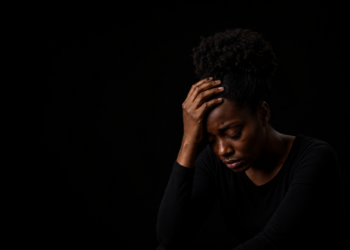

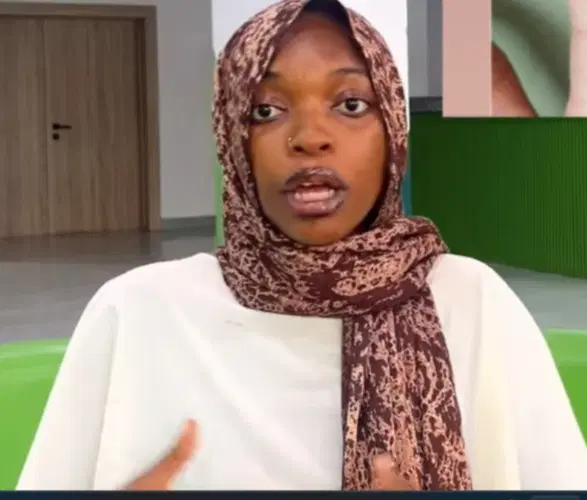
A Nigerian woman born without fingerprints has opened up about the difficulties she has faced using biometric identification systems, saying the condition has caused her significant stress during JAMB registration, the NYSC programme and banking transactions.
The woman, who identifies herself on Instagram as J for Jidds, said she first discovered she had the rare condition in 2017 while registering for her first Joint Admissions and Matriculation Board (JAMB) examination.
According to her, she spent an entire day at the registration centre with her father because officials could not successfully capture her fingerprints.
“I stayed there the whole day with my dad. I watched over 200 people register before me. It was—I cried,” she recalled.
She said officials tried several methods to make her fingerprints readable, including using sand, spirit, methylated spirit, chalk and even watermelon.
“I had to scrub my hand on a stone at a point. And then I got to register,” she said.
The difficulty, however, did not end with registration. She explained that during the examination, she sometimes managed to authenticate her fingerprint when entering the venue but struggled to do so when leaving.
She said similar challenges followed her into other aspects of her life, including the National Youth Service Corps (NYSC) programme and banking.
“Living in Nigeria without fingerprints has been terrible, honestly. From NYSC to JAMB to the bank, to any other thing that needs biometrics. I always have anxiety. It has been frustrating,” she said.
During her NYSC programme, she revealed that she had to use part of her foot for biometric verification because even the ridges on her toes were faint.
Beyond the practical challenges, she said her condition had also exposed her to hurtful misconceptions, including being labelled a ritualist by some people.
She identified her condition as adermatoglyphia, a rare disorder characterised by the absence or near-absence of the ridges that form fingerprints.
Questioning the lack of alternative arrangements for people with the condition, she said institutions that depend heavily on fingerprint biometrics should have provisions for individuals who cannot provide fingerprints.
“If they have knowledge of this issue, why is it that there’s no provision for people like us?” she asked.
Dermatologist Dr Folakemi Cole-Adeife advised people who suspect they have adermatoglyphia to seek medical confirmation and obtain proper documentation.
According to her, a consultant dermatologist at a teaching hospital can confirm the condition and provide an exemption letter that can be presented to institutions such as JAMB and other agencies requiring fingerprint authentication.
The woman’s experience has renewed attention on the need for biometric-dependent institutions to provide accessible alternatives for people living with rare conditions that prevent conventional fingerprint identification.