
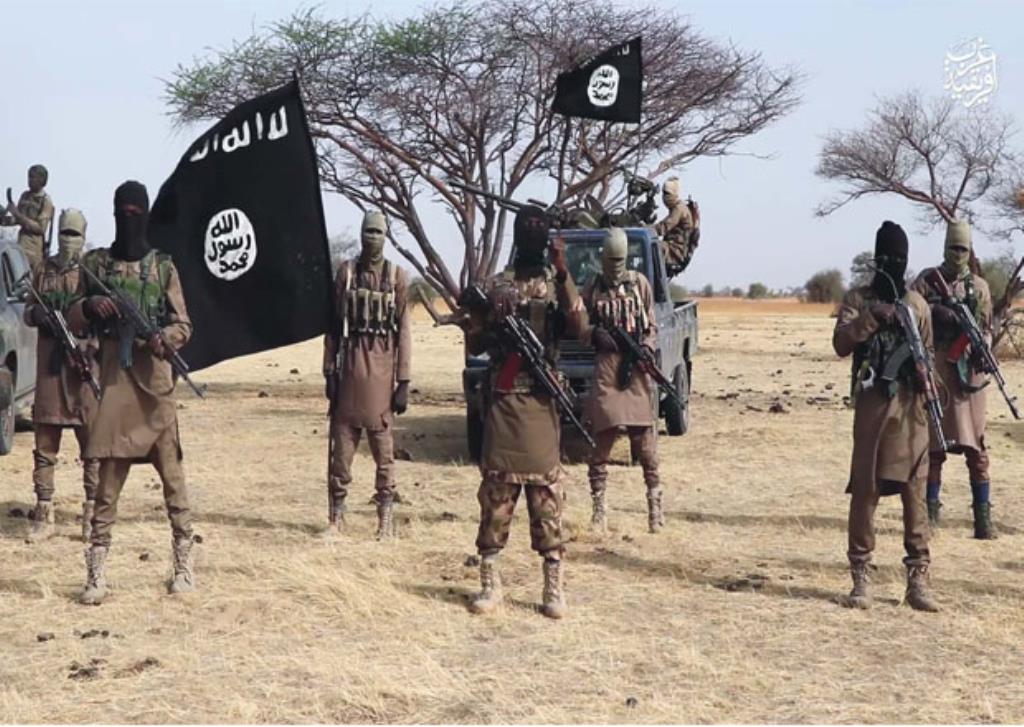
The Senate has called on the Federal Government to discontinue the rehabilitation and reintegration of former Boko Haram members, insisting that individuals involved in terrorism and banditry should instead be prosecuted in accordance with the law.
The resolution followed a motion of urgent national importance sponsored by the Chairman of the Senate Committee on Army, Senator Abdulaziz Yar’Adua, during Tuesday’s plenary, where lawmakers debated the worsening security situation across the country.
The upper chamber condemned the persistent wave of terrorism, insurgency, banditry, kidnappings and attacks on communities, describing the security crisis as increasingly complex and a serious threat to lives and national stability.
Lawmakers from across party lines expressed concern that insecurity, once largely concentrated in the North-East, has spread to virtually every region of Nigeria.
Moving the motion, Senator Yar’Adua described the recent killing of retired Major-General Rabe Abubakar as a painful reminder of the growing dangers faced by both serving and retired military personnel.
“The killing of General Abubakar and other retired officers represents not only personal tragedy but also a painful national loss demanding urgent action,” Yar’Adua said.
He warned that retired military officers have become prime targets for terrorists and kidnappers because of their operational and intelligence backgrounds, adding that attacks on security personnel weaken troop morale and embolden criminal groups.
The senator cited several incidents involving retired military officers in recent years, including the abduction of Colonel Rabiu Garba Yandoto (retd) and his two children in Zamfara in 2023, the kidnapping and killing of Major-General Richard Chukwudi Duru in Imo State despite the payment of a ransom, the murder of Brigadier-General Uwem Harold Udokwere (retd) in Abuja, the abduction of former NYSC Director-General Brigadier-General Maharazu Tsiga (retd) in Katsina, the death of retired Major Joe Ajayi while in captivity in Kogi, the rescue of Colonel Joseph Ajanaku (retd) in Plateau, and the abduction and subsequent death of Major-General Rabe Abubakar in Katsina in 2026.
The Senate observed a minute’s silence in honour of General Abubakar and all Nigerians who have lost their lives to terrorism, insurgency, banditry and kidnapping. It also resolved to send a delegation to condole with the family of the late officer, the Katsina State Government and the Nigerian Army.
During the debate, Senator Joseph Ikpea proposed an additional resolution calling for an end to the Federal Government’s de-radicalisation and reintegration programme for repentant Boko Haram members.
“My additional prayer is that the issue of insecurity has become something Nigerians are deeply concerned about. One of the issues we need to look at is the rehabilitation of Boko Haram members. My additional prayer is to stop the rehabilitation of Boko Haram,” Ikpea said.
The proposal received support from Senator Adams Oshiomhole, who argued that rehabilitating and reintegrating former insurgents sends the wrong message at a time when victims of terrorism and the families of fallen security personnel continue to suffer the consequences of violent attacks.
According to the lawmakers, the continued attacks on both serving and retired security personnel undermine public confidence in the government’s ability to protect citizens and reinforce perceptions that criminal groups are operating with increasing impunity.
The Senate’s position comes as the Nigerian Army announced that two senior terrorist commanders recently surrendered to troops of Operation Hadin Kai in Borno State, with the military stating that the suspects have provided intelligence expected to support ongoing counter-insurgency operations in the North-East.
For years, the Federal Government’s de-radicalisation and reintegration programme has been a key component of its non-kinetic strategy for tackling insurgency, with screened former fighters rehabilitated before being reintegrated into their communities. However, many senators argued that the programme has become increasingly controversial, with many Nigerians viewing it as rewarding violent offenders rather than deterring terrorism.