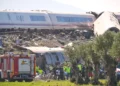

At least 64 people have been killed and about 80 others injured after two high-speed trains collided in central Spain on Wednesday, October 28, triggering a major emergency response.
Authorities in Castilla-La Mancha confirmed the rising death toll as rescue workers continued searching the wreckage for victims and survivors.
Regional president Emiliano García-Page said at least 80 people sustained injuries in the crash, which occurred in the province of Toledo.
According to Spain’s rail infrastructure operator, ADIF, the accident involved two passenger trains travelling in the same direction from Madrid towards Seville.
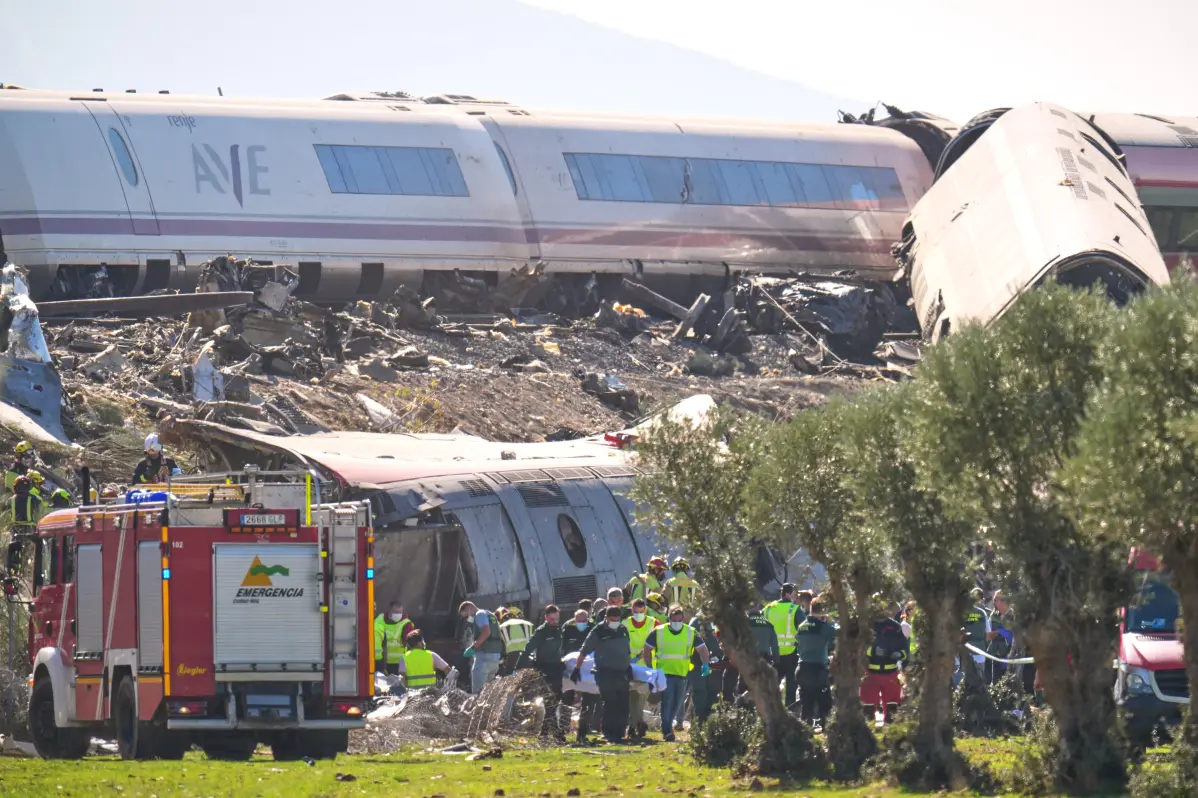
Esther Padilla, a spokesperson for the Castilla-La Mancha regional government, said a state-owned RENFE train struck the rear of a stationary train operated by private company IRYO, causing two carriages to derail.
The collision led to the suspension of rail services between Madrid, Ciudad Real and Andalusia.
The crash occurred on a relatively flat stretch of railway surrounded by olive groves between the towns of Urda and Los Yébenes. The force of the impact reportedly left one carriage severely mangled, with debris scattered down a gravel slope.
Spanish Health Minister Mónica García said emergency teams were concentrating on rescuing passengers trapped in the most damaged carriages and recovering the bodies of those killed.
“It was a high-speed impact, so we are expecting this to be a tragedy,” García said.
The RENFE train was carrying 397 passengers, while the IRYO service had 147 people on board.
Initial reports from regional officials indicated that 24 people died aboard the RENFE train and six on the IRYO service, although authorities were still working to establish the full breakdown of casualties.
A passenger on the RENFE train, Ignacio Relaño, told Spanish state broadcaster TVE that the train appeared to slow down briefly before accelerating and colliding with the other service.
“We all felt the train abruptly slowing down and then the impact,” he said.
Relaño added that the carriage tilted sharply following the collision, while passengers and their belongings were thrown around.
“The car leaned to one side like it was about to tip over. I hit my nose, everything went flying, luggage, cell phones. Everything shook,” he said.
IRYO said it had activated its emergency and security procedures and was cooperating with the relevant authorities.
Emergency personnel, including firefighters, police officers, ambulance crews and military emergency units, were deployed to the crash site. Medical helicopters were also used to support the rescue operation, while passengers who escaped without injuries were transported away from the area by bus.
Manuel Galán, the mayor of nearby Urda, said a local sports pavilion had been converted into a temporary triage centre to provide assistance to injured passengers.
Spanish Prime Minister Pedro Sánchez cancelled his official engagements to monitor developments following the disaster.
In a message posted on X, Sánchez said he was “dismayed by the serious train accident in Toledo”.
King Felipe VI and Queen Letizia also expressed their sorrow over the tragedy, offering condolences to the families of those who died and support to the injured.
European Commission President Ursula von der Leyen joined other international figures in mourning the victims, stating, “Today, Europe mourns with you.”
The tragedy also disrupted sporting activities in the country, with Spain’s football federation postponing all 24 Copa del Rey matches scheduled for Wednesday.
The latest accident is Spain’s second major rail disaster this year, following a January collision in the south of the country that killed 46 people after an IRYO train derailed and struck an approaching RENFE service.
That incident, described as Spain’s deadliest rail disaster since 2013, had already raised concerns about the safety of the country’s high-speed rail network.
Spain has one of the world’s largest high-speed railway systems, extending approximately 3,900 kilometres. The network has expanded significantly over several decades, while the opening of the passenger rail market to private operators has increased competition with state-owned RENFE.
However, the growing volume of rail traffic has prompted concerns from some railway workers about whether infrastructure maintenance has kept pace with increased usage.
Joan Rodríguez, a spokesperson for a Spanish railway workers’ union, said the impact of market liberalisation on infrastructure upkeep should be examined.
“We are not convinced that the liberalization of the high-speed passenger rail service was matched by the necessary upkeep of the lines,” Rodríguez told TVE.
He added, “I am not saying it was a determining factor, but yes, the increase in use of the network is a factor to keep in mind.”
Authorities are expected to investigate the circumstances surrounding Wednesday’s collision as rescue operations and efforts to identify the victims continue.