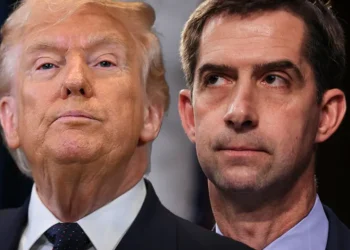

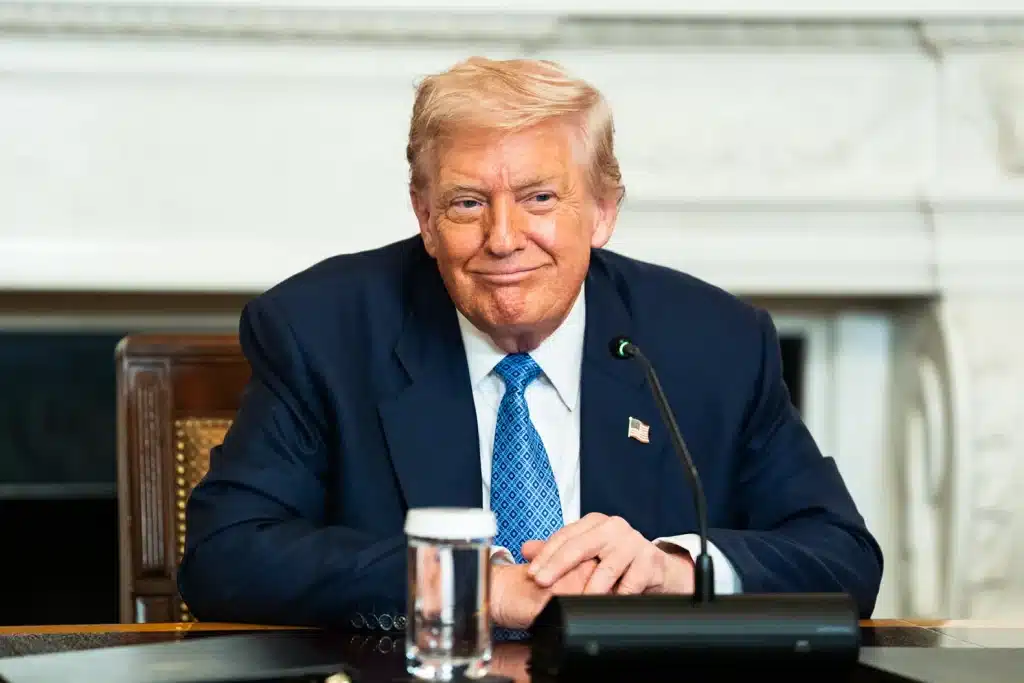
United States President Donald Trump has blamed immigration for the wave of protests and violence in France, calling on the French government to tighten its border controls and take urgent action to address the unrest.
Trump made the remarks in a post on social media, arguing that the arrival of people from different cultural backgrounds had contributed to the country’s problems.
“France is burning!” the US president wrote, linking the unrest to immigration and alleging that some newcomers had brought hostility into the country.
He added, “The immigration of people from an entirely different world, people with hatred in their hearts, has shattered that once great country.”
Trump subsequently urged French authorities to adopt stricter immigration measures, warning that failure to act could worsen the situation.
“Close your Borders and take control, before it is too late!” he declared.
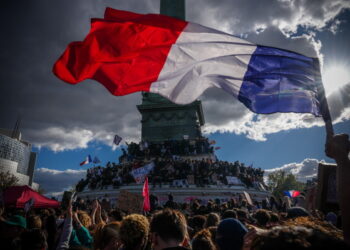
His comments came amid days of demonstrations that escalated into violent confrontations in several French cities, with public buildings attacked, businesses looted and protesters clashing with security personnel.
The unrest has placed additional pressure on President Emmanuel Macron’s administration as France approaches another presidential election cycle.
One of the most serious incidents occurred in Limoges, central France, where a fire engulfed the city’s historic town hall on Saturday. Footage cited by CNN showed the building’s spire collapsing as flames consumed parts of the 143-year-old structure.
In Marseille, individuals wearing black clothing and masks reportedly forced their way into the city hall and vandalised the premises. Lyon also witnessed violence, with the city’s tourist office reportedly set ablaze.
The incidents formed part of a wider wave of unrest that has challenged authorities in multiple urban centres.
The protest movement reportedly began last month among secondary school students in disadvantaged northern suburbs of Paris. Initial demonstrations were driven by complaints about teacher shortages and deteriorating school infrastructure before expanding into a broader expression of dissatisfaction with economic inequality, the rising cost of living and declining public services.
Although the majority of demonstrators reportedly took part in peaceful protests, some groups resorted to violence, attacking public facilities, looting shops and confronting police officers.
Luxury stores and supermarkets were among the businesses reportedly targeted as the unrest spread.
French authorities also reported attacks against law enforcement personnel, journalists and government property, prompting security agencies to intensify efforts to restore order.
Prime Minister Sébastien Lecornu condemned the destruction and accused far-left activists and criminal elements of contributing to the violence.
He also warned political groups against exploiting the demonstrations to advance their interests ahead of the next presidential election.
In a post on X, Lecornu insisted that the government would not surrender to intimidation or allow violence to determine the country’s political direction.
“To those who clearly want to use this violence as a ‘warm-up’ before the presidential election, I say clearly: We will not let ourselves be intimidated. No one will impose their political agenda through violence,” he wrote.
The French government has faced growing pressure to address the causes of the demonstrations while containing the violence and protecting public infrastructure.
Trump’s remarks have added an international political dimension to the crisis, with the US president using the unrest to reinforce his longstanding position that stricter immigration controls are necessary to protect national stability.
However, the protests described in reports have centred on a range of domestic concerns, including education, economic hardship and public services, alongside the violent incidents that have drawn condemnation from French officials.