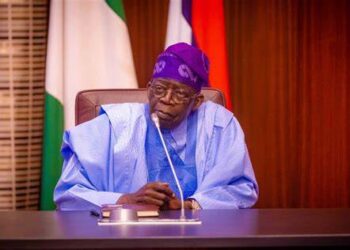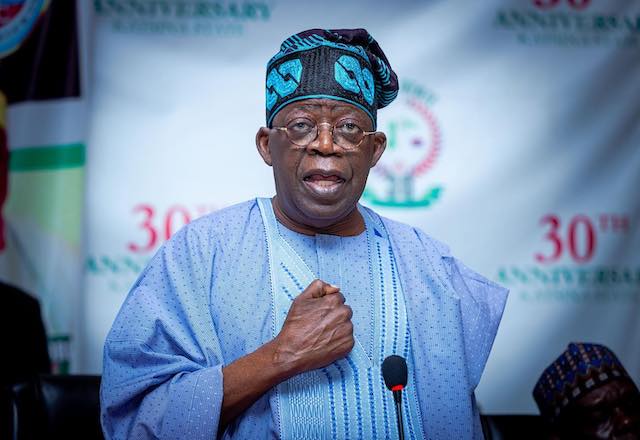

The Federal Government has ruled out restoring petrol subsidies and reintroducing multiple foreign exchange rates, insisting that the economic reforms introduced by President Bola Tinubu’s administration will remain in place.
The Minister of Finance and Coordinating Minister of the Economy, Taiwo Oyedele, stated this on Saturday while addressing concerns about the government’s economic policies ahead of the 2027 general elections.
Oyedele spoke on the sidelines of the World Bank and International Monetary Fund meetings in Bangkok, Thailand, where he responded to questions from investors, credit rating agencies and international financial institutions about the government’s commitment to its reform agenda.
According to the minister, the government had repeatedly been asked whether it intended to reverse its policies, particularly the removal of petrol subsidy and the unification of the foreign exchange market.
He said the administration had no plans to return to the previous arrangements.
“Let me be clear, this was a recurring question almost through all our engagements, but also with the rating agencies, with the investors, and the multilateral institutions,” Oyedele said.
“Every time they ask, are you reversing your plans? Are you bringing back subsidies? Let me be clear, there will be no return to fuel subsidies or multiple exchange rates,” he added.
The minister also clarified that the recent 30-day retail margin discount introduced by the Nigerian National Petroleum Company Limited (NNPC) should not be interpreted as a reversal of the government’s decision to end petrol subsidy.
According to him, the temporary measure was a commercial initiative intended to provide some relief to consumers rather than a subsidy financed with public funds.
“The recent 30-day retail margin discount is a time-bound commercial decision by the NNPC to reduce margins and support Nigerians. It is not a subsidy paid from public funds,” Oyedele explained.
The Tinubu administration introduced major economic reforms after assuming office, including the removal of petrol subsidy and changes to the foreign exchange market. The government has maintained that the measures are necessary to address structural weaknesses in the economy and improve public finances.
However, the reforms have drawn criticism from Nigerians facing rising living costs, particularly increases in the prices of food, transportation and other essential goods.
While the Federal Government has defended the policies as necessary for the country’s long-term economic stability, opposition politicians have called for alternative approaches, with some promising to restore subsidy arrangements if elected.