
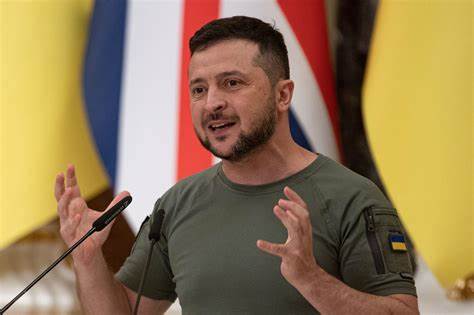
Ukrainian President Volodymyr Zelensky has rejected suggestions by his United States counterpart, Donald Trump, that Ukraine should install a new leader to end the war with Russia, insisting that the country’s leadership must be chosen by its citizens.
Zelensky, however, said Ukraine could organise national elections if Russia agreed to a comprehensive 60-day ceasefire, which would provide the necessary security conditions for the electoral process.
The Ukrainian leader made the remarks during a televised interview with ABC News on Sunday, amid renewed tensions between Kyiv and Washington over the war and US energy policy towards Moscow.
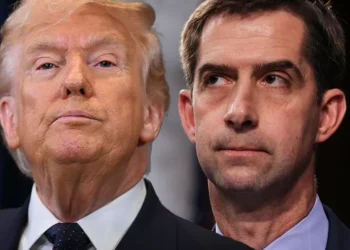
Trump had criticised Ukraine’s continued attacks on Russian oil refineries, arguing that the strikes were contributing to pressure on global energy supplies. He also suggested that Ukraine needed a different leader capable of reaching a settlement with Russia.
Responding to the comments, Zelensky maintained that decisions concerning Ukraine’s leadership rested with the Ukrainian people rather than foreign governments.
“First of all, with all respect to President Trump, it’s up to our society, up to our people to choose one or another leader,” he said.
Addressing concerns about holding elections during wartime, Zelensky disclosed that he had informed American officials that Kyiv was prepared to organise the polls if Moscow agreed to halt hostilities for two months.
“Please tell Putin give us two months, 60 days of total ceasefire, 60 days, and we will organise elections,” he said.
Ukraine has not held national elections since Russia launched its full-scale invasion in February 2022. The continuation of martial law and the security challenges created by the conflict have complicated the prospect of conducting nationwide polls.
Zelensky’s proposal places the possibility of elections on a ceasefire agreement, with Kyiv seeking assurances that Russia would suspend military operations for the duration of the electoral process.
The disagreement comes amid controversy over Washington’s decision to grant a waiver on sanctions affecting significant quantities of Russian diesel, a move intended to help ease domestic fuel costs ahead of the US midterm elections.
The decision has attracted criticism from Ukrainian officials, European allies and some members of Trump’s Republican Party, amid concerns that easing restrictions could provide Moscow with additional economic benefits while the war continues.
Despite the diplomatic tensions, Zelensky stressed that American support remained essential to Ukraine’s efforts to resist Russian aggression and bring the conflict to an end.
“To stop Putin — and I think this is the main goal, to stop him, this is the main deal, to stop this war … we count on American support,” he said.
He also expressed hope that Washington and its European partners would maintain a united position in dealing with Moscow.
“Then, and of course, we count on our European partners, and I hope that we will save this unity, Europe and the United States,” the Ukrainian president added.
Zelensky further reiterated Kyiv’s willingness to pursue measures aimed at reducing hostilities, including a proposed ceasefire covering energy infrastructure, provided Russia agreed to reciprocal arrangements.
However, he expressed doubts about Moscow’s willingness to end the war, pointing to continued attacks on Ukrainian civilian infrastructure.
“This week was very difficult for us, not only geopolitically. First of all, because of massive attacks, Russian attacks on our civilian infrastructure,” he said.
The latest exchange highlights the continuing disagreements between Washington and Kyiv over how to end the war, with Zelensky seeking sustained Western backing while maintaining that any decisions about Ukraine’s political leadership must remain in the hands of its people.