
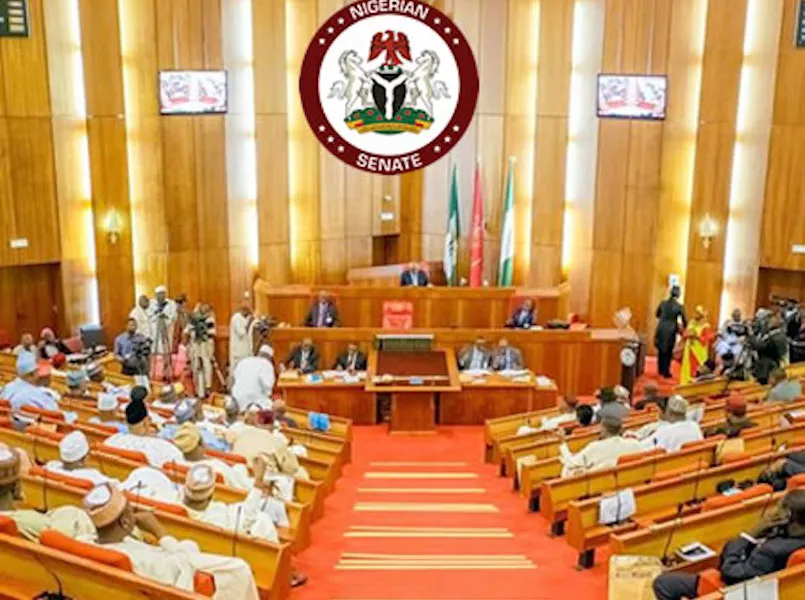
The Nigerian Senate has ruled out any review of the Electoral Act 2026 before the 2027 general elections, insisting that the legislative process has been concluded and the law is ready to guide the polls.
Senator Yemi Adaramodu, Chairman of the Senate Committee on Media and Public Affairs, said lawmakers would not introduce further amendments while political parties were preparing for the forthcoming elections.
Speaking in an interview with Punch, Adaramodu explained that the amended electoral legislation was passed specifically to regulate the conduct of the 2027 general elections.
“We have already done the electoral reform and passed that one; it is meant for the 2027 elections,” the senator said.
He noted that the National Assembly could consider reviewing the law after the elections if concerns emerged over its provisions or stakeholders called for changes.
According to him, any decision to amend the legislation would depend on whether there was a compelling need to revisit its provisions after the electoral process.
“It is only after the elections that we can consider a review if there is any necessity or calls for amendments and rejigging,” he stated.
Adaramodu also urged individuals and organisations dissatisfied with any aspect of the Electoral Act to formally present their grievances to the Senate.
He maintained, however, that the National Assembly had completed its responsibility by passing the legislation into law.
“Anybody who has any petition against it should submit it to the Senate, but for us at the Senate and National Assembly, we have passed the electoral bill into law,” he added.
The Senate’s position comes amid legal disputes surrounding some provisions of the Electoral Act 2026 and aspects of the electoral timetable released by the Independent National Electoral Commission (INEC) for the 2027 general elections.
The development followed a Supreme Court judgment overturning an earlier ruling by the Court of Appeal, which had declared Sections 77(5), 77(6), 77(7) and 84(2) of the Electoral Act unconstitutional.
In a unanimous decision delivered by a seven-member panel, the Supreme Court restored the disputed provisions relating to political party membership registers and procedures for nominating candidates for elections.
The apex court also overturned the Court of Appeal’s decision nullifying portions of INEC’s timetable for the 2027 elections.
With the Senate ruling out changes before the polls, the existing provisions of the Electoral Act 2026 are expected to remain the framework for the conduct of the forthcoming general elections, unless otherwise directed by a competent court.