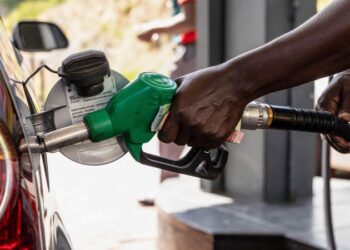

The Federal Government has unveiled a series of measures aimed at cushioning the impact of rising petrol prices on Nigerians, while ruling out a return to the fuel subsidy regime.
The measures include a 30-day discount on petrol sold by the Nigerian National Petroleum Company Limited (NNPCL), priority for public transporters, negotiations for a ₦1,350-per-litre ceiling on the landing or ex-gantry cost of petrol, increased cash transfers, faster deployment of Compressed Natural Gas (CNG) vehicles and the proposed establishment of a National Strategic Fuel Reserve.
The Minister of Finance and Coordinating Minister of the Economy, Taiwo Oyedele, announced the measures during a press briefing in Abuja, where he addressed growing concerns over petrol prices and renewed calls for the Federal Government to reconsider its decision to remove fuel subsidies.
Oyedele acknowledged that Nigerians were facing significant pressure from higher fuel, transportation and logistics costs but argued that returning to a broad petrol subsidy would create deeper economic problems in the long term.
Opening his presentation, the minister said the government understood the difficulties being experienced by households and businesses.
“We know what it means for the commuter in Lagos, the farmer in Kano and the trader in Aba. Prices have risen, and Nigerians are feeling it. That concern is legitimate, and this government recognises it,” he said.
Oyedele said the government’s position was not based on dismissing concerns over the cost of petrol but on finding measures that could provide relief without returning the country to what he described as an unsustainable subsidy system.
He said he would explain the factors driving current petrol prices, outline why the government believes subsidy would worsen the situation and present the steps already taken, as well as additional interventions being considered.
Global crisis blamed for rising petrol prices
According to the minister, the immediate pressure on fuel prices is linked largely to the international energy crisis arising from the conflict in the Gulf.
He said the conflict, which had entered its eighth month, had significantly disrupted global energy supplies, with shipping through the Strait of Hormuz falling sharply.
Oyedele stated that by mid-September, shipping through the strategic waterway had dropped to approximately 13 per cent of its pre-war level, while Brent crude was trading above $100 per barrel, representing an increase of almost 50 per cent compared with its pre-war price.
He added that the pressure had been particularly severe in the refined petroleum products market.
Diesel exports from the Middle East and Russia, he said, had fallen by 75 per cent compared with the previous year, while crude tanker rates from West Africa reached record levels as countries sought alternative sources of supply.
The minister said the International Energy Agency had warned that pressure on refined petroleum products could persist for months.
He cited developments in other countries to demonstrate the global nature of the crisis, noting that diesel prices in the United States had reached $6.50 per gallon, while prices had also increased substantially in the Philippines and Bangladesh.
He also pointed to Zambia, where the government had suspended fuel duties to reduce pump prices, only for prices to rise by about 24 per cent when the relief expired.
Oyedele said the experience showed that temporary relief that was not financially sustainable could simply postpone the problem.
“Relief that cannot be sustained does not remove the pain. It postpones it, and then delivers it all at once, often with greater force,” he said.
Petrol now averages ₦1,400 per litre
Turning to Nigeria, the minister said petrol sold for about ₦830 per litre before the international conflict, when crude oil was around $70 per barrel.
He said the product now averaged about ₦1,400 per litre, adding that the increase was largely linked to international developments beyond Nigeria’s control.
Oyedele argued that the removal of the subsidy had actually prevented the impact of the global energy crisis from becoming more severe.
He acknowledged, however, that higher petrol prices had placed considerable pressure on Nigerian households and businesses.
According to him, the increase in crude prices has had mixed consequences for Nigeria because it could boost government revenue, but lower-than-expected crude production and existing commitments from the subsidy era had limited the benefits.
At the same time, he said Nigerians were dealing with higher transportation, fuel and logistics costs, with low-income households bearing much of the burden.
The minister, however, highlighted the continued availability of petrol across the country as one positive development.
“Yet there is one thing Nigerians have not faced through these months: queues. Fuel has remained available in every state. In a crisis of this kind, availability is the first form of affordability,” Oyedele said.
FG rejects return to subsidy
Oyedele strongly opposed proposals for a return to petrol subsidy, including proposals described as a production subsidy for local refineries.
He said while the government respected the intentions behind such proposals, it disagreed with the suggested solution.
The minister identified four major reasons why the government believes subsidy would not provide a sustainable answer to the current crisis.
First, he said petrol prices were heavily influenced by the exchange rate because crude oil, freight and refining inputs were largely priced in dollars.
He argued that forcing petrol prices down through government intervention would effectively require the government to subsidise foreign exchange, potentially recreating the multiple exchange-rate system that contributed to previous economic difficulties.
Oyedele also distinguished between a genuine production subsidy and the proposal being discussed.
According to him, a production subsidy would normally assist producers who could not compete at market prices, whereas reducing the price of crude and passing the reduction through to consumers would amount to a consumption subsidy by another route.
The second concern, he said, was that subsidies could hide price volatility without eliminating the underlying cost.
If crude oil prices, freight costs and exchange rates continued to fluctuate while the pump price remained artificially low, the financial burden would simply be transferred to the government’s balance sheet.
With crude oil trading above $100 per barrel, Oyedele warned that the financial commitment could become both substantial and open-ended.
₦20tn annual cost projected
The minister said Nigeria consumes approximately 50 million litres of petrol daily.
He estimated that returning petrol to its pre-reform price could cost more than ₦20 trillion annually, even before taking into account increased consumption and smuggling.
He further said that a proposed ₦500-per-litre intervention would cost more than ₦16 trillion each year.
According to Oyedele, such sums were comparable to a substantial portion of the funds shared among the Federal, state and local governments through the Federation Account in 2025.
He warned that financing such a subsidy would have implications for government spending on salaries, pensions, education, healthcare and national security.
The minister also argued that cheaper petrol could encourage smuggling because Nigerian petrol was already cheaper than products sold in many neighbouring countries.
He said widening the price gap could result in Nigerian taxpayers effectively subsidising fuel consumption outside the country.
FG cites ₦15.8tn revenue boost from subsidy removal
Oyedele also highlighted the financial benefits the government said had resulted from the removal of the subsidy.
He stated that subsidy removal released ₦15.8 trillion to the Federation Account between June 2023 and December 2025.
Of that amount, he said ₦10.4 trillion went to state and local governments.
The minister recalled that 27 states were unable to reliably pay workers’ salaries in May 2023, but said none was in that position at the time of his briefing.
At the federal level, he said about two-thirds of the savings, combined with other revenue and borrowing, had been directed towards spending intended to benefit Nigerians through higher wages, infrastructure, electricity subsidies and social transfers.
He said the remaining funds were largely used to stabilise the economy, particularly as the cost of servicing debt increased amid efforts to control inflation.
Oyedele warned that reversing the subsidy reforms could weaken government revenue, increase borrowing costs, trigger capital flight, reduce foreign reserves and place renewed pressure on the naira.
He further projected that the exchange rate could approach ₦3,000 to the dollar within months if the subsidy was restored, potentially pushing petrol prices to at least ₦2,000 per litre despite the subsidy.
“A subsidy does not lower the cost of fuel. It only changes how it is paid, and when,” he said.
He added that Nigeria had previously experienced the consequences of subsidy dependence, including fuel scarcity, smuggling, currency weakness and fiscal difficulties.
Government lists measures already implemented
The minister said the removal of subsidy had not meant that the government had abandoned efforts to reduce the burden of petrol prices.
He listed several interventions already implemented over the past three years.
These include encouraging local refining, which he said had become more viable following deregulation.
The government has also maintained tax and duty waivers on petroleum products, which Oyedele said were saving Nigerian consumers between ₦400 and ₦600 per litre.
He estimated the value of those waivers at more than ₦5 trillion in potential tax revenue.
According to him, petrol in Nigeria is currently 20 to 30 per cent cheaper than in Benin Republic, Togo and Cameroon, while it is 30 to 40 per cent cheaper than in Ghana, Kenya and South Africa.
He said Nigeria’s petrol price was also approximately 35 per cent below the global average and among the 25 lowest petrol prices in the world.
The government has also introduced a naira-for-crude arrangement under which local refiners purchase Nigerian crude in naira.
Oyedele said the arrangement reduces demand for foreign exchange and makes crude transactions more transparent and less vulnerable to exchange-rate volatility.
FG says stable naira crucial to petrol prices
The minister described exchange-rate stability as one of the most important factors affecting petrol prices.
He clarified the government’s position on the naira, saying the currency had depreciated rather than being formally devalued.
Oyedele said the government had previously been unable to sustain an artificial exchange rate because of insufficient reserves, while manufacturers and ordinary Nigerians had been paying significantly higher rates in the parallel market.
He said the difference between official and parallel-market rates had now narrowed from more than 60 per cent to below five per cent.
Nigeria’s foreign reserves, he added, stood at about $55 billion, which he described as the highest level in 18 years.
“This is the single biggest lever on pump prices, and one we cannot afford to lose,” Oyedele said.
Over 120,000 vehicles now running on CNG
The Federal Government also highlighted the expansion of alternative energy sources, particularly CNG, as part of its strategy to reduce dependence on petrol.
Oyedele said more than 120,000 vehicles were now operating on CNG, supported by over 400 conversion centres, 96 refuelling stations and 18 Liquefied-to-Compressed Natural Gas stations.
He added that more than 550 CNG buses had been deployed.
According to him, transport fares had fallen by between 30 and 50 per cent in areas where the CNG buses were operating.
The government has also removed taxes on electric vehicles and solar equipment and reduced import duties on vehicles.
Oyedele said Customs data showed that imports of CNG-powered vehicles, including tricycles, electric vehicles and renewable-energy equipment, had more than doubled since May 2023.
He said duty waivers on those items had exceeded ₦100 billion, while some state governments were preparing to introduce CNG buses and electric tricycles on a larger scale.
Nigeria grants ₦3.3tn petrol tax and duty waiver
The minister also compared Nigeria’s response with measures adopted by other countries facing higher energy costs.
He said the International Energy Agency had recorded energy-tax adjustments in more than 50 countries.
Nigeria, he stated, had gone further by granting a complete waiver of taxes and duties on petrol, worth more than ₦3.3 trillion for the year ending September 30, 2026.
He cited Vietnam as another country using tax relief and Brazil as a country that renews diesel support in 30-day periods.
He also said 25 countries had adopted renewable electrification to reduce dependence on imported fuel.
Oyedele said the IEA’s position was that measures aimed at reducing fuel consumption and securing supply were more sustainable than broad-based subsidies.
FG announces 10 additional measures
Acknowledging that the interventions already implemented had not completely eliminated the pressure on households, Oyedele announced a further package of measures.
The first is a 30-day margin discount on petrol sold at NNPC stations, with public transport operators given priority nationwide.
The minister said, “We are offering a discount on petrol dispensed by NNPC Limited for the next 30 days, with priority for public transporters nationwide.”
The second measure is forward sales of crude oil to domestic refineries. The government said this would help shield domestic petrol prices from sudden movements in international markets as crude production increases and previously committed crude becomes available.
The third is a proposed ₦1,350-per-litre ceiling on the ex-gantry or landing cost of petrol.
Oyedele said the government was negotiating the ceiling to reduce fluctuations in pump prices.
Under the proposed arrangement, if production or import costs rise above the ceiling, refiners and importers would temporarily bear the difference and recover it later when crude prices or exchange rates become more favourable.
He stressed that the arrangement would neither amount to a subsidy nor constitute price control.
According to him, the objective is to smooth out fluctuations rather than suppress prices.
“The reasoning is simple. 1,400 naira a litre today and 1,400 tomorrow is better than 1,500 today and 1,300 tomorrow, because volatility itself adds to uncertainty and cost,” he said.
He said the ceiling would be reviewed monthly and adjusted when necessary, with the figures published to promote transparency.
Government targets illegal levies, increases cash support
The fourth measure involves removing illegal levies that contribute to higher transportation and logistics costs.
Oyedele said the Federal Government would work with state governments under the 2025 tax reform laws to address road taxes and other levies that increase the cost of transportation.
The fifth measure is increased direct support for vulnerable Nigerians.
The government plans to increase funding for cash transfers to vulnerable households while also expanding subsidised credit for small businesses and consumers.
The sixth is an accelerated rollout of CNG infrastructure in partnership with state governments.
The minister called on transport operators benefiting from cheaper CNG to pass the savings on to commuters through lower fares.
FG considers excess profit tax
The seventh measure is the possible introduction of an excess profit tax on businesses that take undue advantage of consumers across the energy value chain.
Oyedele said proceeds from such a tax would be dedicated exclusively to measures designed to cushion the effect of petrol prices.
These could include transport support and vouchers for urban minimum-wage earners considered particularly vulnerable.
The Federal Government also plans to work with the National Assembly on enhanced tax relief for low-income earners under the 2027 Finance Bill.
The eighth measure involves reducing regulatory bottlenecks.
Oyedele said the government would cut unnecessary regulatory costs that add to the cost of doing business and ultimately contribute to higher prices of goods and services.
FG plans National Strategic Fuel Reserve
The ninth initiative is the creation of a National Strategic Fuel Reserve.
According to the minister, the reserve would allow the government to release refined petroleum products into the market under clearly published rules whenever global disruptions or artificial hoarding threaten supply and price stability.
He stressed that the proposed reserve would not be used to fix petrol prices or operate as a subsidy.
Instead, its purpose would be to guarantee supply, discourage market manipulation and reduce price volatility during international disruptions.
Oyedele said the reserve would form part of a broader strategy to ensure that deregulation delivers economic stability rather than exposing Nigerians to sudden energy shocks.
The tenth measure involves improving traffic and logistics management.
The government plans to improve traffic flow in major cities in order to reduce fuel consumption, while the use of NIPOST’s newly launched address codes is expected to make logistics operations more efficient and less expensive.
FG insists subsidy will not return
Oyedele emphasised that none of the measures announced should be interpreted as a restoration of blanket petrol subsidy.
“To be perfectly clear, none of these measures restores a blanket subsidy. To do so would amount to creating longer term harm for a short-term cure,” he said.
He said the government’s approach was to direct assistance towards Nigerians who needed it most without exposing the wider economy to the risks associated with an open-ended subsidy.
The minister acknowledged that the current cost of fuel remained a serious concern for Nigerians and said the government was not ignoring the hardship caused by the reforms.
“Let me end where I began. The cost of fuel is real, and we do not dismiss it. Removing the subsidy came at a price, and many households are still bearing it,” he said.
However, Oyedele maintained that the alternative had already been tested and had produced severe consequences for the Nigerian economy.
He said the Federal Government’s priority was therefore to preserve the reforms while ensuring that their benefits reached Nigerians more quickly and in more practical ways.
“Our task is not to reverse a necessary reform designed to set our country on the path towards sustained prosperity. It is to make sure its gains reach more Nigerians, more quickly and in more tangible ways,” he said.
The minister further disclosed that the Federal Government was preparing a comprehensive fiscal package aimed at reducing inflation to single digits sustainably in the near term.
He said further details of the package would be made public in the coming months.