
Seventeen members of Nigeria’s House of Representatives have formally defected from the African Democratic Congress (ADC) to the Nigerian Democratic Congress (NDC), in a development that signals shifting political alliances ahead of the 2027 general elections.
The defections were announced during plenary on Tuesday, May 5, drawing attention to the growing influence of the NDC within the lower legislative chamber.
The lawmakers who moved to the NDC include Yusuf Datti, Uchenna Okonkwo, Adamu Wakili, Thaddeus Attah, George Ozodinobi, Lilian Orogbu, Oluwaseyi Sowunmi, Peter Aniekwe, Mukhtar Zakari, George Oluwande, Munachim Umezuruike, Emeka Idu, Jesse Onuakalusi, Ifeanyi Uzokwe, Afam Ogene, and Abdulhakeem Ado.
In a related development, Leke Abejide announced his defection from the ADC to the All Progressives Congress (APC).
Speaking during plenary, the Speaker of the House read out the letters of defection, with several lawmakers citing “irreconcilable differences” within the ADC and the need to align with what they described as “a more progressive and nationally driven political platform.”
One of the defecting lawmakers said, “Our decision is rooted in the urgent need to reposition ourselves within a platform that reflects the aspirations of our constituents and the broader Nigerian populace.”
Another lawmaker added, “The NDC presents a renewed vision and direction that we believe is critical for national development and political stability moving forward.”
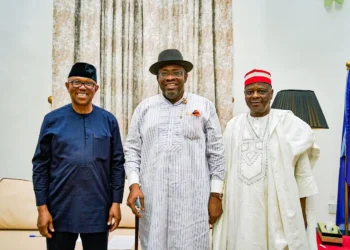
The wave of defections follows earlier high-profile moves by Peter Obi, the 2023 presidential candidate of the Labour Party, and Rabiu Musa Kwankwaso, former presidential flagbearer of the New Nigeria Peoples Party (NNPP), who both recently left the ADC for the NDC.
Their decisions, announced earlier in the week, have been widely interpreted as part of a broader realignment of political forces ahead of the next election cycle.
Political observers say the growing list of defections could significantly alter the balance of power within the House of Representatives and reshape coalition-building efforts as parties begin early positioning for 2027.