
The Federal Government has ignited debate across Nigeria’s education sector following its announcement to phase out university courses considered misaligned with the country’s economic priorities.
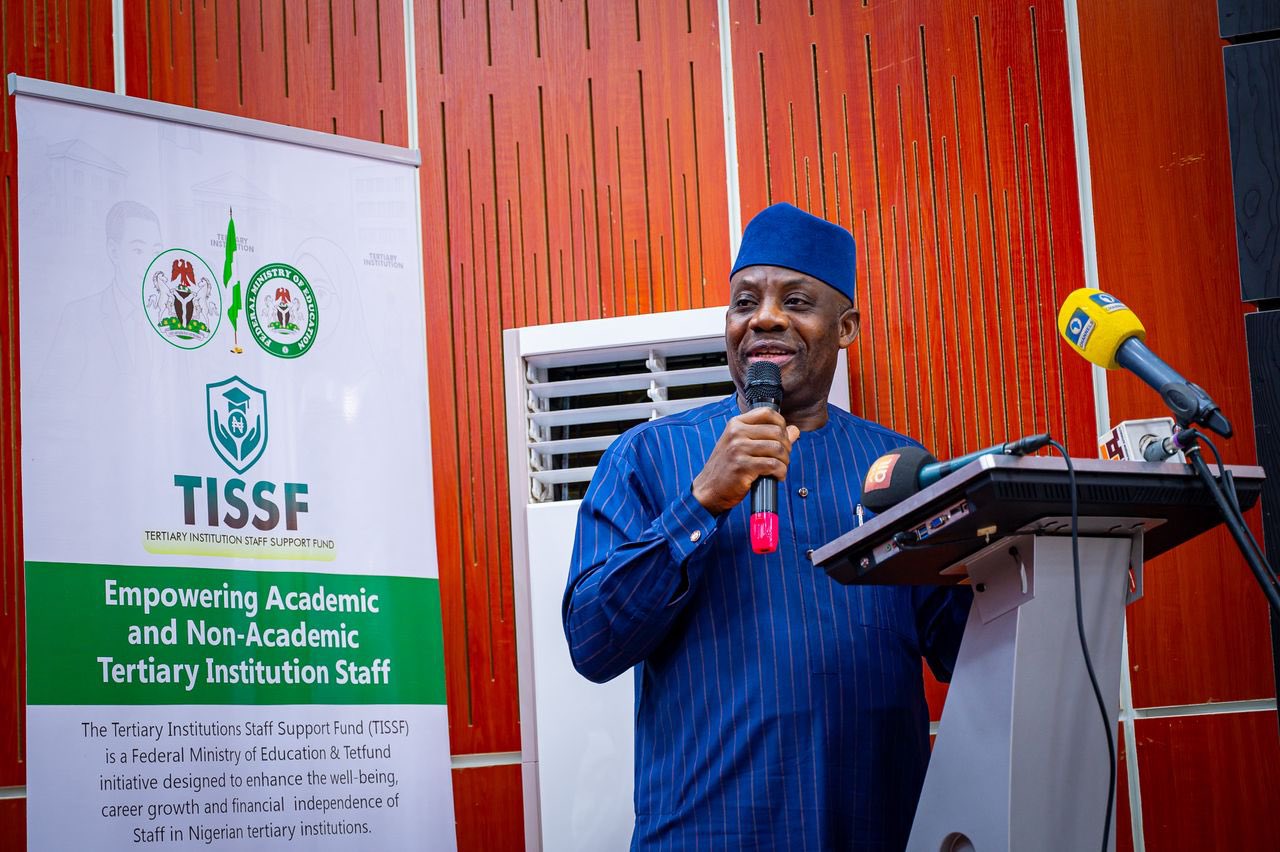
Minister of Education, Tunji Alausa, made the disclosure on Sunday, April 26, during a “Renewed Hope Conversation” held at the University of Abuja. He said the government is moving to end what it described as outdated academic programmes that do not translate into tangible economic opportunities for graduates.
According to the minister, the policy shift is part of a broader strategy to reposition higher education toward market-driven skills and global workforce demands. He stressed that the government would prioritize courses that enhance employability, entrepreneurship, and innovation.
Alausa was particularly critical of certain social science disciplines, warning students about limited job prospects in those fields. He argued that continuing to admit students into programmes with weak economic value amounts to misleading them.
He also cautioned prospective students against using loans from the Nigerian Education Loan Fund (NELFUND) to pursue such courses, noting that discussions are already ongoing with university administrators—including vice-chancellors, rectors, and provosts—on implementing the proposed changes.
The announcement, however, has been met with swift opposition from academic unions and stakeholders in the education sector.
Dr. Niyi Sunmonu, National President of the Congress of University Academics (CONUA), warned against outright scrapping of programmes. He advocated for curriculum reform instead, emphasizing the need to integrate emerging trends such as artificial intelligence and automation into existing courses.
Similarly, Dr. Makolo Hassan of the Non-Academic Staff Union (NASU) challenged the government’s definition of “relevance.” He argued that many graduates from humanities and language programmes have achieved success, insisting that value lies in how courses are structured and taught rather than their titles.
On the part of parents, Alhaji Haruna Danjuma, President of the National Parent Teacher Association of Nigeria (NAPTAN), urged caution. He warned that abrupt policy changes could undermine the financial investments families have already made in their children’s education.
Despite the criticism, the minister maintained that the reforms are necessary to prepare graduates for a rapidly evolving economy. He highlighted plans to make the Entrepreneurship, Innovation and Business Incubation Certification (EPIC) compulsory by 2027, alongside the integration of digital and artificial intelligence skills across all levels of education.
While the government has yet to release a definitive list of courses targeted for removal, the announcement has intensified discussions about the future direction of Nigeria’s university system and the balance between academic diversity and economic utility.