

The Federal Government has declared an end to what it describes as the exploitation of Nigerian parents by some schools, particularly through compulsory purchases and unnecessary school activities.
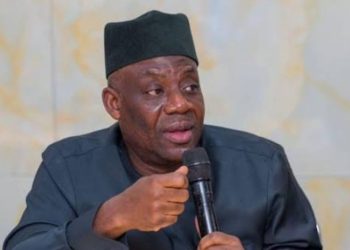
Speaking during an interview on Arise News, the Minister of Education, Tunji Alausa, said the administration of President Bola Ahmed Tinubu is determined to stop practices that place undue financial pressure on parents.
According to the minister, the government has banned several activities commonly used by schools to extract money from families, including compulsory textbook sales and nursery school graduation ceremonies.
Alausa described nursery graduations as unnecessary and exploitative, arguing that they lack real educational value. He explained that graduation ceremonies should only be held at meaningful academic milestones such as the completion of primary school, junior secondary school, and senior secondary school.
“It may look like fun, but it is sheer extortion of parents. Why would you do graduation for one or two children? That is not acceptable,” he said.
The minister stressed that while children should be encouraged, such encouragement must be tied to clear and tangible educational progress rather than frequent, costly ceremonies.
On textbooks, Alausa criticised the practice of forcing parents to buy new books every academic year, even when the content has barely changed. He recalled that textbooks were once reused by younger siblings, helping families cut costs.
He noted that publishers and schools had manipulated the system by merging workbooks with textbooks, making it impossible to reuse them. In some cases, he said, new editions contained little or no content changes, with only the pagination or cover altered.
To address this, the government has ordered that workbooks must be completely separated from core textbooks, ensuring that textbooks can be reused and parents are not compelled to buy new ones annually.
“We will not allow Nigerian parents to be extorted,” Alausa said, adding that the policy is part of broader reforms in the education sector.
The Minister also announced the reintroduction of Nigerian history into the school curriculum, describing its earlier removal as unjustifiable.
History was officially removed from the primary and junior secondary school curriculum in 2007. However, Alausa said the Tinubu administration reviewed the decision and moved quickly to reverse it.
He explained that the absence of history from classrooms had disconnected young Nigerians from their national identity and past.
“Our children are now so delinked from the history of the country. I don’t know who, in their right mind, would ban history,” he said.
Alausa clarified that the current administration did not remove history but has now fully restored it as part of a comprehensive curriculum review.
“Nigerian history is back in the curriculum. We felt it was wrong to remove it, and we moved swiftly to correct that,” he added.
The reforms, according to the minister, are aimed at reducing financial burdens on families while strengthening the quality and relevance of education in Nigeria.