
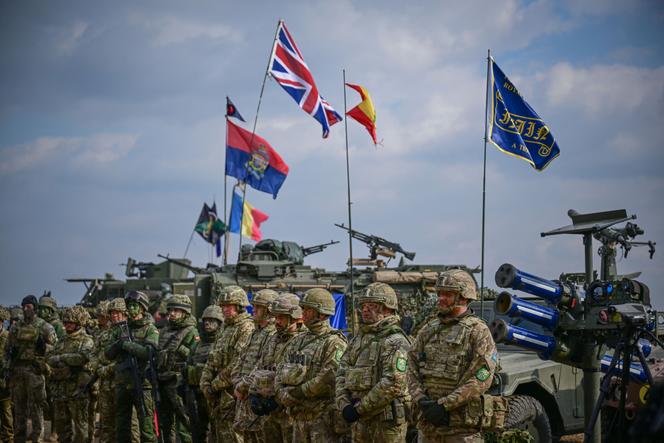
Several NATO member states have begun deploying small contingents of troops to Greenland for joint military exercises with Denmark, in a move widely seen as a show of solidarity amid escalating tensions sparked by renewed threats from United States President Donald Trump to take control of the Arctic island.
Germany, Sweden, France and Norway confirmed this week that their forces are arriving in Greenland to participate in exercises coordinated by Denmark, which is responsible for the island’s defence. The deployments come as Trump intensifies rhetoric suggesting the United States could annex Greenland, including by force, a position that has unsettled European allies and strained the foundations of the US-led NATO alliance.
Denmark has warned that any military attack on Greenland would represent a direct assault on NATO itself, given the alliance’s core principle that an attack on one member is considered an attack on all. Greenland, while autonomous, is part of NATO through Denmark. Copenhagen has since announced plans to strengthen its military presence on the island in close cooperation with allied countries.
Germany’s Defence Ministry said it is sending a small reconnaissance unit to Greenland at Denmark’s invitation to carry out an exploration mission alongside partner nations. Sweden also confirmed the deployment of its troops, noting they will support preparations for a wider multinational exercise, Operation Arctic Endurance. France and Norway have similarly confirmed their participation, with French President Emmanuel Macron announcing that the first French units are already en route and additional forces will follow.
Although joint Arctic training among NATO allies is not unusual, analysts note that the timing and symbolism of the deployments are significant. The moves come against the backdrop of sharp internal tensions within NATO, following Trump’s repeated public statements asserting that the United States should control Greenland. The US already maintains around 150 military personnel at its Pituffik Space Base in northwestern Greenland.
Trump recently reignited controversy by declaring at a press conference that the United States would “do something on Greenland, whether they like it or not,” later insisting online that “anything less” than US control of the island is unacceptable. He has argued that NATO would become stronger if Greenland were under American control, a claim strongly rejected by European allies.
Alongside the military deployments, diplomatic efforts are also intensifying. Canada and France have announced plans to open consulates in Nuuk, Greenland’s capital, in the coming weeks, reinforcing political and diplomatic support for Denmark and Greenland. Canada has reiterated its firm backing for Greenland’s sovereignty and territorial integrity, with its foreign minister confirming plans to travel to Nuuk as part of its broader Arctic security strategy. France has said its consulate, scheduled to open in early February, had been planned before the current crisis but now carries added symbolic weight.
The troop announcements coincided with high-level meetings involving Danish and Greenlandic officials and US Secretary of State Marco Rubio and Vice President JD Vance. While officials described the talks as frank and constructive, they acknowledged that major disagreements remain unresolved. However, all parties agreed to establish a high-level working group to explore possible ways forward, expected to convene in the coming weeks.
French officials have publicly urged Washington to halt its threats, warning that any attack on Greenland would run counter to US interests and severely undermine NATO’s unity. Denmark’s defence minister has described the idea of a US military assault as hypothetical, stressing that it remains highly unlikely that one NATO member would attack another, even as concerns continue to mount across Europe.