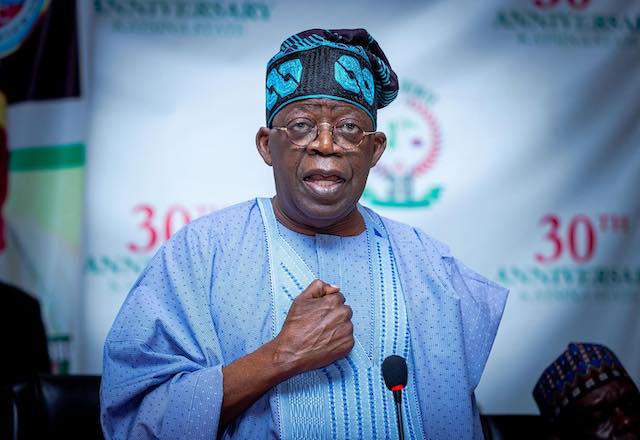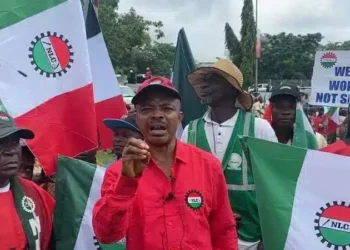


The President of the Nigeria Labour Congress (NLC), Joe Ajaero, has warned that raising Nigeria’s minimum wage to ₦1 million monthly could destabilise the economy if underlying economic challenges are not addressed.
Ajaero made the remarks during an interview on Channels Television, where he stressed that discussions about workers’ wages should go beyond increasing nominal salaries to tackling the rising cost of living and improving the purchasing power of the naira.
“₦1,000,000 minimum wage will collapse the Nigerian economy,” the labour leader stated.
He argued that wage increases alone would not significantly improve workers’ welfare if inflation, currency depreciation and the high prices of essential goods and services continued to erode their earnings.
According to Ajaero, economic policies aimed at stabilising the economy and reducing the financial pressure on households should take priority in discussions about further wage adjustments.
He maintained that the focus should be on ensuring that workers can afford basic necessities with their salaries, rather than pursuing wage figures that may prove difficult to sustain under prevailing economic conditions.
The NLC president’s comments come amid ongoing discussions between organised labour and the Federal Government over workers’ welfare and measures to cushion the effects of rising living expenses.
The Federal Government recently approved a monthly transport allowance of ₦70,000 for public service workers for six months, beginning in November 2026, as part of efforts to ease the burden of rising transport costs, particularly following increases in fuel prices.
The intervention is expected to provide temporary relief to eligible workers as economic pressures continue to affect household budgets.
Ajaero’s remarks have brought renewed attention to the debate over minimum wage increases, with the labour movement facing the challenge of securing better earnings for workers while addressing the broader economic conditions that determine their real purchasing power.