
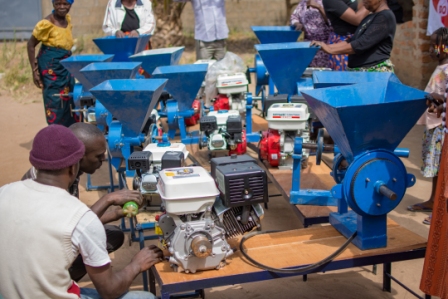
The Federal Institute of Industrial Research, Oshodi (FIIRO) has raised alarm over the potential health risks posed by foods processed with certain locally fabricated grinding machines, warning that they may be contributing to rising cases of organ failure and cardiovascular diseases in Nigeria.
Director-General of Federal Institute of Industrial Research, Oshodi (FIIRO), Dr. Jummai Adamu Tutuwa, made the disclosure in a statement issued to journalists, referencing findings from a scientific assessment conducted by the institute.
According to her, a comprehensive study carried out by FIIRO researchers in 2013 examined locally manufactured grinding machines commonly used to process tomatoes, pepper, onions, melon seeds and other food items, particularly within Lagos metropolis. The assessment revealed the presence of heavy metals including lead, copper, chromium, nickel, cadmium and manganese. It also detected non-heavy metals such as calcium, magnesium, zinc and iron.
“Our findings showed that several locally fabricated grinding machines released measurable traces of heavy metals into food during processing,” Tutuwa said. “In some cases, the levels exceeded the permissible limits set by international safety bodies.”
She noted that contamination was more pronounced in locations exposed to heavy vehicular traffic and industrial activity, where environmental pollutants may further compound the problem. The contamination levels, she added, surpassed safety thresholds recommended by both the World Health Organization and the Food and Agriculture Organization in certain instances.
Tutuwa warned that prolonged consumption of food contaminated with toxic metals could have serious health implications.
“Heavy metals are naturally occurring, but their danger lies in their bioaccumulative nature and their inability to degrade,” she explained. “When they build up in the body over time, they can trigger chronic health conditions, including cardiovascular diseases and organ failure, even among younger adults.”
She described cadmium contamination in particular as “a serious ecotoxicological concern,” citing its widespread industrial application and persistence in the environment.
In response to the findings, FIIRO has developed a safer alternative. The Director-General disclosed that the institute has designed and fabricated a stainless-steel pepper grinding machine aimed at significantly reducing the risk of metal contamination during food processing.
“As part of our intervention, we have produced a stainless-steel grinding machine that minimizes metal leaching and ensures safer food processing,” she said.
Tutuwa further revealed plans for broader collaboration to scale up the initiative. According to her, FIIRO intends to work with the National Assembly, the Office of the First Lady, and other stakeholders to promote mass production, distribution, monitoring and maintenance of the improved machines nationwide.
She emphasized the need for stricter regulatory oversight and sustained public enlightenment to mitigate health risks.
“Strengthening regulation, enforcement and public awareness is critical if we are to reduce contamination and ultimately lower the burden of cancer, cardiovascular diseases and organ failure across the country,” she stated.