
Nigeria has dispatched fighter aircraft to the Benin Republic following unconfirmed reports of a military coup that allegedly ousted President Patrice Talon on Sunday, raising concerns about regional stability.
Security sources disclosed to Vanguard that the military deployment, which originated from Lagos, is conducting aerial surveillance operations in Beninese airspace as Nigeria intensifies monitoring of the rapidly deteriorating political situation in the neighboring West African nation.
A senior security official, who requested anonymity due to the sensitivity of the matter, explained that the deployment represents a precautionary response aimed at evaluating potential regional security threats and protecting Nigeria’s strategic interests.
“The aircraft has already arrived in the Benin Republic. Nigeria is closely monitoring developments and evaluating potential risks. This is not an offensive operation but a strategic response to unfolding events,” the source revealed.
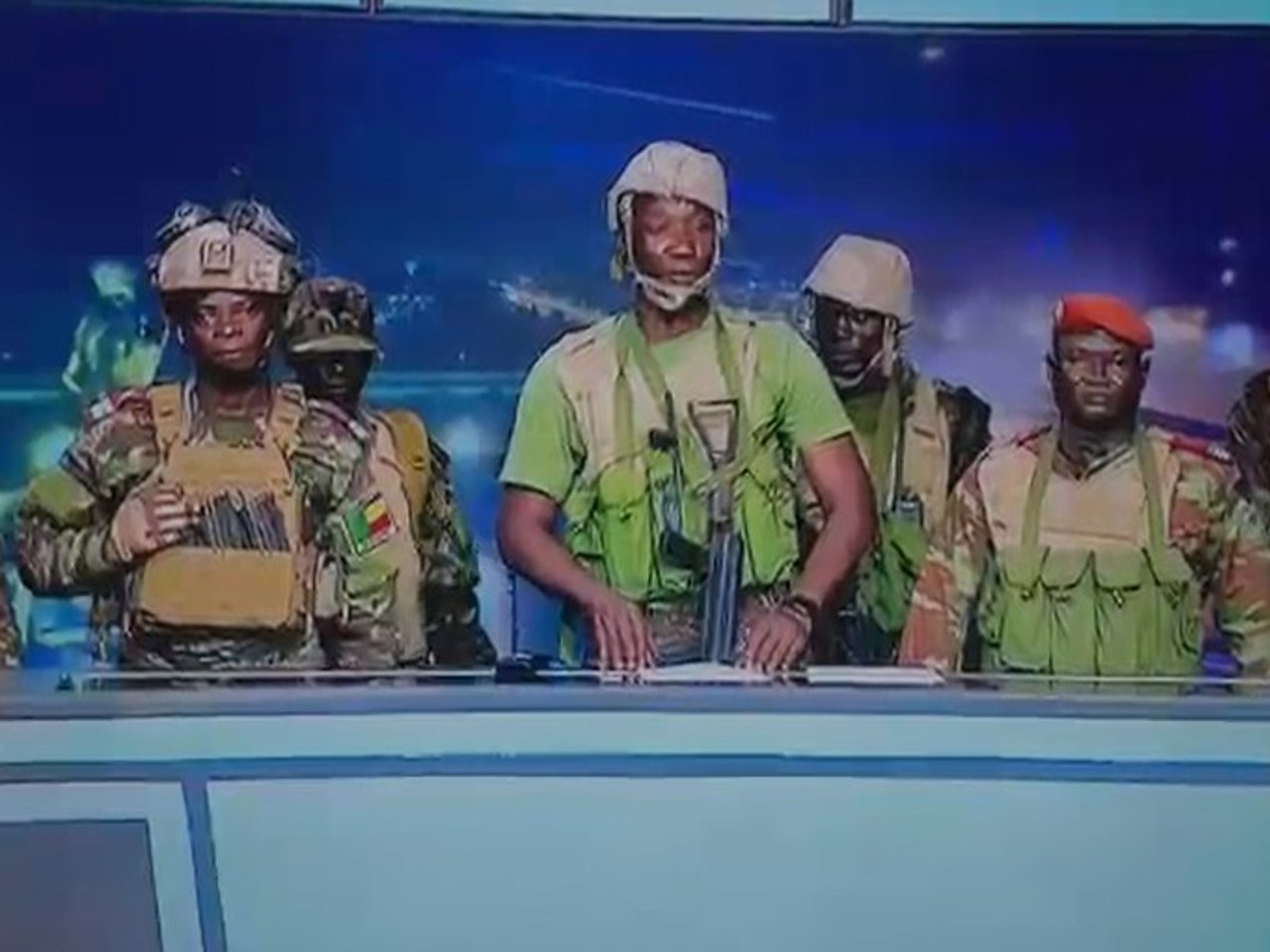
Emerging reports from Benin suggest that the alleged coup was orchestrated by Lt. Pascal Tigri, who reportedly proclaimed the dissolution of state institutions and assumed complete military authority over the country.
The group, identifying itself as the Military Committee for Rebuilding, announced sweeping measures including the suspension of the November 2025 Constitution, the dissolution of all state institutions, and the prohibition of political party activities.
In addition, the self-proclaimed military leadership declared the closure of all land, sea, and air borders until further notice, effectively isolating the country from its neighbors.
The developments in Benin Republic pose significant security implications for Nigeria due to the countries’ shared border, which is notoriously porous and difficult to monitor effectively.
Any political instability or security vacuum in Benin could potentially create opportunities for criminal networks, refugees flows, and other cross-border threats that would directly impact Nigerian territories, particularly in border states such as Ogun, Oyo, and Kwara.
As of the time of publication, the Nigerian government has not released an official statement addressing the situation or confirming the military deployment.
However, military sources indicated that surveillance operations would continue indefinitely until the circumstances in Benin Republic become clearer and the nature of the alleged coup is verified.
The alleged coup, if confirmed, would represent yet another unconstitutional change of government in West Africa, a region that has experienced multiple military takeovers in recent years, including in Mali, Burkina Faso, Niger, and Guinea.
Nigeria, as the region’s largest economy and most populous nation, has historically played a leading role in ECOWAS peacekeeping and democracy restoration efforts, making its response to the Benin situation particularly significant.
President Patrice Talon has governed Benin Republic since 2016 and was re-elected in 2021, though his tenure has been marked by allegations of authoritarian tendencies and the marginalization of opposition voices.
The Economic Community of West African States (ECOWAS), which suspended Guinea-Bissau following a coup last week, has not yet issued a statement on the reported developments in Benin Republic.